Quick Answer
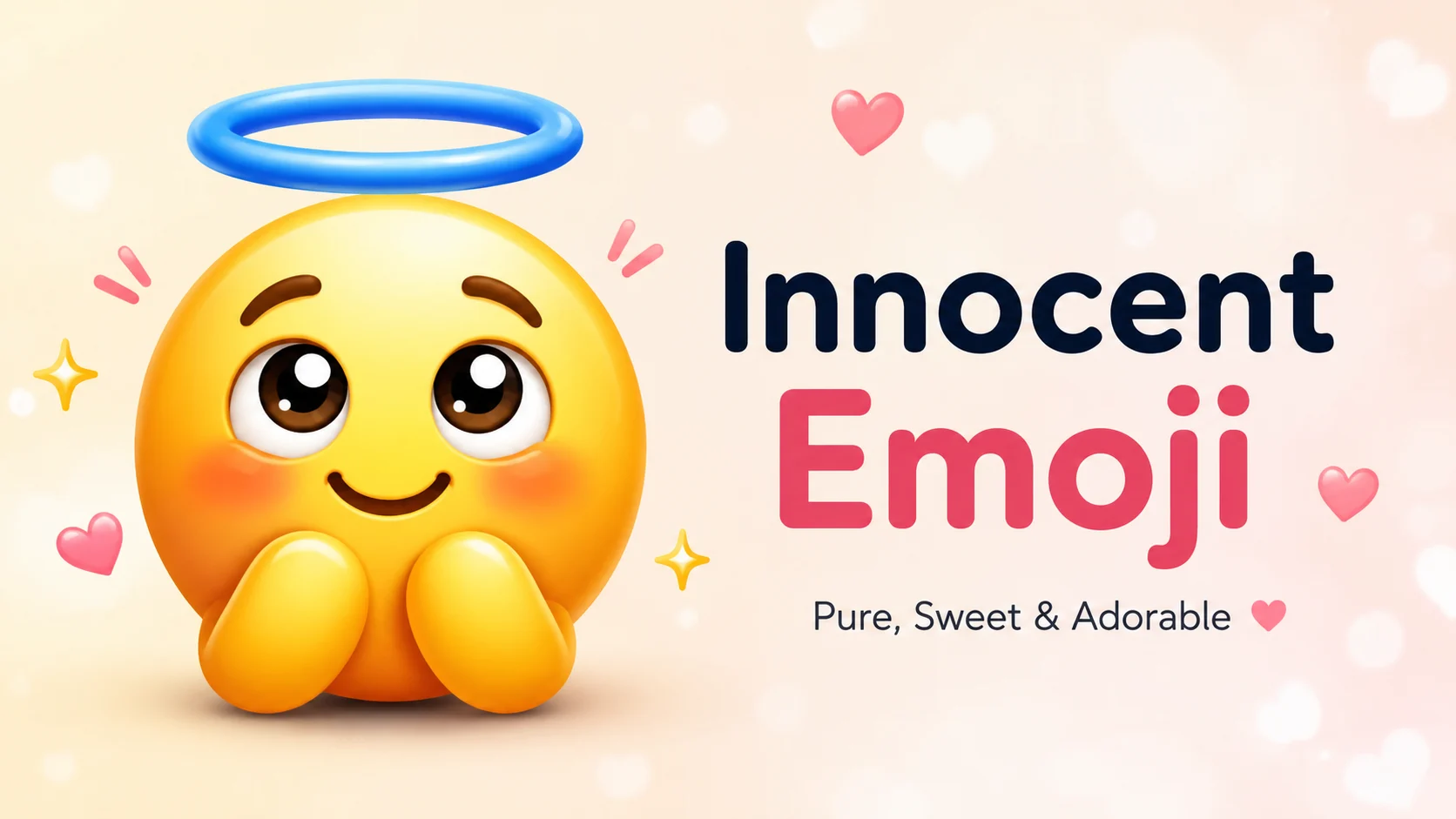
The 😇 emoji is officially called Smiling Face with Halo. It commonly represents innocence, kindness, goodness, sweetness, or angelic behavior. In casual texting, it can also be playful or ironic, especially when someone is pretending they did nothing wrong or jokingly acting innocent. The surrounding message is important because 😇 can express genuine kindness or a teasing “Who, me?” attitude.
The 😇 emoji is often called the innocent emoji because its halo and gentle smile give it an angelic appearance. People commonly use it when they want to suggest that they are being good, sweet, helpful, well-behaved, or completely innocent.
In everyday texting, though, 😇 is not always meant literally. Someone might send it after admitting to a small mistake, making a cheeky comment, or teasing a friend. In those situations, the emoji can mean something like “I’m innocent!” even when the sender knows they are being a little mischievous.
Context makes the difference. A message such as “I helped my friend with their homework 😇” sounds genuinely wholesome, while “I definitely didn’t eat the last cookie 😇” can sound deliberately playful or sarcastic. The emoji itself does not prove whether someone is truly innocent, joking, or being flirty.
What Does the 😇 Innocent Emoji Mean?
The official Unicode name for 😇 is Smiling Face with Halo. Its common meanings include:
- Innocence
- Kindness
- Good behavior
- Sweetness
- Angelic behavior
- Purity
- Being helpful
- Playful innocence
- Pretending not to be responsible for something
The halo gives the emoji its “angelic” meaning, while the smiling face makes it feel friendly rather than serious.
For example:
“I was being good all day 😇”
The sender is presenting themselves as well-behaved or innocent.
But:
“I may have taken the last slice of cake 😇”
can be read as a playful confession with a fake-innocent tone.
😇 Meaning in Text Messages
In text messages, 😇 often adds a soft, innocent, or playful tone to a statement.
It can make a simple message sound sweeter:
“I saved you the last piece 😇”
Here, the emoji suggests kindness or thoughtfulness.
It can also make an admission sound humorous:
“Okay, maybe I started the argument 😇”
In this context, the halo creates a joking contrast with the confession.
Another common use is pretending to be completely innocent:
“Me? I didn’t do anything 😇”
The sender may be joking rather than making a serious claim.
Why Do People Use 😇?
The halo gives the emoji a clear visual association with an angel. Because angels are commonly associated with goodness and innocence, 😇 can communicate those ideas quickly.
People may use it when they want to:
- Show that they behaved well
- Make a kind statement feel warmer
- Describe someone as sweet
- Pretend they are innocent
- Soften a cheeky comment
- Joke about a minor mistake
- Make a playful confession
- Add an angelic tone to a message
The meaning can range from genuinely wholesome to obviously tongue-in-cheek.
Is 😇 Really an Innocent Emoji?
Yes, innocence is one of the common interpretations of 😇, but “innocent emoji” is an informal description rather than its official Unicode name.
The official name is Smiling Face with Halo. The emoji can represent an angelic or good-natured attitude, but users also employ it ironically.
For example:
“I never cause trouble 😇”
Depending on the conversation, this could be sincere or a joke.
If the sender is known for teasing or joking, the halo may actually make the statement sound less believable and more playful.
😇 Meaning When Someone Sends It
If someone sends 😇 after a message, the best interpretation depends on what they said.
After a Kind Message
“I brought you some snacks 😇”
This likely communicates kindness or thoughtfulness.
After an Admission
“I might have eaten your leftovers 😇”
This sounds playfully guilty or fake-innocent.
After a Joke
“I said nothing about your surprise party 😇”
The emoji can make the statement sound teasing.
After an Apology
“Okay, I’ll behave 😇”
Here, it can suggest a promise to be good, sometimes with a playful tone.
The emoji alone does not tell you exactly what the sender feels. Their wording and the previous conversation provide the missing context.
Is 😇 a Flirty Emoji?
😇 can appear in flirtatious conversations, but it is not specifically a flirting emoji.
Someone might use it to make a teasing message sound sweet or innocent:
“Who said I was trying to impress you? 😇”
The halo adds a playful “I’m innocent” feeling.
However, the emoji does not automatically mean romantic interest. A person can use 😇 with friends, family, coworkers, or anyone else in a casual conversation.
If you are trying to understand whether a message is flirting, consider the complete conversation rather than relying on 😇 alone.
Can 😇 Be Sarcastic?
Yes. One of the most recognizable informal uses of 😇 is pretend innocence.
For example:
“I definitely didn’t finish the cookies 😇”
If the sender clearly did finish them, the emoji makes the message humorous.
Another example:
“I would never encourage you to stay up late 😇”
The halo can signal that the sender is jokingly acting like an angel.
This is why 😇 can sometimes communicate the opposite of its literal appearance. The sender may use an angelic expression specifically because they are being cheeky.
Is 😇 Rude?
Usually, 😇 is not considered a rude emoji. It generally has a friendly, sweet, or playful tone.
However, it can feel sarcastic or passive-aggressive in certain situations.
For example:
“Of course I followed all the rules 😇”
If the context suggests the person clearly did not follow the rules, the emoji may sound mocking.
The wording matters more than the emoji itself. A friendly conversation can make 😇 feel warm, while an argument can make the same emoji feel sarcastic.
😇 in Friendship and Relationships
Among friends, 😇 can be used to joke about being innocent, helpful, or well-behaved.
“I only gave you one tiny spoiler 😇”
This sounds like playful guilt.
In relationships, someone might use it to make a sweet or teasing message softer:
“I saved your favorite dessert 😇”
That sounds affectionate without the emoji necessarily being romantic.
The important point is that 😇 does not automatically signal love, attraction, or romantic interest. The relationship and conversation provide the context.
Related Emojis and How They Differ
| Emoji | Official Name | Common Meaning | Tone | Where or When It Is Used |
|---|---|---|---|---|
| 😇 | Smiling Face with Halo | Innocence, goodness, angelic behavior | Sweet, playful, sometimes ironic | Kind messages, innocent jokes, playful confessions |
| 🙂 | Slightly Smiling Face | Mild happiness or friendliness | Neutral, gentle | Everyday replies and casual conversations |
| 😊 | Smiling Face with Smiling Eyes | Warmth, happiness, appreciation | Warm, friendly | Thanks, compliments, pleasant conversations |
| 🥰 | Smiling Face with Hearts | Affection, warmth, being touched | Affectionate, loving | Sweet messages and close relationships |
| 😈 | Smiling Face with Horns | Mischief, naughty humor, playful trouble | Cheeky, mischievous | Jokes, teasing, playful trouble |
| 🤭 | Face with Hand Over Mouth | Embarrassment, amusement, surprise, playful reaction | Shy, amused | Awkward moments, jokes, secrets |
| 😌 | Relieved Face | Contentment, calmness, relief | Peaceful, relaxed | Reassurance, satisfaction, calm reactions |
| 🫣 | Face with Peeking Eye | Shyness, nervous curiosity, embarrassment | Shy, playful | Awkward moments, surprising situations, teasing |
The most useful comparison is between 😇 and 😈. They can almost act like opposites in playful texting: 😇 suggests an angelic or innocent attitude, while 😈 commonly suggests mischief or naughty humor.
😇 and 🙂 are also easy to confuse because both can appear friendly. The halo on 😇 adds a stronger sense of innocence or “being good,” while 🙂 is more general.
😇 and 🥰 are different as well. 🥰 focuses more on affection and warm feelings, whereas 😇 focuses on goodness, innocence, or an angelic attitude.
😇 vs. 😈: What’s the Difference?
These two emojis are often used together because their visual meanings contrast so clearly.
😇 = “I’m innocent.”
😈 = “I’m being mischievous.”
For example:
“I didn’t touch the cake 😇”
suggests pretend innocence.
Meanwhile:
“I’m taking the last piece 😈”
suggests playful mischief.
Sometimes people use both together:
“I behaved all day 😇 …well, mostly 😈”
This creates a humorous contrast between good behavior and mischief.
Text Message Examples
Showing Genuine Goodness
“I helped my little brother with his project 😇”
Meaning: The sender is emphasizing that they did something kind or helpful.
Pretending to Be Innocent
“I have no idea who ate the last cookie 😇”
Meaning: The sender is jokingly pretending not to be responsible.
Softening a Confession
“Okay, I read the first page of your notes 😇”
Meaning: The emoji makes the admission sound playful rather than serious.
Being Sweet
“I saved you a seat 😇”
Meaning: The sender is highlighting a thoughtful gesture.
Playful Teasing
“I would never tease you about that 😇”
Meaning: The sender may be joking because the statement itself suggests the opposite.
How to Respond to 😇
The best response depends on the tone.
If the message is genuinely kind:
“Aww, thank you! 😊”
If they’re pretending to be innocent:
“Sure you didn’t 😂”
Keep your response consistent with the existing conversation instead of assuming the sender is flirting or being sarcastic.
Common Misunderstandings About 😇
It does not always mean genuine innocence
Someone may be using the emoji ironically or pretending to be innocent.
It does not automatically mean flirting
😇 can appear in romantic conversations, but it is also common in ordinary friendly conversations.
It does not prove someone is being honest
A person can use 😇 while joking about something they actually did.
It is not the same as 🥰
🥰 emphasizes affection and warm feelings, while 😇 emphasizes innocence, goodness, or angelic behavior.
It is not always religious
Although the halo gives 😇 an angelic appearance, everyday texting often uses it simply to communicate innocence, sweetness, or playful behavior.
Official Emoji Details
The official Unicode name for 😇 is Smiling Face with Halo. Its Unicode code point is U+1F607. Unicode’s emoji data identifies it as a smiling face with a halo, while its common interpretations extend into ideas such as angelic behavior and innocence.
The emoji was included in Unicode 6.0 in 2010 and later became part of the standardized emoji set. Platform designs can vary slightly in facial expression, halo shape, color, and shading, but the central concept remains recognizable.
FAQs
What is the official name of 😇?
The official Unicode name is Smiling Face with Halo.
What does 😇 mean in texting?
It commonly means innocent, good, sweet, angelic, or well-behaved. It can also be used jokingly to pretend the sender did nothing wrong.
Is 😇 the innocent emoji?
Yes, 😇 is commonly called the innocent emoji because its halo and smile suggest angelic behavior. Its official name is Smiling Face with Halo.
What does 😇 mean from someone?
It can mean that the person is being sweet, behaving well, jokingly pretending to be innocent, or softening a playful confession. The surrounding message determines the exact meaning.
Is 😇 a flirting emoji?
Not specifically. It can be used in flirtatious or teasing conversations, but it does not automatically indicate romantic interest.
Conclusion
The 😇 Smiling Face with Halo is commonly used as an innocent emoji to express goodness, sweetness, kindness, or angelic behavior. In casual texting, it can also have a playful twist, especially when someone is pretending they are completely innocent after doing something cheeky.
Context is the key to understanding it. 😇 can be sincere, friendly, teasing, or sarcastic depending on the words around it. It also should not automatically be interpreted as flirting or romantic interest.
If you want a clearly innocent reaction, 😇 works well. If you want to show affection, 🥰 may be more suitable, while 😈 is a better choice when you want to emphasize playful mischief.
Discover More Related Articles:
- Giggle Emoji | From Shy Laughs to Playful Moments In 2026
- Smug Emoji | Flirty, Playful, Confident & Sarcastic Meanings In 2026
