Quick Answer
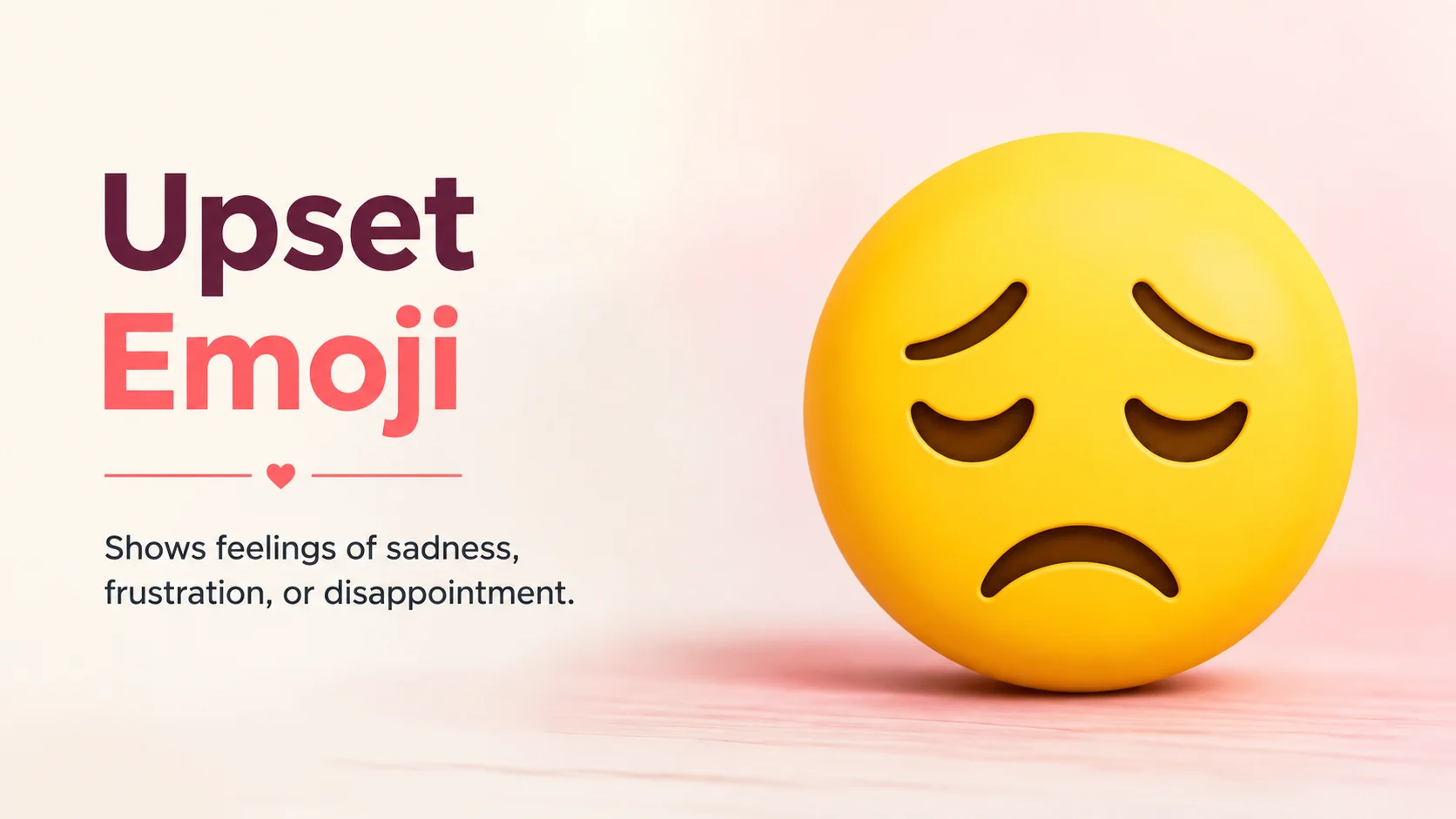
The 😟 emoji is officially called Worried Face. It commonly expresses worry, concern, sadness, disappointment, stress, or feeling upset. It usually has a more concerned and tense feeling than a simple sad face, but its exact meaning depends on the message around it. Unicode identifies 😟 as Worried Face, while Emojipedia describes it as conveying moderately sad or tense emotions such as concern, anxiety, disappointment, and unhappiness.
When someone sends 😟, they are usually showing that something has made them worried, uncomfortable, sad, or upset. The raised or furrowed eyebrows and downturned mouth give the emoji a concerned expression rather than an extremely sad one.
The upset emoji can be useful when words like “I’m worried,” “That made me sad,” or “I don’t feel good about this” seem too long. It can communicate emotional discomfort in a simple way, especially when the sender wants to show that something is bothering them.
Context makes a big difference. A message such as “I hope everything is okay 😟” sounds caring and concerned, while “I can’t believe you did that 😟” may communicate disappointment or hurt. The emoji does not automatically indicate one specific emotion.
What Does the 😟 Upset Emoji Mean?
The official Unicode name for 😟 is Worried Face, not “Upset Face.” Unicode lists the character as U+1F61F.
In everyday texting, people may use 😟 to express:
- Worry
- Concern
- Feeling upset
- Mild sadness
- Disappointment
- Nervousness
- Emotional discomfort
- Unhappiness
The expression generally feels more concerned than angry. It can communicate that something is bothering the sender without making the reaction extremely dramatic.
For example:
“I don’t know what I’m going to do 😟”
Here, 😟 suggests worry or uncertainty.
By contrast:
“That really hurt my feelings 😟”
In this context, the same emoji can communicate sadness or emotional hurt.
Why Do People Use 😟 in Texts?
One reason 😟 works well in messages is that it adds emotional tone without requiring a long explanation.
Compare:
“I hope you’re okay.”
with:
“I hope you’re okay 😟”
The emoji adds a visible sense of concern. It can make the message feel more emotionally aware and supportive.
People may also use 😟 when they are unsure how strongly to express a negative feeling. It can be softer than an angry emoji and less intense than a crying emoji.
😟 Meaning in Text Messages
The meaning of 😟 can change depending on the words around it.
Concern
“You haven’t replied all day 😟”
Likely meaning: The sender is worried about you.
Disappointment
“I thought you were coming 😟”
Likely meaning: The sender feels disappointed or slightly hurt.
Sadness
“I really miss those days 😟”
Likely meaning: The emoji adds a feeling of sadness or longing.
Nervousness
“I have to give my presentation tomorrow 😟”
Likely meaning: The sender is worried or nervous about what is coming.
The emoji itself does not tell you exactly which emotion is intended. The surrounding words provide the strongest clue.
Is 😟 a Sad Emoji or a Worried Emoji?
It can be both, but Worried Face is its official name.
Unicode places 😟 among face emojis associated with concern and negative emotions, while Emojipedia describes it as covering a range of moderately sad or tense feelings, including concern, anxiety, disappointment, and unhappiness.
A simple way to think about the difference is:
😟 = “Something is bothering me, and I’m concerned.”
😢 = “I’m sad and may be crying.”
That makes 😟 useful when the emotion is uncomfortable or unhappy but does not necessarily involve tears.
What Does 😟 Mean From Someone?
If someone sends you 😟, the most likely interpretation depends on what you were discussing.
They might be:
- Worried about a situation
- Concerned about you
- Disappointed by something
- Feeling emotionally hurt
- Nervous about what will happen
- Reacting sympathetically to something sad
For example:
You: “I didn’t do well on my test.”
Them: “Oh no 😟”
This probably communicates sympathy or concern.
But:
You: “I’m thinking about canceling our plans.”
Them: “😟”
could suggest disappointment.
It is better to interpret the full message than assume the emoji has a fixed meaning.
Is 😟 a Flirty Emoji?
😟 is not normally considered a flirting emoji. Its official identity and common interpretations center on worry, concern, sadness, and related negative emotions.
Someone could use it in any type of conversation, including one with a close friend or romantic partner, but that does not make the emoji itself romantic.
For example:
“I wish you were here 😟”
could sound emotionally affectionate because of the words, but the romantic meaning comes from the complete message rather than from 😟 alone.
Can 😟 Be Used Sarcastically?
Yes, but sarcasm depends heavily on context.
For example:
“Oh no, you have to eat pizza again 😟”
The sender may be joking because the situation is not genuinely upsetting.
Another example:
“You only got the biggest piece? 😟”
could be playful teasing.
Without the surrounding words, it is difficult to know whether 😟 is sincere or sarcastic. When the conversation is clearly humorous, the emoji can become part of the joke.
Is 😟 Rude?
Usually, 😟 is not inherently rude. It generally communicates concern, disappointment, or unhappiness rather than hostility.
However, it can feel judgmental in certain situations.
For example:
“You really chose that outfit? 😟”
Depending on the relationship and tone, this could sound critical.
On the other hand:
“You have to work all weekend? 😟”
is more likely to sound sympathetic.
The same emoji can therefore feel caring or critical depending on the sentence.
Related Emojis and Their Meanings
| Emoji | Official Name | Common Meaning | Tone | Where or When It Is Used |
|---|---|---|---|---|
| 😟 | Worried Face | Worry, concern, mild sadness | Concerned, uneasy | Stressful news, uncertainty, emotional concern |
| 😔 | Pensive Face | Sadness, reflection, regret | Quiet, sad | Disappointment, missing someone, thoughtful moments |
| 😞 | Disappointed Face | Disappointment, sadness, regret | Hurt, downcast | Bad news, unmet expectations, personal disappointment |
| 🙁 | Slightly Frowning Face | Mild sadness or dissatisfaction | Softly negative | Minor problems, disappointment, unhappy reactions |
| ☹️ | Frowning Face | Sadness or unhappiness | Clearly negative | Stronger frowning reactions and unhappy situations |
| 😢 | Crying Face | Sadness, hurt, crying | Emotional, sad | Difficult news, emotional messages, sympathy |
| 😥 | Sad but Relieved Face | Sadness mixed with relief | Emotional, relieved | Difficult situations that ended better than expected |
| 😰 | Anxious Face with Sweat | Anxiety, nervousness, worry | Tense, anxious | Stressful situations, uncertainty, nervous reactions |
| 🥺 | Pleading Face | Vulnerability, pleading, wanting sympathy | Soft, emotional | Asking for something, affection, emotional reactions |
The closest matches to 😟 are 😔, 😞, 🙁, and 😰, but each emphasizes something different. 😟 leans toward worry and concern, 😔 feels more reflective or sad, 😞 emphasizes disappointment, and 😰 adds stronger anxiety or nervousness.
If the person is actually crying or describing emotional pain, 😢 may communicate that more clearly. If they are nervous about something happening, 😰 may be a better fit.
😟 vs. 😔: What’s the Difference?
The difference is subtle but useful.
😟 Worried Face generally suggests concern, worry, or uneasiness.
😔 Pensive Face usually feels quieter and more reflective, often suggesting sadness, regret, or thoughtful disappointment.
Compare:
“My interview is tomorrow 😟”
This sounds worried.
“I wish things had turned out differently 😔”
This sounds more reflective and sad.
😟 vs. 😞: What’s the Difference?
😟 tends to focus on worry or concern, while 😞 is more strongly associated with disappointment and sadness.
“I don’t know if everything will work out 😟”
This suggests uncertainty and worry.
“I really thought I would get the job 😞”
This suggests disappointment.
Both can communicate that someone is upset, but the reason behind the feeling is different.
😟 vs. 😢: What’s the Difference?
😟 can mean:
“I’m worried about this.”
😢 can mean:
“This is making me genuinely sad.”
If the main emotion is concern, 😟 is usually more precise. If the main emotion is sadness or hurt, 😢 may fit better.
Text Message Examples Using 😟
Example 1: Concern
“You said you weren’t feeling well 😟”
Meaning: The sender is showing concern.
Example 2: Disappointment
“You can’t make it tonight? 😟”
Meaning: The sender is disappointed but not necessarily angry.
Example 3: Nervousness
“I have my driving test tomorrow 😟”
Meaning: The sender is worried about the upcoming event.
Example 4: Sympathy
“That’s really difficult to hear 😟”
Meaning: The emoji adds a sympathetic, concerned tone.
Example 5: Playful Use
“You finished all the cookies without me? 😟”
Meaning: The sender may be jokingly pretending to be upset.
How to Respond to 😟
If someone sends 😟 because they are worried, a reassuring response may work well:
“Don’t worry, everything is okay.”
If you think they are joking:
“😂 Okay, okay, I’ll save you some next time.”
A simple question can prevent you from reading too much into the emoji.
Common Misunderstandings About 😟
😟 Does not always mean sadness
It can communicate worry, anxiety, concern, disappointment, or general unhappiness.
😟 does not automatically mean something serious happened
Someone may use it for a small inconvenience or playful complaint.
😟 is not the same as 😢
😢 has a stronger association with crying and sadness, while 😟 focuses more on concern and uneasiness.
😟 does not prove someone is angry
The expression is concerned rather than openly angry. If anger is intended, the surrounding words usually make that clearer.
😟 does not automatically indicate romantic feelings
If someone sends it in a personal conversation, the relationship context matters more than the emoji itself.
Official Emoji Details
The official Unicode name of 😟 is Worried Face, and its code point is U+1F61F. Unicode lists the emoji under the face-concerned group.
Worried Face was approved as part of Unicode 6.1 in 2012 and added to Emoji 1.0 in 2015, according to Emojipedia.
Different platforms can draw emoji faces with small visual differences. The basic idea of 😟 remains a worried or concerned facial expression.
FAQs
What is the official name of 😟?
The official Unicode name is Worried Face. Its Unicode code point is U+1F61F.
What does the upset emoji mean in texting?
The upset emoji 😟 commonly expresses worry, concern, sadness, disappointment, nervousness, or unhappiness. The exact meaning depends on the conversation.
Is 😟 the upset face emoji?
People may call 😟 an “upset emoji,” but its official name is Worried Face. “Upset” is a common description rather than its official Unicode name.
What does 😟 mean from a friend?
It often means the friend is worried, concerned, disappointed, or feeling unhappy about something. The surrounding message gives the best clue.
Is 😟 a sad emoji?
It can express sadness, but it more specifically emphasizes worry or concern. Unicode officially calls it Worried Face.
Conclusion
The 😟 emoji is officially called Worried Face, but people may use it to express a wider range of upset feelings, including concern, disappointment, nervousness, sadness, and unhappiness.
Its meaning depends heavily on context. A message about an upcoming test may make 😟 mean nervousness, while a message about canceled plans may make it express disappointment. It can also be used playfully when someone pretends to be upset about something minor.
When choosing between similar emojis, focus on the emotion you want to emphasize: 😟 for worry, 😔 for quiet sadness, 😞 for disappointment, 😢 for stronger sadness, and 😰 for anxiety or nervousness.
Discover More Related Articles:
