Quick Answer|
The hungry emoji 😋 usually represents an appetite for food, enjoyment of something delicious, or satisfaction after thinking about a tasty meal. Its official Unicode name is Face Savoring Food, and Unicode includes keywords such as “hungry,” “delicious,” “eat,” “tasty,” and “yummy.” It can also be used playfully to show that something looks appealing or desirable.
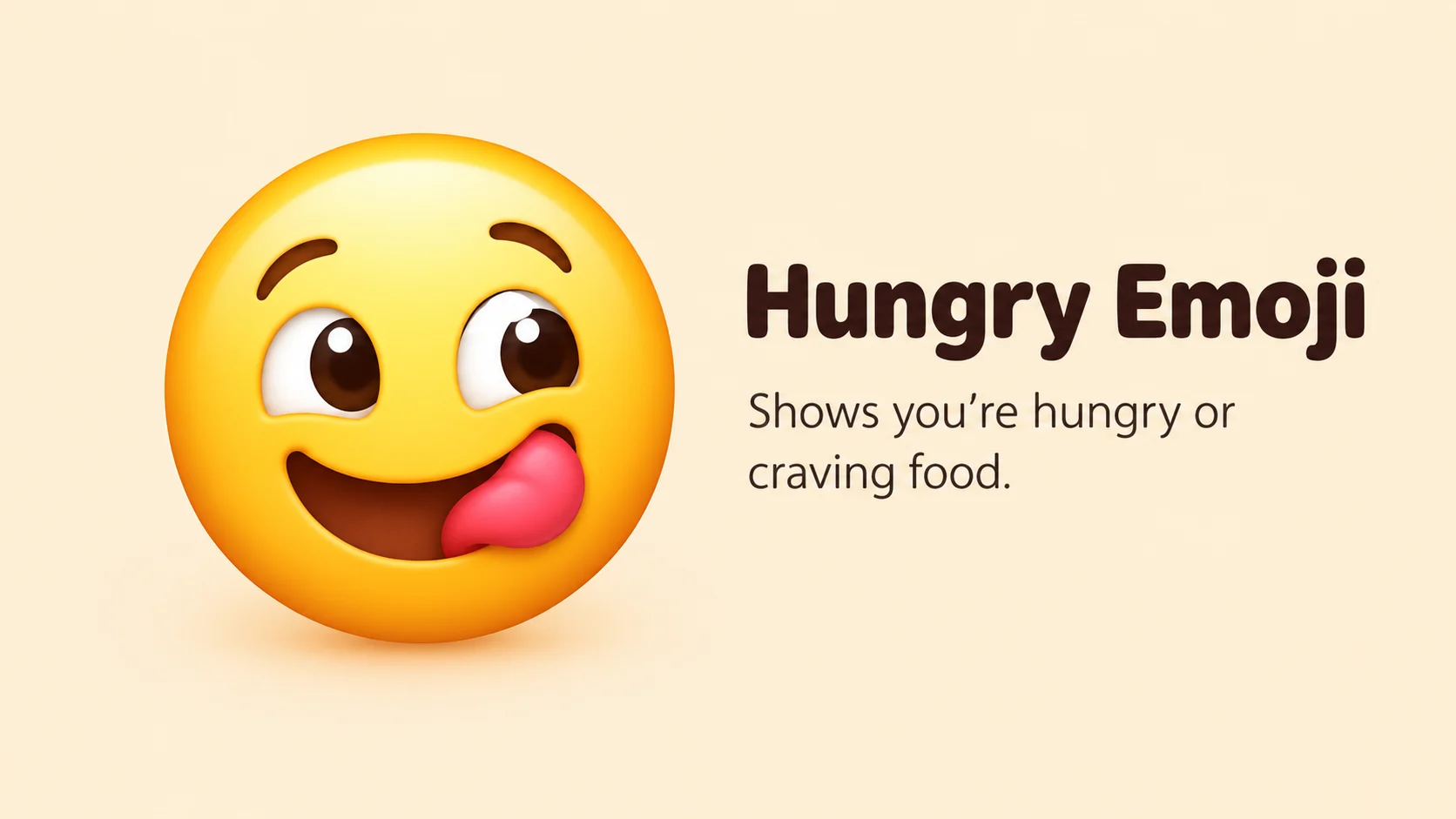
The 😋 emoji shows a smiling face with smiling eyes and a tongue sticking out from one side of its mouth. That expression makes it especially useful when talking about food, cravings, cooking, restaurants, desserts, or something that looks delicious.
The hungry emoji 😋 is commonly used when someone wants to express hunger, appetite, or enjoyment of tasty food. Although people often call it the “hungry emoji,” its official name is Face Savoring Food. The expression looks like someone happily tasting or savoring something delicious.
In texting, 😋 can appear after a message about pizza, burgers, dessert, dinner, or a favorite meal. Someone might also use it after seeing a food photo or when talking about what they want to eat. In those situations, it usually has a cheerful and playful tone rather than simply saying, “I am hungry.”
Context can broaden the meaning. 😋 may sometimes communicate that something is appealing or satisfying even when the subject is not literally food. Because of that, the emoji can occasionally feel teasing or playful. The surrounding words are the best guide to what the sender intends.
What Does the Hungry Emoji 😋 Mean?
The 😋 emoji most commonly expresses appetite, enjoyment of food, or appreciation for something delicious.
People may use it to communicate:
- “That looks delicious.”
- “I want to eat that.”
- “I am hungry.”
- “That food was really good.”
- “Yum!”
- “I am craving that.”
- “That sounds satisfying.”
Unicode’s emoji list specifically includes hungry, delicious, eat, full, tasty, yum, and yummy among the keywords associated with Face Savoring Food.
Is 😋 Actually a Hungry Emoji?
Yes, hungry is one of the Unicode keywords associated with 😋, but the emoji is not limited to hunger.
Its official name, Face Savoring Food, points more broadly to enjoying or anticipating something tasty. Someone can use 😋 before eating because they are hungry, while another person might use it after eating to show that the food was delicious.
For example:
“What should we order? 😋”
This could express hunger or excitement about choosing food.
But:
“That cheesecake was amazing 😋”
is more clearly about enjoying the food.
What Does 😋 Mean in Texting?
In texts, 😋 is often a quick way to say “yum,” “that looks good,” or “I want some.”
For example:
“Mom is making tacos tonight 😋”
Likely meaning: The sender is looking forward to eating tacos.
“Look at this pizza 😋”
Likely meaning: The pizza looks delicious and appealing.
“That cake was so good 😋”
Likely meaning: The sender enjoyed the cake.
The emoji can make an ordinary food-related message feel more expressive and playful.
What Does 😋 Mean From Someone?
When someone sends you 😋, look at what they are reacting to.
If you send a picture of food and they reply:
“That looks amazing 😋”
they are probably expressing appetite or appreciation for the food.
If they say:
“Save me some 😋”
the emoji adds a playful sense of wanting the food.
If the conversation is not about food, the interpretation becomes less certain. 😋 can suggest that the person finds something appealing or satisfying, but you should not automatically assume a romantic meaning.
Can 😋 Mean “Yummy”?
Yes. “Yummy” is one of the Unicode keywords associated with Face Savoring Food.
For example:
“Homemade cookies 😋”
can simply mean:
“These look yummy.”
Similarly:
“Best pasta ever 😋”
can express enjoyment and satisfaction with the food.
Does 😋 Mean “I’m Hungry”?
It can.
Someone might send:
“I haven’t eaten all day 😋”
Here, the emoji can reinforce the idea of wanting food.
But 😋 does not necessarily mean the sender is physically hungry. It may simply mean that food looks delicious or that they enjoyed eating it.
That distinction matters because hunger, craving, and food enjoyment are related but not identical ideas.
😋 and Food Conversations
The emoji works especially naturally with messages about:
- Breakfast
- Lunch
- Dinner
- Desserts
- Snacks
- Recipes
- Cooking
- Restaurants
- Favorite foods
- Food photos
- Cravings
- Delicious meals
Examples:
“Pizza for dinner 😋”
Shows excitement or appetite.
“I finally made the cookies 😋”
Suggests the cookies look or taste delicious.
“We’re getting ice cream! 😋”
Shows anticipation and enjoyment.
Can 😋 Be Flirty?
Sometimes, but 😋 is not automatically a flirting emoji.
Its primary food-related meaning is much more straightforward. If the conversation is about dinner, dessert, or a meal, there is usually no reason to interpret it romantically.
In a conversation about a person rather than food, however, the emoji can sometimes be used playfully to suggest that someone or something is appealing. Emojipedia notes that 😋 can also be used for the idea of someone being “a snack,” so context matters.
The emoji by itself does not prove attraction or romantic interest.
Can 😋 Be Used for Something Other Than Food?
Yes.
Although food is its clearest use, 😋 can sometimes communicate that something is appealing, satisfying, or desirable.
For example:
“That new gaming setup 😋”
could jokingly suggest that the person really likes the setup.
Similarly:
“That weekend sounds perfect 😋”
could express anticipation or strong appeal.
These uses are more playful and depend heavily on the surrounding conversation.
Emojis Similar to the Hungry Emoji 😋
| Emoji | Official Name | Common Meaning | Tone | Where or When It Is Used |
|---|---|---|---|---|
| 😋 | Face Savoring Food | Hunger, tasty food, enjoyment | Playful, cheerful | Food photos, meals, cravings, recipes |
| 🤤 | Drooling Face | Strong craving or desire | Eager, exaggerated | Appetizing food or something highly desirable |
| 😛 | Face with Tongue | Playfulness, silliness, teasing | Playful, cheeky | Jokes, teasing, casual messages |
| 😜 | Winking Face with Tongue | Mischief, joking, playful teasing | Cheeky, mischievous | Jokes and playful conversations |
| 😝 | Squinting Face with Tongue | Exaggerated silliness or disgust | Goofy, playful | Jokes, teasing, exaggerated reactions |
| 🥵 | Hot Face | Heat, being overheated, or sometimes intense reaction | Intense, dramatic | Hot weather or strong reactions |
| 🍕 | Pizza | Pizza or a pizza meal | Casual, food-focused | Dinner plans, food posts, cravings |
| 🍔 | Hamburger | Burger or fast-food meal | Casual, appetizing | Meal plans and food conversations |
The closest comparisons are 😋 and 🤤. Both can appear in conversations about food, but 🤤 is more strongly associated with craving or desire, while 😋 focuses more on savoring or enjoying food. Emojipedia specifically distinguishes 🤤 from 😋 and describes 🤤 as commonly conveying desire or craving, including reactions to appetizing food.
😛 is different because it is primarily a playful tongue-out expression rather than a food-specific face. 😜 and 😝 push that playful or goofy feeling further. Unicode’s current emoji list gives 😋 the food-related keywords that make it especially distinct from these tongue-out faces.
😋 vs. 🤤: What’s the Difference?
This is one of the most common questions about the hungry emoji.
😋 Face Savoring Food generally suggests:
- Delicious food
- Enjoying a meal
- Appetite
- “Yum”
- Food cravings
🤤 Drooling Face can suggest:
- Strong craving
- Desire for food
- Anticipation
- Something looking extremely appealing
🤤 can also be used for strong desire toward something other than food, while 😋 is more naturally connected to eating and savoring food.
A simple example:
“That burger looks good 😋”
feels like appreciation of the food.
“I NEED that burger 🤤”
feels more like an exaggerated craving.
😋 vs. 😛: What’s the Difference?
😋 is specifically associated with savoring food, while 😛 is the Face with Tongue and is more generally playful.
Compare:
“This dessert is amazing 😋”
The meaning is clearly related to food.
“Just kidding 😛”
Here, the tongue-out emoji makes the message playful rather than food-related.
If your message is about something delicious, 😋 is usually the more direct choice.
How to Use 😋 in a Text
Use 😋 when you want to make a food-related message more expressive.
Talking about a meal
“We’re having tacos tonight 😋”
Sharing a food photo
“Homemade brownies 😋”
Saying something was delicious
“That pasta was incredible 😋”
Talking about a craving
“I could really go for pizza right now 😋”
Reacting to someone’s food
“That looks so good 😋”
These examples show different uses without assuming that the emoji always means exactly the same thing.
How to Respond to 😋
If someone sends 😋 about food, a natural response depends on the conversation.
they like the food:
“Right? It was so good!”
If they want some:
“I’ll save you a piece 😄”
If You’re deciding what to eat:
“Pizza or tacos?”
You do not need to respond with another food emoji unless it fits naturally.
Common Misunderstandings About 😋
One common mistake is assuming that 😋 always means “I am hungry.” It can also mean that something tastes good or looks delicious.
Another mistake is treating 😋 as automatically romantic. It can sometimes have a playful or suggestive interpretation, but a food-related conversation usually gives it a simple food meaning.
It is also easy to confuse 😋 with 🤤. The two can overlap when discussing cravings, but their expressions and common uses are different.
The best way to interpret 😋 is to consider what was being discussed immediately before the emoji.
When Should You Use the Hungry Emoji?
😋 is a good choice when you want to communicate:
- “Yum!”
- “That looks delicious.”
- “I want to eat that.”
- “I’m enjoying this food.”
- “I’m craving that.”
- “That meal sounds great.”
It works especially well with food pictures, restaurant conversations, recipes, dinner plans, and casual messages.
Copy and Paste the Hungry Emoji
😋
You can copy 😋 and use it in texts, captions, comments, messages, recipes, or food-related posts.
Official Name and Unicode Details
The official Unicode name for 😋 is Face Savoring Food. Its code point is U+1F60B. Unicode lists food-related keywords including delicious, eat, full, hungry, savor, tasty, yum, and yummy.
Emojipedia notes that Face Savoring Food was approved as part of Unicode 6.0 in 2010 and added to Emoji 1.0 in 2015. It also notes that the emoji existed on early Japanese emoji keyboards before it was standardized in Unicode.
The artwork can vary slightly between platforms. For example, the direction of the tongue can differ between designs, while the overall expression remains recognizable as Face Savoring Food.
FAQs
What does 😋 mean?
😋 is officially called Face Savoring Food. It commonly represents delicious food, appetite, hunger, cravings, or enjoyment of a meal.
Is 😋 the hungry emoji?
😋 is commonly called the hungry emoji because Unicode includes hungry among its keywords. Its official name, however, is Face Savoring Food.
What does 😋 mean from a girl or guy?
The emoji does not have a different official meaning based on the sender’s gender. The conversation and surrounding words are more useful for understanding the intended tone.
Does 😋 mean flirting?
Not necessarily. It is primarily associated with food and savoring something delicious. In some contexts it can be playful or suggestive, but the emoji alone does not establish romantic interest.
What does 😋 mean after a food picture?
It usually means the food looks delicious, appealing, or makes the sender want to eat it.
Conclusion
The hungry emoji 😋 is officially called Face Savoring Food and is mainly used for appetite, delicious food, cravings, and enjoyment of eating. It can mean “yum,” “that looks good,” or “I want some,” depending on the message around it.
While 😋 can occasionally have a playful or broader meaning, food-related context is usually the clearest interpretation. When comparing it with 🤤, 😛, 😜, or other emojis, remember that small differences in facial expression can change the tone. The surrounding conversation always provides the most useful clue.
Discover More Related Articles:

6 thoughts on “Hungry Emoji | Food, Cravings & More In 2026😋”