Quick Answer
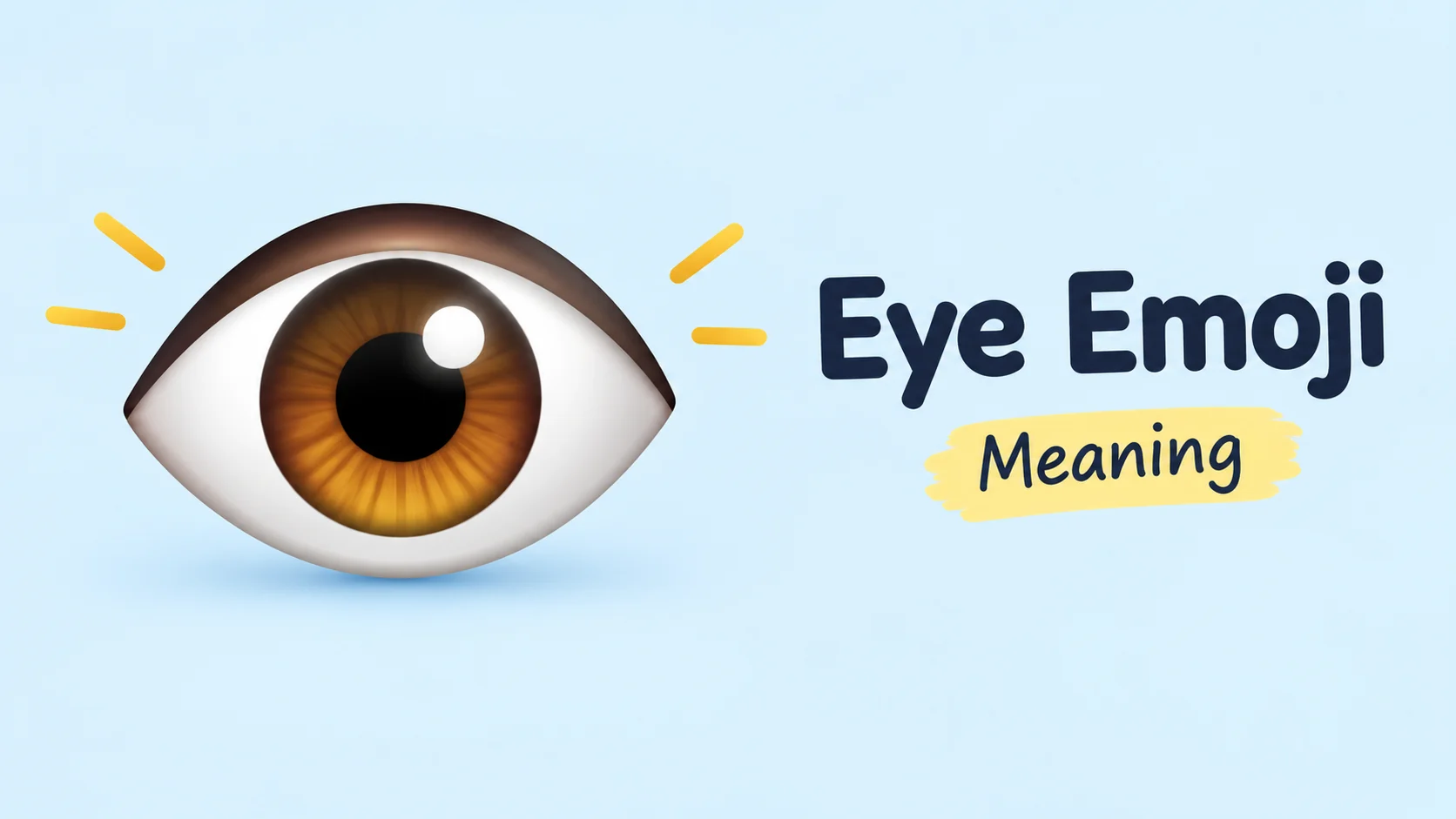
The eye emoji 👁️ usually means seeing, watching, noticing, paying attention, or curiosity. In texts and social media, it can also suggest “I’m watching,” “I saw that,” or “Tell me more.” Depending on the conversation, it may feel curious, playful, suspicious, supportive, or even slightly flirty. The exact meaning depends on the surrounding words and the relationship between the people communicating.
The eye emoji 👁️ is a simple but flexible symbol that can communicate attention, observation, curiosity, or the idea of watching something. Someone might send it after hearing interesting news, noticing a surprising comment, or wanting to show that they are paying attention.
In texting, the eye emoji can also work as a reaction. A person may use 👁️ when they want to say “I see you,” “I noticed that,” or “What’s going on here?” Its meaning can shift from neutral to playful depending on the message around it.
Because the emoji can suggest looking or watching, people sometimes interpret 👁️ as mysterious, suspicious, teasing, or flirty. However, the emoji itself does not guarantee any of those meanings. Context is what gives it its specific tone.
What Does the Eye Emoji 👁️ Mean?
The 👁️ Eye emoji commonly represents the act of seeing or looking. It can be used literally, but in everyday messages it often carries a broader conversational meaning.
Someone might use it to express:
- “I see.”
- “I noticed that.”
- “I’m watching.”
- “I’m paying attention.”
- “That caught my attention.”
- “Tell me what happened.”
- “I’m curious.”
- “I saw what you did.”
For example:
“I saw your post 👁️”
Here, the emoji reinforces the idea of noticing or watching.
In another message:
“Wait… what happened 👁️”
The same emoji becomes more curious and playful.
Eye Emoji Meaning in Text
In texting, 👁️ is often used as a reaction rather than a literal reference to an eye.
For example:
“She just announced that she’s moving 👁️”
The emoji can suggest that the sender is interested and wants to hear more.
Another example:
“You deleted that message pretty quickly 👁️”
Here, 👁️ can make the message sound observant or teasing, as if the sender noticed something.
The emoji can therefore add a sense of attention without requiring the sender to explain their reaction directly.
Eye Emoji Emotional Tone
The eye emoji does not have one fixed emotional tone. It can be:
Curious:
“Okay, now I need the full story 👁️”
Observant:
“I noticed what you did 👁️”
Playful:
“Interesting choice 👁️😂”
Suspicious:
“Something feels different today 👁️”
Attentive:
“I’m listening 👁️”
Teasing:
“Oh, so that’s what we’re doing now 👁️”
The words around the emoji usually tell you which interpretation makes the most sense.
What Does 👁️ Mean From Someone?
If someone sends you 👁️ by itself, they may be signaling that they are watching, noticing, or curious about something.
For example, if you post:
“I have some big news…”
Someone might reply:
“👁️”
This usually works like “I’m listening” or “Okay, tell me.”
If you say:
“Guess who I ran into today?”
and someone responds:
“👁️”
they may be showing curiosity and asking you to continue.
A single emoji can be intentionally vague, so it is better to consider the previous messages before deciding exactly what the sender meant.
Is the Eye Emoji Flirty?
The 👁️ emoji can sometimes appear in a flirty conversation, but it is not automatically a flirting emoji.
For example:
“You looked really good in that picture 👁️”
The surrounding message gives the emoji a more suggestive or playful tone.
But:
“I saw your new post 👁️”
could simply mean that someone noticed your post.
The emoji alone does not prove romantic interest. If the conversation already has a clearly playful or romantic tone, 👁️ may add to that tone.
Can the Eye Emoji Be Sarcastic?
Yes. 👁️ can be used sarcastically when the sender wants to emphasize that they noticed something unusual.
For example:
“You said you weren’t hungry, but you ordered fries 👁️”
The emoji adds a teasing “I noticed that” feeling.
It can also be paired with 😂 or other reaction emojis to make the sarcasm more obvious:
“Interesting decision 👁️😂”
Here, the message is likely playful rather than serious criticism.
Eye Emoji Meaning in Relationships
In a relationship or close friendship, 👁️ can be used to show attention or playful curiosity.
For example:
“Who were you talking to? 👁️”
Depending on the relationship and tone, this could be playful curiosity or genuine questioning.
Another example:
“I saw what you posted 👁️❤️”
The added heart changes the emotional tone and may make the message feel warmer.
Still, the eye emoji itself does not automatically indicate jealousy, suspicion, attraction, or affection. Those interpretations come from the full conversation.
Eye Emoji Meaning on Social Media
On social media, 👁️ is often used as a quick reaction to something interesting, surprising, or attention-grabbing.
People may use it under a post or comment to communicate ideas such as:
- “I noticed this.”
- “I’m paying attention.”
- “This is interesting.”
- “I want to know more.”
- “I saw that.”
- “Something is happening here.”
For example:
“New details coming soon 👁️”
A reply of 👁️ can communicate curiosity or anticipation.
The same emoji under a controversial or surprising post may instead suggest that the person is watching the situation unfold.
👁️ vs. 👀: What Is the Difference?
The 👁️ Eye emoji shows a single eye, while 👀 Eyes shows a pair of eyes.
Both can communicate looking, watching, or noticing, but they often create slightly different impressions.
👁️ can feel more singular, direct, mysterious, or stylized.
👀 often feels more like “I’m watching,” “I see that,” or “Tell me more.”
For example:
“I saw what you did 👁️”
can feel more pointed or playful.
“I saw what you did 👀”
can feel more like a familiar reaction of noticing something.
Neither has one guaranteed meaning. The surrounding message still matters.
Emojis Similar to the Eye Emoji
| Emoji | Official Name | Common Meaning | Tone | Where or When It Is Used |
|---|---|---|---|---|
| 👁️ | Eye | Seeing, noticing, watching | Neutral, curious, mysterious | Texts, reactions, observations |
| 👀 | Eyes | Watching, noticing, curiosity | Curious, playful | Comments, gossip, reactions |
| 👁️🗨️ | Eye in Speech Bubble | Witnessing, observation, reporting | Serious, attentive | Discussions about seeing or reporting something |
| 🫣 | Face with Peeking Eye | Shyness, nervous curiosity, hiding while looking | Shy, playful | Awkward or embarrassing situations |
| 🤔 | Thinking Face | Thinking, questioning, uncertainty | Thoughtful, curious | Questions and doubtful reactions |
| 🧐 | Face with Monocle | Careful observation, examination | Curious, analytical | Suspicious or detailed reactions |
| 😳 | Flushed Face | Surprise, embarrassment, nervousness | Embarrassed, surprised | Awkward or unexpected moments |
| 🙈 | See-No-Evil Monkey | Avoiding something, embarrassment, playful discomfort | Shy, humorous | Awkward jokes or embarrassing situations |
The biggest comparison is between 👁️ and 👀. Both can show attention, but 👀 often feels more like actively watching or reacting to something. 👁️ can feel more direct or visually dramatic.
🫣 is better when the idea is “I’m looking, but I’m shy about it,” while 🧐 suggests careful observation. 🤔 focuses more on thinking or questioning than simply looking.
Eye Emoji Examples in Text Messages
Showing curiosity
“Okay, you have my attention 👁️”
Likely meaning: The sender wants to hear more.
Noticing something
“I noticed that 👁️”
Likely meaning: The sender is pointing out that they saw something.
Playful teasing
“You really thought I wouldn’t notice 👁️😂”
Likely meaning: The sender is jokingly calling attention to something.
Showing interest
“Wait, tell me everything 👁️”
Likely meaning: The sender is interested in the story.
Slightly suspicious
“That’s a very specific excuse 👁️”
Likely meaning: The sender is playfully questioning the explanation.
Can 👁️ Mean “I’m Watching You”?
Yes, in some contexts, 👁️ can communicate “I’m watching” or “I’m keeping an eye on this.”
For example:
“Don’t think I didn’t notice 👁️”
Here, the emoji reinforces the idea of observation.
However, sending 👁️ alone does not necessarily mean someone is literally monitoring you. It can simply be a playful way to say that they noticed something.
Can 👁️ Mean “I See You”?
Yes. The eye emoji can be used to communicate “I see you” or “I noticed you.”
For example:
“I see you 👁️”
This could be encouraging, teasing, or simply observational depending on the conversation.
If someone sends the emoji after you accomplish something, it may mean they noticed your effort. If they send it after a suspicious statement, it may sound more teasing.
Common Misunderstandings About the Eye Emoji
The most common mistake is assuming that 👁️ always has a hidden or romantic meaning.
It does not.
An eye emoji can be a simple reaction to something interesting. It can also express curiosity, attention, humor, or mild suspicion.
Another misunderstanding is treating 👁️ and 👀 as completely interchangeable. They are closely related, but their visual differences can affect the tone. 👀 often feels more like active watching, while 👁️ can feel more direct or symbolic.
The safest approach is to read the emoji together with the actual words.
How to Respond to the Eye Emoji
Your response should match the context.
Someone is curious
“Haha, what do you want to know? 😂”
If they noticed something
“Yep, you caught that 👀”
They’re teasing you
“I knew you were going to notice 😂”
If you want to keep it mysterious
“You’ll find out soon 👁️”
A simple clarification can be better than trying to guess the sender’s intention.
Eye Emoji Copy and Paste
Here are some eye-related emojis you can copy and paste:
👁️ 👀 🫣 🧐 😳 🙈
For different moods:
Curious: 👁️👀
Playful: 👁️😂
Watching: 👀
Shy curiosity: 🫣
Careful observation: 🧐
These combinations are informal ways to express different reactions. They do not create new official emoji meanings.
Official Eye Emoji Facts
The 👁️ emoji is officially named Eye in the Unicode emoji standard.
The character represents an eye and can be used for concepts connected with seeing, looking, observing, or attention. Its exact visual design can vary slightly between platforms, but the basic concept remains an eye.
Emoji names and characters are standardized through Unicode, while platforms can create their own visual artwork for those characters. This is why an emoji can look somewhat different on different devices while still representing the same Unicode character.
FAQs
What does the 👁️ emoji mean?
The 👁️ emoji usually represents seeing, looking, noticing, watching, or paying attention. Its tone can become curious, playful, suspicious, or teasing depending on context.
What does 👁️ mean from a girl or guy?
The emoji does not have a different official meaning based on the sender’s gender. Look at the conversation, wording, and relationship to understand the intended tone.
Does 👁️ mean flirting?
It can appear in a flirty conversation, but 👁️ does not automatically mean flirting. The surrounding message provides the romantic or playful context.
What does 👁️ mean on Instagram or social media?
It can show that someone noticed a post, is curious about something, or is watching a situation unfold. The exact meaning depends on the post and conversation.
What is the difference between 👁️ and 👀?
👁️ is the single Eye emoji, while 👀 is the Eyes emoji. Both can express looking or noticing, but 👀 often gives a stronger sense of watching or paying attention.
Conclusion
The eye emoji 👁️ usually communicates seeing, noticing, watching, attention, or curiosity. In everyday texting, it can be a simple reaction, a playful “I noticed that,” or a way to show interest in what someone is saying.
Its meaning can change with context. It may feel curious, funny, teasing, suspicious, supportive, or even flirty when used alongside clearly romantic wording. However, the emoji by itself does not prove any particular intention.
If you are unsure what someone meant by 👁️, focus on the surrounding words and the overall conversation rather than assigning a hidden meaning to the emoji alone.
Discover More Related Articles:
