Quick Answer
The Russian flag emoji 🇷🇺 represents Russia and its national flag, which features three horizontal stripes: white, blue, and red. People commonly use it in messages, social media posts, travel discussions, sports conversations, and content related to Russian culture, language, or national identity. Its meaning depends on context, and using the emoji does not automatically indicate a person’s political views or support for a government.
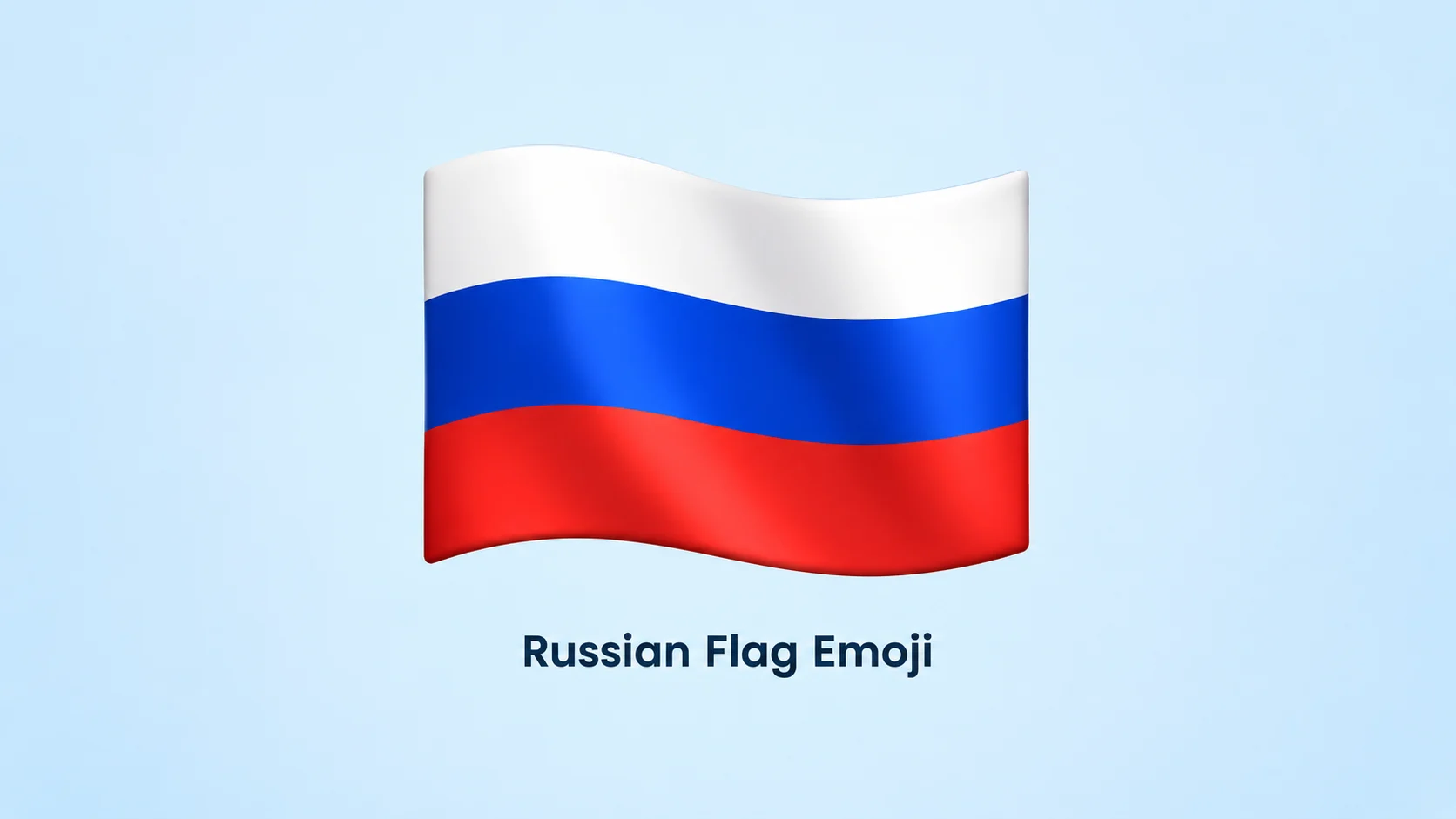
The Russian flag emoji 🇷🇺 is the digital representation of Russia’s national flag. It displays three horizontal stripes in white, blue, and red, arranged from top to bottom. You may see it in conversations about Russian culture, geography, history, travel, language, sports, and international events.
In texting and online conversations, people often use 🇷🇺 to identify Russia, indicate a connection to the country, or label Russian-language content. For example, someone learning Russian might add the flag to a language-learning post, while a traveler could use it in a caption about visiting Moscow or Saint Petersburg.
However, the Russian flag emoji does not have one meaning in every situation. It can represent national identity, cultural interest, a location, or a sports team, while political discussions may give it a more sensitive meaning. To understand what someone intends, consider the accompanying words and the overall conversation rather than making assumptions based on the flag alone.
What Does the Russian Flag Emoji 🇷🇺 Mean?
The Russian flag emoji 🇷🇺 primarily represents the country of Russia. It is a national flag emoji rather than a facial expression or an emotion-based symbol.
Depending on the context, it can communicate several things:
- Country identification: Showing that a place, person, event, or topic is connected to Russia.
- Russian culture: Referring to Russian traditions, food, music, literature, or history.
- Language: Identifying Russian-language content or language-learning material.
- Travel: Talking about visiting Russia or exploring Russian cities.
- Sports: Representing a Russian team, athlete, or sporting discussion.
- National identity: Expressing a personal or cultural connection to Russia.
- News and international affairs: Identifying Russia as the country being discussed.
The most reliable starting point is its direct meaning: Russia. More specific interpretations depend on the message surrounding it.
What Do the Colors of the Russian Flag Mean?
The Russian national flag has three horizontal stripes: white at the top, blue in the middle, and red at the bottom.
These colors are sometimes associated with qualities such as peace, loyalty, courage, or strength in popular explanations. However, such interpretations should not be treated as one universally established official meaning for each stripe.
The flag’s defining feature is its three-color design. When you see 🇷🇺 in a message, the colors help identify the Russian national flag rather than communicate three separate emotions.
What Does 🇷🇺 Mean in Texting?
In texting, 🇷🇺 usually identifies Russia or something associated with the country. Its meaning is often straightforward when it appears next to a location, language, or cultural reference.
Here are some hypothetical examples:
“My next trip might be to Russia 🇷🇺”
Likely meaning: The sender is talking about traveling to Russia.
“I’m practicing Russian every day 🇷🇺”
Likely meaning: The flag identifies the language or cultural subject.
“Russian literature is fascinating 🇷🇺📚”
Likely meaning: The sender is discussing literature associated with Russia.
“Big match tonight! 🇷🇺⚽”
Likely meaning: The flag identifies the country connected to the sporting discussion.
Unlike 😀 or 😂, the Russian flag emoji does not inherently express happiness or laughter. Any emotional tone comes mainly from the words and other symbols used with it.
Russian Flag Emoji vs. Other Flag Emojis
The Russian flag can look similar to other national flags because several countries use horizontal stripes or combinations of red, white, and blue. The order and arrangement of the colors help distinguish them.
| Emoji | Official Name | Common Meaning | Tone | Where or When It Is Used |
|---|---|---|---|---|
| 🇷🇺 | Flag: Russia | Russia and Russian identity | National, cultural | Russian culture, travel, country-related discussions |
| 🇫🇷 | Flag: France | France and French culture | National, cultural | French language, travel, French events |
| 🇳🇱 | Flag: Netherlands | The Netherlands | National, cultural | Dutch culture, travel, country identification |
| 🇱🇺 | Flag: Luxembourg | Luxembourg | National, cultural | Luxembourg-related news, travel, geography |
| 🇺🇸 | Flag: United States | The United States | National, cultural | American culture, travel, national events |
| 🇬🇧 | Flag: United Kingdom | The United Kingdom | National, cultural | British culture, travel, UK-related discussions |
| 🇺🇦 | Flag: Ukraine | Ukraine and Ukrainian identity | National, cultural, sometimes political | Ukrainian culture, news, international discussions |
| 🇧🇾 | Flag: Belarus | Belarus and Belarusian identity | National, cultural | Belarus-related news, travel, geography |
How Is 🇷🇺 Different From Similar Flags?
The Russian flag has three horizontal stripes in this order: white, blue, and red. The Dutch flag has red, white, and blue stripes from top to bottom, while Luxembourg’s flag uses red, white, and light blue.
France’s flag uses three vertical stripes rather than horizontal ones. The United States and United Kingdom have more complex designs, making them easier to distinguish from the Russian tricolor.
The Ukrainian flag uses two horizontal stripes, blue above yellow. Although 🇷🇺 and 🇺🇦 are both national flag emojis, they represent different countries and may carry additional significance in political or news-related conversations.
What Does 🇷🇺 Mean on Social Media?
On social media, 🇷🇺 can identify the country a post is about or provide context for a caption, profile, video, or comment.
Common examples include:
- Travel posts: A caption about visiting Russian cities.
- Language content: A post featuring Russian vocabulary or pronunciation.
- Cultural content: Discussions about Russian music, food, literature, or traditions.
- Sports conversations: References to Russian athletes or teams.
- News discussions: Posts about Russian domestic or international affairs.
The meaning is not automatically positive or negative. A travel photo, a language lesson, and a political discussion may all include 🇷🇺 while communicating very different messages.
Does the Russian Flag Emoji Have a Political Meaning?
It can have a political meaning in some contexts, but it is not inherently political.
Someone might use 🇷🇺 to identify a country in a geography lesson, share a cultural reference, or describe a place. In a discussion about government policy, international relations, or conflict, the same emoji may carry a political association.
It is important to distinguish between representing a country and endorsing a particular government, policy, or political position. The flag alone does not establish what a person believes.
If a post’s intention is unclear, read the caption and surrounding discussion before drawing conclusions.
How to Use the Russian Flag Emoji
Use 🇷🇺 when you want to identify Russia or add clear country-related context to a message.
Here are some natural examples:
For travel:
“Exploring the history and architecture of Moscow 🇷🇺”
For language learning:
“Learning a few new Russian words today 🇷🇺📚”
The cultural discussions:
“Russian literature has so many fascinating works 🇷🇺”
These examples illustrate possible uses. The flag does not guarantee a particular political opinion, nationality, or personal connection.
Copy and Paste the Russian Flag Emoji
You can paste 🇷🇺 into text messages, social media captions, comments, documents, and other places that support emoji.
If the emoji appears as two letters or a blank symbol on an older device, the platform or software may not be rendering the flag sequence correctly.
Official Name and Unicode Details
The Russian flag emoji is commonly identified by the Unicode CLDR short name Flag: Russia. It represents the regional code RU and is encoded as a sequence of two regional indicator symbols:
- Emoji: 🇷🇺
- Country code: RU
- Unicode code points: U+1F1F7 and U+1F1FA
- Flag design: Three horizontal stripes, white, blue, and red
- Representation: The flag of Russia
Unicode defines the system used to encode flag emoji, while device and platform vendors determine how their emoji artwork is displayed. As a result, the precise appearance may vary slightly across operating systems and applications. See the Unicode Emoji Standard.
The Russian national flag itself is legally defined as a rectangular flag with three equal horizontal stripes: white on top, blue in the middle, and red on the bottom. The official Russian government state symbols website provides details about its design and history.
FAQs
What does the Russian flag emoji 🇷🇺 mean?
It represents Russia, its national flag, and topics related to Russian culture, geography, language, travel, or national identity.
What are the colors of the Russian flag?
The flag has three horizontal stripes: white at the top, blue in the middle, and red at the bottom.
What does 🇷🇺 mean in a text message?
It usually identifies Russia or something associated with the country. The exact meaning depends on the surrounding words and conversation.
Does 🇷🇺 mean someone is Russian?
Not necessarily. A person can use the flag to discuss Russia, learn Russian, share travel information, or refer to Russian culture without being Russian.
Is the Russian flag emoji political?
Not by itself. It can be used in neutral cultural or geographical contexts, although political discussions may give it additional meaning.
Conclusion
The Russian flag emoji 🇷🇺 represents Russia and is commonly used in conversations about its culture, language, geography, travel, sports, and national identity. Its white, blue, and red stripes make it recognizable, while the surrounding message determines the context in which it is being used.
Although the emoji can appear in political discussions, it does not automatically indicate a person’s beliefs or opinions. Read the complete message to understand whether the sender is referring to the country, its culture, a personal connection, or a political topic.
Discover More Related Articles:
- Hungry Emoji | Food, Cravings & More In 2026
- Eye Twitching Emoji | Funny, Awkward & Suspicious Uses In 2026
