Quick Answer
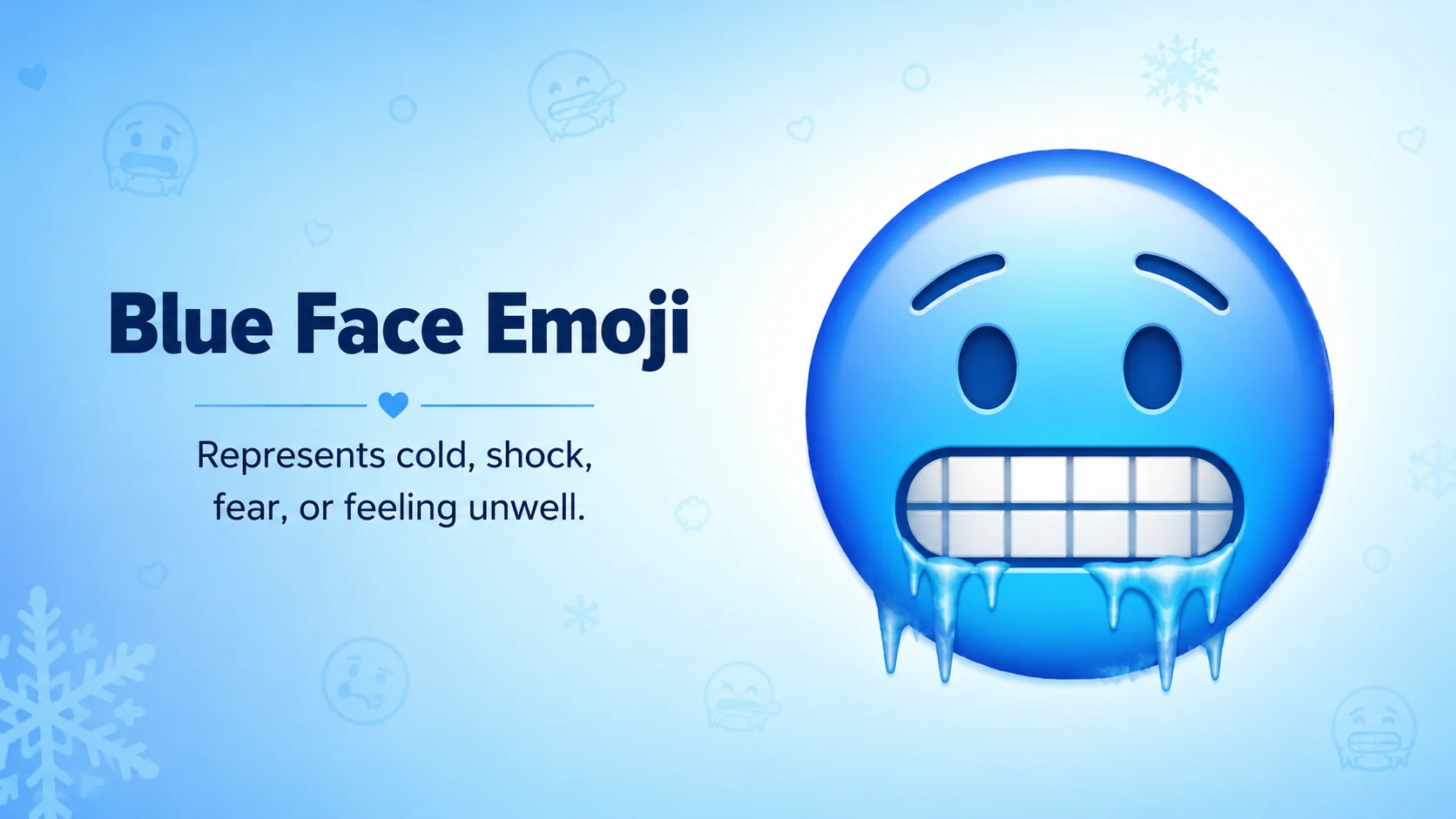
The blue face emoji 🥶 usually refers to the Cold Face emoji. It commonly expresses feeling extremely cold, freezing, or affected by icy weather. In texting, it can also suggest being shocked, overwhelmed, or figuratively “frozen” by something unexpected. Unicode lists U+1F976 as Cold Face and includes keywords such as “blue,” “blue-faced,” “cold,” “freezing,” and “icicles.”
The 🥶 emoji is often called the blue face emoji because its face is shown with a cold, bluish appearance. Its official Unicode name is Cold Face, and its clenched teeth, wide eyes, and icy features make its main meaning fairly easy to recognize: “I’m freezing!”
In everyday texting, however, 🥶 can mean more than physical cold. Someone might use it after seeing an unexpectedly intense situation, hearing surprising news, or reacting to something that leaves them feeling mentally “frozen.” These meanings are informal and depend on the message around the emoji.
The safest way to read 🥶 is to look at the complete conversation. “It’s 10 degrees outside 🥶” clearly points to cold weather, while “That plot twist 🥶” may express shock or being overwhelmed. The emoji itself does not guarantee one particular emotional meaning.
What Does the Blue Face Emoji 🥶 Mean?
The most direct meaning of 🥶 is being very cold or freezing. It visually represents a face reacting to intense cold, with clenched teeth and icy details.
People may use it when talking about:
- Freezing weather
- Cold rooms
- Winter conditions
- Snow and ice
- Feeling chilled
- An unexpectedly intense situation
- Something that metaphorically “froze” them
For example:
“I forgot my jacket today 🥶”
This most likely means the person is feeling very cold.
But:
“That ending 🥶”
could mean the ending was so unexpected or intense that the person was left speechless.
What Does 🥶 Mean in Texting?
In texting, 🥶 is commonly used as a quick reaction to something cold, intense, shocking, or overwhelming.
Its literal meaning is usually the easiest to identify:
“It is freezing outside 🥶”
Meaning: The weather is extremely cold.
“This room is so cold 🥶”
Meaning: The sender feels chilled.
A more figurative use can appear in reactions:
“That was an intense moment 🥶”
Meaning: The moment was shocking or emotionally intense.
The surrounding words tell you whether 🥶 should be understood literally or figuratively.
Why Does 🥶 Look Blue?
The blue appearance visually reinforces the idea of extreme cold. Unicode’s emoji data includes “blue” and “blue-faced” among the keywords associated with U+1F976, along with cold-related terms such as freezing, frostbite, and icicles.
The blue color is therefore part of the visual concept of the emoji rather than a separate “blue face” emoji with an unrelated meaning.
Can 🥶 Mean Shocked or Speechless?
Yes, in informal use, 🥶 can suggest that something left you frozen or stunned.
For example:
“She really said that out loud 🥶”
The sender may be expressing disbelief or surprise.
Another example:
“That was the most unexpected ending 🥶”
Here, the emoji is not about temperature. It adds a dramatic reaction to something surprising.
This is a contextual interpretation rather than the emoji’s primary official definition.
Can 🥶 Be Used as a Reaction to Something Impressive?
Sometimes people use 🥶 as a dramatic reaction to something intense or impressive. The idea is similar to being “frozen” by what you just saw.
For example:
“That performance 🥶”
could mean the person was extremely impressed or stunned.
However, this is an informal interpretation. If the intended meaning is simply “That was amazing,” emojis such as 🤩 or 🔥 may communicate excitement more directly.
Does 🥶 Mean “Cold” Emotionally?
It can, but this should not automatically be assumed.
A message such as:
“That reply was cold 🥶”
may use the emoji to emphasize the word cold in a figurative sense.
In that context, “cold” could mean emotionally distant, blunt, or harsh. The emoji is reinforcing the wording rather than independently creating that meaning.
Without the surrounding words, it is usually better to interpret 🥶 as referring to physical cold or an intense reaction.
Is 🥶 a Negative Emoji?
Not necessarily.
🥶 can appear in uncomfortable situations, such as being freezing cold or shocked by something. But it can also be playful or dramatic.
Compare:
“I walked outside without a coat 🥶”
This suggests discomfort from cold.
“That magic trick 🥶”
This could be a playful reaction to something impressive or surprising.
So the emotional tone can range from uncomfortable and dramatic to amused and impressed.
Is 🥶 Flirty?
🥶 is not inherently a flirting emoji.
It may appear in a playful or flirtatious conversation, but the emoji alone does not establish romantic interest. The surrounding words, conversation history, and relationship between the people matter much more.
For example:
“You really wore that outfit in this weather? 🥶”
could simply be a comment about the cold.
The same emoji could appear in a playful conversation with a completely different meaning. It is better not to read romantic intent into 🥶 without additional context.
What Does 🥶 Mean From Someone?
If someone sends you 🥶, start by looking at what they are responding to.
If they are talking about weather
“It’s freezing today 🥶”
Likely meaning: They are physically cold.
If they are reacting to surprising news
“Wait… seriously? 🥶”
Likely meaning: They are stunned or caught off guard.
Likely meaning: They are dramatically impressed or amazed.
If they use the word “cold”
“That was a cold response 🥶”
Likely meaning: The emoji emphasizes the figurative idea of being cold or emotionally distant.
The same emoji can therefore communicate different shades of meaning without having a completely different official definition.
Blue Face Emoji Examples in Texts
Here are a few realistic examples showing how context changes the interpretation:
| Message | Likely Meaning | Why Context Matters |
|---|---|---|
| “It’s freezing outside 🥶” | Very cold weather | The surrounding words directly mention temperature. |
| “I forgot my coat 🥶” | Feeling cold | The emoji reinforces the situation. |
| “That plot twist 🥶” | Shock or surprise | There is no weather context, so the emoji works as a dramatic reaction. |
| “That was a cold reply 🥶” | Emotional coldness | The word “cold” is being used figuratively. |
| “That was an finish 🥶” | Amazement or being stunned | The emoji adds dramatic emphasis to the reaction. |
Related Emojis and Their Meanings
| Emoji | Official Name | Common Meaning | Tone | Where or When It Is Used |
|---|---|---|---|---|
| 🥶 | Cold Face | Freezing, intense cold, or a figurative frozen reaction | Cold, dramatic, startled | Cold-weather texts, intense reactions |
| 🥵 | Hot Face | Feeling extremely hot or overheated | Intense, uncomfortable | Heat, hot weather, dramatic reactions |
| 😰 | Anxious Face with Sweat | Anxiety, worry, nervousness | Worried, tense | Stressful or uncertain situations |
| 😨 | Fearful Face | Fear, alarm, or apprehension | Scared, tense | Frightening or worrying situations |
| 😱 | Face Screaming in Fear | Extreme shock or fear | Dramatic, alarmed | Major surprises or frightening reactions |
| 😳 | Flushed Face | Embarrassment, surprise, or awkwardness | Shy, startled | Unexpected or uncomfortable moments |
| 🥴 | Woozy Face | Dizzy, confused, overwhelmed, or dazed | Unsteady, confused | Strange or overwhelming situations |
| 🫨 | Shaking Face | Shock, disbelief, or intense reaction | Dramatic, startled | Unexpected or overwhelming moments |
The closest visual counterpart to 🥶 is 🥵 Hot Face. The two are almost opposites: 🥶 represents intense cold, while 🥵 represents intense heat. Unicode lists both as distinct face emojis, with 🥶 associated with freezing and 🥵 with heat and feverishness.
😰 and 😨 can look similar in a tense conversation, but they focus more on anxiety and fear than cold. 😱 is much stronger and more dramatic, while 😳 is more closely associated with embarrassment or surprise.
🥶 vs. 🥵: What’s the Difference?
The simplest distinction is temperature:
🥶 = extremely cold
🥵 = extremely hot
For example:
“It’s snowing again 🥶”
means the cold is intense.
“It’s 100 degrees today 🥵”
means the heat is intense.
Both can also be used dramatically, but their basic visual meanings remain opposite.
🥶 vs. 😰: What’s the Difference?
🥶 is primarily associated with cold or freezing, while 😰 is associated with anxiety, nervousness, or worry.
Compare:
“The water is freezing 🥶”
The emoji refers to temperature.
“I have to give a presentation tomorrow 😰”
The emoji reflects nervousness.
The two may appear in similar stressful conversations, but they emphasize different feelings.
🥶 vs. 😱: What’s the Difference?
🥶 can express being stunned or overwhelmed, but its main visual concept is cold.
😱, officially Face Screaming in Fear, is much more directly associated with extreme fear or shock.
A person might write:
“That was unexpected 🥶”
for a dramatic frozen reaction.
But:
“I thought I saw a ghost 😱”
clearly communicates fear.
When Should You Use 🥶?
Use 🥶 when you want to communicate intense cold or add a dramatic “frozen” reaction.
It works naturally for:
- Cold weather
- Snowy days
- Ice and winter
- Freezing rooms
- Unexpected moments
- Dramatic reactions
- Being stunned by something
- Figurative uses of “cold”
Examples:
“Why is the AC this cold? 🥶”
“First snow of the year 🥶❄️”
“That ending had me frozen 🥶”
“Okay, that was unexpected 🥶”
When Could 🥶 Be Misunderstood?
The biggest source of confusion is whether the emoji is literal or figurative.
If someone writes:
“My hands are freezing 🥶”
the meaning is straightforward.
But:
“That comeback 🥶”
could mean they were impressed, shocked, or simply found the response intense.
Another issue is that people may use emojis for dramatic effect. The sender may not literally feel frozen or shocked. The emoji can simply make a reaction feel stronger.
How to Respond to 🥶 in a Text
The best response depends on what the sender means.
If they’re talking about the cold
“Same! It’s freezing today.”
They’re reacting to surprising news
“Right? I didn’t expect that either.”
If they’re impressed by something
“Seriously! That was wild.”
A simple clarification can prevent unnecessary misunderstanding.
Copy and Paste the Blue Face Emoji
🥶
You can copy the Cold Face emoji and use it in texts, captions, comments, or other messages that support emoji.
Official Name and Unicode Details
The official Unicode name of 🥶 is Cold Face, and its code point is U+1F976. Unicode’s emoji data associates it with keywords including blue, blue-faced, cold, freezing, frostbite, icicles, subzero, and teeth.
Cold Face was included in Emoji 11.0. Unicode’s historical emoji charts list U+1F976 as “cold face” with the keyword “blue-faced,” along with cold-related terms.
The exact artwork can vary between devices and services. The basic concept remains a blue-toned, cold-looking face with clenched teeth and an icy expression.
FAQs
What does the blue face emoji 🥶 mean?
The blue face emoji 🥶 is officially called Cold Face. It usually means feeling extremely cold or freezing, but it can also be used for figurative reactions such as shock or being stunned.
What is the official name of 🥶?
Its official Unicode name is Cold Face. Its Unicode code point is U+1F976.
Why is the Cold Face emoji blue?
The blue appearance visually represents extreme cold. Unicode also lists “blue” and “blue-faced” among its associated keywords.
Can 🥶 mean shocked?
Yes. In informal texting, 🥶 can suggest that something left someone frozen, stunned, or speechless. The surrounding message determines whether that interpretation makes sense.
Does 🥶 mean “cold”?
Yes. Feeling physically cold or freezing is its most direct meaning.
Conclusion
The blue face emoji 🥶, officially known as Cold Face, is mainly used to express extreme cold or freezing weather. In casual texting, it can also describe feeling stunned, overwhelmed, or figuratively “frozen” by something unexpected.
Context is the key to understanding it. If the message mentions weather, 🥶 probably means cold. If it follows surprising news or an intense reaction, it may be used more dramatically. Compared with 🥵, 😰, and 😱, 🥶 has its own distinct focus: cold first, figurative intensity second.
Discover More Related Articles:
- Upset Emoji | Sad, Worried & Uncomfortable Feelings In 2026
- Laughing Face Emoji | Funny, Playful, and Sarcastic Uses In 2026
