Quick Answer
The tongue sticking out emoji 😛 usually means playfulness, silliness, joking, teasing, or lighthearted fun. Its official Unicode name is Face with Tongue. Someone may use it after a joke, playful comment, or teasing message to show that they are not being completely serious. In some contexts, it can also have a suggestive interpretation, so the surrounding message matters.
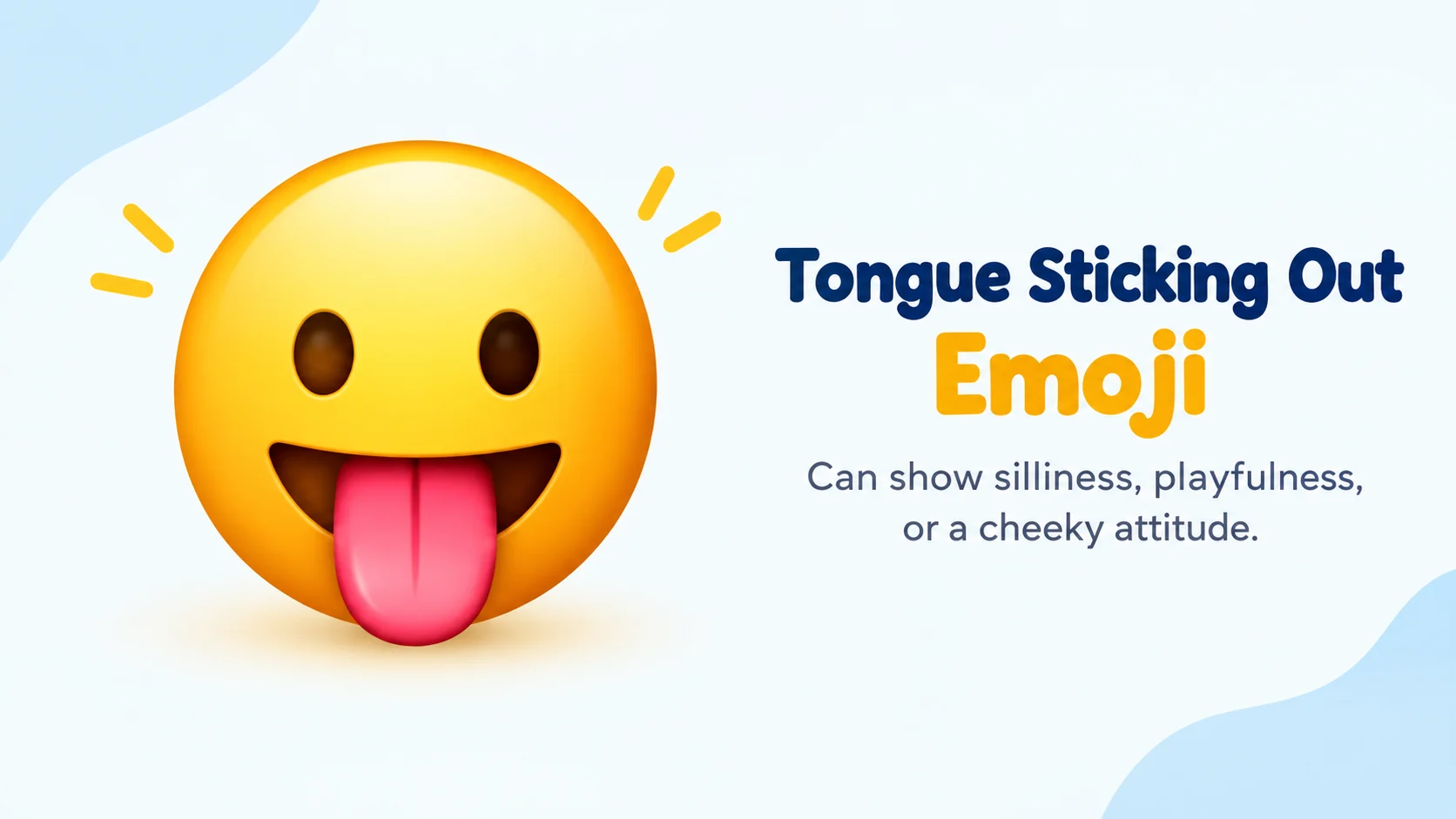
The tongue sticking out emoji 😛 is one of the more playful face emojis. It shows a yellow face with a grin, open eyes, and its tongue sticking out. In everyday texting, it often adds a silly or joking tone to a message that might otherwise sound too serious.
Its official Unicode name is Face with Tongue, while its Unicode code point is U+1F61B. Unicode lists it among the face-tongue emojis alongside 😜 Winking Face with Tongue and 😝 Squinting Face with Tongue.
The meaning is not fixed in every conversation. A friend might use 😛 simply to be goofy, while someone else might use it to make teasing sound lighter. Because sticking out the tongue can also carry a suggestive meaning in some situations, it is best to consider the words, relationship, and overall tone before interpreting it too strongly.
What Does the Tongue Sticking Out Emoji 😛 Mean?
The 😛 emoji most commonly communicates a playful and unserious mood.
It can mean:
- “I’m just joking.”
- “I’m being silly.”
- “I’m teasing you.”
- “Don’t take that too seriously.”
- “I’m being playful.”
- “That was funny.”
- “I’m acting goofy.”
For example:
“You really thought I was going to let you win 😛”
Here, the emoji softens the teasing. It makes the message feel more playful than hostile.
The same emoji can also appear after a silly statement:
“I definitely did not eat the last cookie 😛”
The sender is likely joking rather than making a serious denial.
Tongue Sticking Out Emoji Meaning in Text
In texting, 😛 often works as a tone marker. Written messages do not include facial expressions or voice tone, so an emoji can show that a statement is playful.
Consider:
“You’re so annoying.”
Without an emoji, this could sound genuinely irritated.
Now compare:
“You’re so annoying 😛”
The emoji makes the sentence more likely to sound like friendly teasing.
This does not guarantee that the sender is joking, but it provides an important clue about how the message is intended to feel.
Is 😛 a Playful Emoji?
Yes. Playfulness is one of the main uses of 😛.
Emojipedia describes 😛 as capable of conveying fun, excitement, silliness, cuteness, happiness, and joking. It is generally less goofy than 😜 and less animated than 😝.
For example:
“I know exactly what I’m doing 😛”
The sender may be playfully pretending to be confident.
Or:
“Oops, I did it again 😛”
The emoji can make the message feel mischievous rather than serious.
Is the Tongue Emoji Used for Teasing?
Yes. 😛 can make teasing sound lighter and friendlier.
Example:
“You finally admitted I was right 😛”
Likely meaning: The sender is teasing the other person about admitting they were correct.
The emoji does not automatically mean the sender is being rude. In a friendly conversation, it can signal that the teasing is meant as a joke.
However, tone still depends on the words. If the surrounding message is insulting or hostile, 😛 may not make the message friendly.
Does 😛 Mean “Just Kidding”?
It can.
A person may place 😛 after a statement to show that they were being playful rather than completely serious.
Example:
“I’m never talking to you again 😛”
The words sound dramatic, but the emoji suggests that the statement may be playful.
Still, 😛 does not literally translate to “just kidding.” It is better understood as a signal that the message has a lighthearted or joking tone.
Does 😛 Mean Flirting?
Sometimes it can contribute to a flirty or teasing tone, but 😛 does not automatically mean flirting.
For example:
“You know you like my jokes 😛”
Depending on the relationship and conversation, this could be friendly teasing or mild flirting.
By contrast:
“I totally beat your score 😛”
is much more naturally understood as playful competition.
The surrounding conversation matters more than the emoji alone. Do not assume romantic interest simply because someone sends 😛.
Can 😛 Be Sarcastic?
Yes. The tongue sticking out emoji can accompany sarcasm or exaggerated humor.
For example:
“Wow, you answered my text in only three hours 😛”
The statement is probably not a genuine compliment. The emoji helps signal playful sarcasm.
Whether it is actually sarcastic depends on the conversation and the sender’s usual style.
Does 😛 Mean Someone Is Being Rude?
Not necessarily.
The tongue sticking out can sometimes look childish, mocking, or cheeky, especially when used after a disagreement.
For example:
“Told you I was right 😛”
Between friends, this may be harmless teasing.
In a serious conversation, however, the same emoji could make the message seem dismissive.
If the conversation is already tense, relying on 😛 to soften a statement may not work as intended.
What Does 😛 Mean From Someone?
When someone sends 😛 to you, look at the complete message before deciding what it means.
It may indicate:
Friendly:
“I finally finished it 😛”
The sender may simply be celebrating playfully.
Teasing:
“You thought you could beat me 😛”
The sender is probably jokingly challenging you.
Silly:
“Guess what I just did 😛”
The emoji adds a goofy tone.
Potentially flirty:
“You’re pretty fun to tease 😛”
The wording can make the message feel more personal, but the emoji itself does not prove romantic interest.
Tongue Sticking Out Emoji in Different Situations
With Friends
Among friends, 😛 often means joking, teasing, or being silly.
“I’m stealing your fries 😛”
It makes the statement feel playful.
After a Joke
“I totally planned that 😛”
The emoji can reinforce that the speaker is not being completely serious.
During Friendly Competition
“I won again 😛”
Here it can communicate playful bragging.
After a Mistake
“Okay, maybe I was wrong 😛”
It can make an admission feel lighter or humorous.
In a Serious Conversation
😛 may be less appropriate when the topic is emotional or sensitive. It can make a message seem dismissive if the other person expects a serious response.
Tongue Sticking Out Emoji vs. Similar Emojis
Several emojis have a tongue sticking out, but their expressions are not identical. The differences can change the emotional intensity.
| Emoji | Official Name | Common Meaning | Tone | Where or When It Is Used |
|---|---|---|---|---|
| 😛 | Face with Tongue | Playfulness, silliness, teasing | Playful, light | Jokes, teasing, casual texts |
| 😜 | Winking Face with Tongue | Joking, mischief, playful teasing | Cheeky, goofy | Jokes, teasing, playful reactions |
| 😝 | Squinting Face with Tongue | Excitement, silliness, exaggerated fun | Energetic, exuberant | Big reactions, jokes, playful excitement |
| 😋 | Face Savoring Food | Enjoying food, deliciousness, satisfaction | Cheerful, playful | Food messages and tasty reactions |
| 🤪 | Zany Face | Goofiness, craziness, exaggerated humor | Wild, goofy | Absurd jokes and exaggerated reactions |
| 👅 | Tongue | Literal tongue, licking, or playful reference | Playful, context-dependent | Jokes, food, body-related references |
| 😂 | Face with Tears of Joy | Strong laughter or amusement | Very humorous | Funny messages and jokes |
| 😎 | Smiling Face with Sunglasses | Coolness, confidence, relaxed attitude | Cool, playful | Confident or joking reactions |
The closest comparisons are 😜 and 😝. All three feature a tongue sticking out, but 😛 has a simpler, more relaxed playful expression. 😜 adds a wink, making it feel more mischievous, while 😝 has tightly closed eyes and often gives a more exaggerated, energetic impression. Emojipedia specifically describes 😛 as generally less goofy than 😜 and less animated than 😝.
😛 vs. 😜: What’s the Difference?
😛 Face with Tongue is usually the more straightforward playful option.
😜 Winking Face with Tongue adds a wink, which can make the message feel more cheeky, mischievous, or intentionally teasing. Emojipedia describes 😜 as generally goofier than 😛.
Compare:
“You can’t catch me 😛”
This feels like simple playful teasing.
“You can’t catch me 😜”
The wink can make the teasing feel more mischievous.
Neither emoji automatically means flirting.
😛 vs. 😝: What’s the Difference?
The main difference is the intensity of the expression.
😛 has open eyes and a big grin, creating a relatively simple playful expression.
😝 has tightly closed, scrunched eyes and usually feels more exaggerated or energetic. Emojipedia describes 😝 as generally more exuberant than 😛 and 😜.
For a mild joke, 😛 may fit better.
For an exaggerated reaction, 😝 may communicate more energy.
😛 vs. 😋: What’s the Difference?
These two can look similar at first, but their meanings are different.
😛 Face with Tongue is mainly about playfulness, teasing, or joking.
😋 Face Savoring Food is commonly associated with enjoying something tasty or delicious. Unicode lists 😋 under the face-tongue group but gives it the short name “face savoring food.”
For example:
“This pizza is amazing 😋”
The emoji is about enjoying food.
“I know you want the last slice 😛”
The emoji is more playful and teasing.
Can 😛 Have a Suggestive Meaning?
It can in some contexts.
Because the emoji shows a tongue, some people may interpret it in a suggestive way, especially when combined with certain wording or other emojis. Emojipedia specifically notes that 😛 can be interpreted suggestively in some situations.
That does not mean every use is suggestive. In ordinary conversations, 😛 is very commonly used for harmless joking, silliness, and teasing.
Context should determine how much meaning you assign to it.
How to Respond to 😛
Your response can simply match the tone of the original message.
Playful
“Haha, you’re ridiculous 😛”
Teasing
“Keep talking, I’ll remember that 😂”
Friendly
“Okay okay, you win!”
Competitive
“Just wait until the rematch 😎”
Neutral
“Haha!”
If you are unsure what the sender meant, respond to the actual words in their message rather than trying to decode the emoji by itself.
Common Misunderstandings About 😛
It does not always mean flirting
A tongue sticking out can be playful without having a romantic meaning.
It does not always mean sarcasm
The sender may simply be joking or acting silly.
It is not the same as 😜
The wink in 😜 gives it a different expression and can make the message feel more mischievous.
It is not the same as 😝
😝 generally has a stronger, more exaggerated expression than 😛.
The emoji does not determine the whole message
Words, context, relationship, and communication style all affect interpretation.
Official Name and Unicode Details
The official Unicode short name for 😛 is Face with Tongue. Its code point is U+1F61B. Unicode currently lists it with keywords including “face,” “stuck-out,” and “tongue.”
Emojipedia notes that the emoji was approved as part of Unicode 6.1 in 2012 under the name “Face with Stuck-Out Tongue” and was added to Emoji 1.0 in 2015.
The appearance can vary slightly between platforms and emoji designs, but the core concept remains a smiling face sticking out its tongue.
Tongue Sticking Out Emoji Copy and Paste
Here is the emoji you can copy:
😛
You can also use related tongue emojis:
😜 😝 😋 🤪 👅
Choose 😛 when you want a relatively simple playful or teasing expression.
FAQs
What does the 😛 emoji mean?
😛 usually means playfulness, silliness, joking, teasing, or a lighthearted reaction. It is officially called Face with Tongue.
What is the official name of 😛?
The Unicode short name is Face with Tongue. Earlier Unicode naming information recorded it as “Face with Stuck-Out Tongue.”
Is 😛 a flirty emoji?
It can appear in a flirty or suggestive context, but it does not automatically mean flirting. The surrounding conversation is more important.
Is 😛 a laughing emoji?
Not exactly. 😛 can accompany jokes and playful messages, but its main purpose is expressing a playful, silly, or teasing mood.
What is the difference between 😛 and 😜?
😛 has a straightforward playful expression, while 😜 adds a wink and generally feels more cheeky or goofy.
Conclusion
The tongue sticking out emoji 😛, officially called Face with Tongue, is mainly a playful emoji used for joking, teasing, silliness, and lighthearted reactions. It can soften a sarcastic comment, add humor to a message, or show that someone is not being completely serious.
Its meaning can change with context. While 😛 may occasionally appear in flirty or suggestive conversations, it does not automatically carry that meaning. Compared with 😜 and 😝, it usually gives a simpler and less exaggerated tongue-out expression. When interpreting it, focus on the full message rather than treating the emoji as a fixed translation.
Discover More Related Articles:
- Batman Emoji | Complete Texting & Social Media Guide In 2026
- Detective Emoji | Curious, Sneaky & Investigative In 2026
