Quick Answer
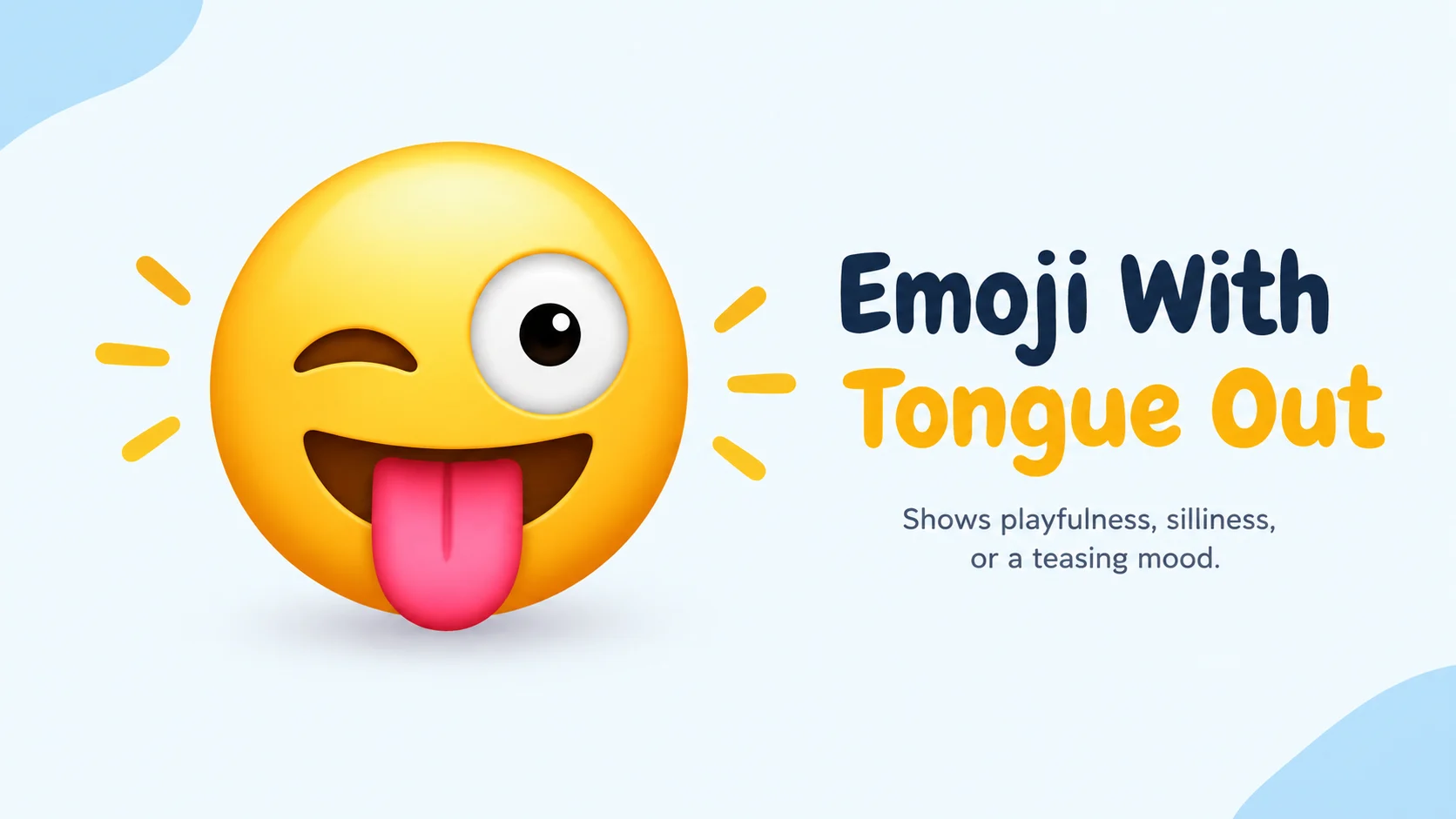
The emoji with tongue out 😛 usually expresses playfulness, silliness, joking, teasing, or a lighthearted mood. It can feel like saying “just kidding,” “I’m being silly,” or “I’m teasing you.” The exact tone depends on the surrounding message. Unicode lists 😛 as Face with Tongue, while its earlier Unicode name was “Face with Stuck-Out Tongue.”
The 😛 emoji shows a smiling face with its tongue sticking out, giving it a playful and mischievous appearance. People commonly use it when they want to make a message feel less serious, tease someone, or show that they are joking around. It can turn an otherwise blunt statement into something more lighthearted.
In texting, 😛 often works as a visual signal that the sender is not being completely serious. For example, “I knew you would lose 😛” can sound like friendly teasing rather than a serious insult. Emojipedia describes it as conveying fun, excitement, silliness, cuteness, happiness, or jesting.
There are several emojis that show a tongue sticking out, including 😜 and 😝. They are related but have slightly different expressions and tones. 😛 is generally the simpler and less exaggerated option, while 😜 adds a wink and 😝 uses tightly closed eyes for a more energetic expression.
What Does the Emoji With Tongue Out 😛 Mean?
The most common meaning of 😛 is playfulness.
It can communicate:
- “I’m just kidding.”
- “I’m being silly.”
- “I’m teasing you.”
- “Don’t take me too seriously.”
- “That was playful.”
- “I’m having fun.”
The emoji often softens a statement that could otherwise sound too direct.
For example:
“You actually believed me 😛”
This can suggest friendly teasing.
By comparison:
“You actually believed me.”
Without the emoji, the same sentence may sound more serious or critical.
That is one reason 😛 is useful in casual conversations. It adds emotional context without requiring a long explanation.
What Does 😛 Mean in Texting?
In texting, 😛 can act like a playful facial expression at the end of a sentence.
For example:
“I finished the last cookie 😛”
This could mean the sender is jokingly admitting that they took the last cookie.
Another example is:
“You are not getting my fries 😛”
Here, the emoji makes the message sound teasing rather than harsh.
It can also be used by itself:
“😛”
A standalone 😛 can simply communicate silliness or playful teasing. Its meaning becomes clearer from the messages that came before it.
The Tone of 😛
The emoji with tongue out is usually lighthearted, but its exact emotional tone can change.
Playful
This is one of its most common uses.
“I beat you again 😛”
The sender may be celebrating in a teasing way.
Silly
Someone might use 😛 simply to show that they are acting goofy.
“I have no idea what I’m doing 😛”
The emoji keeps the message casual.
Teasing
It can make friendly teasing feel less serious.
“You really thought I was going to share? 😛”
The message is playful rather than necessarily hostile.
Joking
😛 can signal that a statement should not be taken completely literally.
“Fine, I’ll never talk to you again 😛”
Depending on the relationship and conversation, this can be an exaggerated joke.
Mischievous
It can also give a message a cheeky or mischievous feeling.
“I may have eaten your dessert 😛”
The emoji adds a playful confession.
Does 😛 Mean “Just Kidding”?
It can.
Although 😛 does not have one universal translation, it is commonly used to make a statement feel less serious or to show that the sender is joking. Emojipedia specifically notes its use in a “just kidding” type of context.
For example:
“I’m keeping your seat 😛 Just kidding.”
The emoji reinforces the playful tone.
However, you should not assume that every 😛 automatically means “just kidding.” The surrounding words still matter.
Is 😛 Rude?
Usually, 😛 is not inherently rude. It is generally associated with playful or silly communication.
However, context can change how it feels.
“You’re so annoying 😛”
Between friends, this might be affectionate teasing.
“You’re so annoying.”
Without the emoji, the statement can sound much more critical.
The relationship between the people, the topic, and the sender’s usual texting style all matter. If the conversation is already tense, adding 😛 may not automatically make a message friendly.
Does 😛 Mean Flirting?
😛 can appear in playful or teasing conversations, including conversations where people are flirting, but the emoji does not automatically mean flirting.
For example:
“You’re trouble 😛”
This could be playful teasing, flirting, or simply joking between friends.
The emoji by itself is not enough to determine romantic interest. The surrounding conversation and relationship provide much more context.
It is also worth distinguishing playful teasing from suggestive interpretation. Because the emoji shows a tongue, some people may interpret it in a suggestive way, but that is not its required or universal meaning.
What Does 😛 Mean From Someone?
If someone sends 😛 to you, it most often signals a playful, silly, or teasing attitude.
Consider these examples:
“You believed me 😛”
Likely meaning: They are teasing you.
“I ate the last slice 😛”
Likely meaning: They are jokingly admitting something.
“Okay, okay 😛”
Likely meaning: They are keeping the conversation light.
“You’re impossible 😛”
Likely meaning: Depending on the relationship, this may be affectionate or playful teasing.
Rather than assigning a hidden meaning to the emoji, look at what the person actually wrote.
😛 in Different Conversation Situations
With Friends
😛 is often a natural choice for joking and friendly teasing.
“You really thought that was going to work 😛”
During an Argument
It can be more complicated. Using 😛 after a serious statement may make the message seem dismissive or sarcastic.
“Whatever, you’re right 😛”
Depending on the conversation, this could be playful or could annoy the other person.
When Sharing a Joke
😛 can reinforce that the sender is being silly.
“I definitely did all my homework 😛”
When Admitting Something
It can make a confession feel mischievous.
“Okay, I took the last cookie 😛”
The emoji adds a cheeky tone.
Related Tongue-Out Emojis and Similar Faces
| Emoji | Official Name | Common Meaning | Tone | Where or When It Is Used |
|---|---|---|---|---|
| 😛 | Face with Tongue | Playfulness, silliness, teasing, joking | Playful | Casual texts, jokes, friendly teasing |
| 😜 | Winking Face with Tongue | Joking, mischief, wackiness, playful teasing | Cheeky | Teasing, jokes, exaggerated reactions |
| 😝 | Squinting Face with Tongue | Strong excitement, silliness, hilarity | Energetic | Big reactions, jokes, playful messages |
| 🤪 | Zany Face | Goofy behavior, craziness, wild silliness | Very goofy | Absurd jokes, chaotic humor, playful reactions |
| 👅 | Tongue | Literal tongue, playful reference, or other context-dependent uses | Neutral to playful | References to the tongue or playful expressions |
| 😋 | Face Savoring Food | Enjoying food, deliciousness, “yum” | Playful | Food, meals, cravings, tasty treats |
| 😉 | Winking Face | Playful hint, joke, teasing, or knowing expression | Playful | Jokes, teasing, light hints |
| 😂 | Face with Tears of Joy | Strong amusement or laughter | Very cheerful | Funny messages, jokes, humorous reactions |
The closest comparisons are 😜 and 😝. All three feature a tongue, but their expressions create different levels of energy. 😛 is the straightforward playful option. 😜 adds a wink and therefore often feels cheekier. 😝 has tightly closed eyes and generally gives a more exaggerated, energetic reaction.
The 👅 Tongue emoji is different because it is not a complete facial expression. It can refer literally to a tongue or take on a playful meaning depending on the surrounding message.
😛 vs. 😜 vs. 😝
These three emojis are easy to confuse.
😛 Face with Tongue
A simple playful or teasing expression. It is generally the least exaggerated of the three.
😜 Winking Face with Tongue
Adds a wink, which can make the message feel more mischievous, cheeky, or obviously joking.
😝 Squinting Face with Tongue
Uses tightly closed eyes and usually gives a stronger, more energetic sense of excitement or silliness.
If you want a simple “I’m joking” or “I’m being silly” expression, 😛 can work well. If you want more exaggerated mischief, 😜 or 😝 may fit better.
Examples of the Emoji With Tongue Out in Texts
“I knew you would fall for it 😛”
Likely meaning: Friendly teasing.
The emoji helps show that the sender is joking rather than making a serious criticism.
“I ate the last cookie 😛”
Likely meaning: A playful or mischievous confession.
The sender may be deliberately making the admission sound cheeky.
“You can’t catch me 😛”
Likely meaning: Lighthearted teasing.
This could be used during a playful conversation or joke.
“Okay, I’m being silly 😛”
Likely meaning: The sender is openly signaling a playful mood.
“I was only joking 😛”
Likely meaning: The sender is reinforcing that the statement was not intended seriously.
Can 😛 Be Sarcastic?
Yes, depending on context.
For example:
“Wow, what an amazing idea 😛”
The emoji could make the statement sound teasing or sarcastic rather than genuinely enthusiastic.
However, the emoji itself does not automatically mean sarcasm. If the surrounding message is sincere, 😛 may simply add a playful tone.
Common Misunderstandings About 😛
One common mistake is assuming that 😛 always means flirting. It does not. It can be used between friends, family members, classmates, coworkers in casual settings, or anyone having a playful conversation.
Another mistake is assuming that it always means “just kidding.” While that is a common interpretation, the sender may simply be acting silly or teasing.
It is also easy to confuse 😛 with 😜 and 😝. The three emojis belong to the same general family, but their facial expressions create different shades of meaning.
Finally, avoid interpreting the emoji without considering the complete message. A single emoji rarely gives enough information to determine exactly what someone feels.
How to Respond to 😛
Your response can match the sender’s tone.
If they are teasing you:
“Okay, you got me 😂”
If they are joking:
“I knew you were kidding 😛”
If you want to tease them back:
“Keep telling yourself that 😜”
If you are unsure what they mean:
“Wait, are you serious or joking?”
A natural response is usually better than trying to decode the emoji as a hidden message.
When Should You Use 😛?
Use 😛 when you want your message to feel playful, silly, or teasing.
It can work well for:
- Friendly jokes
- Light teasing
- Playful confessions
- Silly comments
- Exaggerated reactions
- Joking around with friends
- Showing that a statement should not be taken too seriously
If the conversation is serious, emotional, or formal, 😛 may not be the best choice because its playful tone can make the message seem dismissive.
Copy and Paste Emoji With Tongue Out
😛
You can copy and paste 😛 into a text, caption, comment, or casual message.
Common combinations include:
- 😛😂
- 😛😜
- 😛😉
- 😛🤣
- 😛😋
Each combination can slightly change the tone, so use the surrounding emojis and words to make your intention clear.
Official Name and Unicode Details
The emoji commonly described as the emoji with tongue out is 😛. Unicode’s current emoji list identifies it as FACE WITH TONGUE, with the code point U+1F61B.
Unicode documentation has also used the descriptive name FACE WITH STUCK-OUT TONGUE for U+1F61B. The emoji was approved as part of Unicode 6.1 in 2012 and added to Emoji 1.0 in 2015, according to Emojipedia.
Different platforms can draw 😛 somewhat differently. The basic concept remains recognizable as a smiling face sticking out its tongue, but details such as the shape of the eyes, mouth, and tongue can vary between designs.
FAQs
What does 😛 mean?
😛 usually means playful, silly, teasing, joking, or “I’m not being serious.”
What is the official name of 😛?
Unicode currently lists 😛 as Face with Tongue. Its code point is U+1F61B.
Does 😛 mean just kidding?
It can. 😛 is often used to make a statement feel playful or to signal that the sender is joking, but context still matters.
Is 😛 a flirting emoji?
It can appear in flirting or teasing, but 😛 does not automatically indicate romantic interest.
Is 😛 rude?
Usually not. It is generally playful, although using it during a serious conversation can make a message seem dismissive or sarcastic.
Conclusion
The emoji with tongue out 😛 is mainly a playful expression used for silliness, teasing, joking, and lighthearted reactions. It can make a message feel less serious and can sometimes communicate the idea of “just kidding” without saying it directly.
Its meaning can change with context, so 😛 should not automatically be interpreted as flirting, sarcasm, or any particular relationship signal. When compared with 😜 and 😝, it is generally the simpler tongue-out expression, while those emojis add a wink or a stronger exaggerated reaction.
Discover More Related Articles:
