Quick Answer
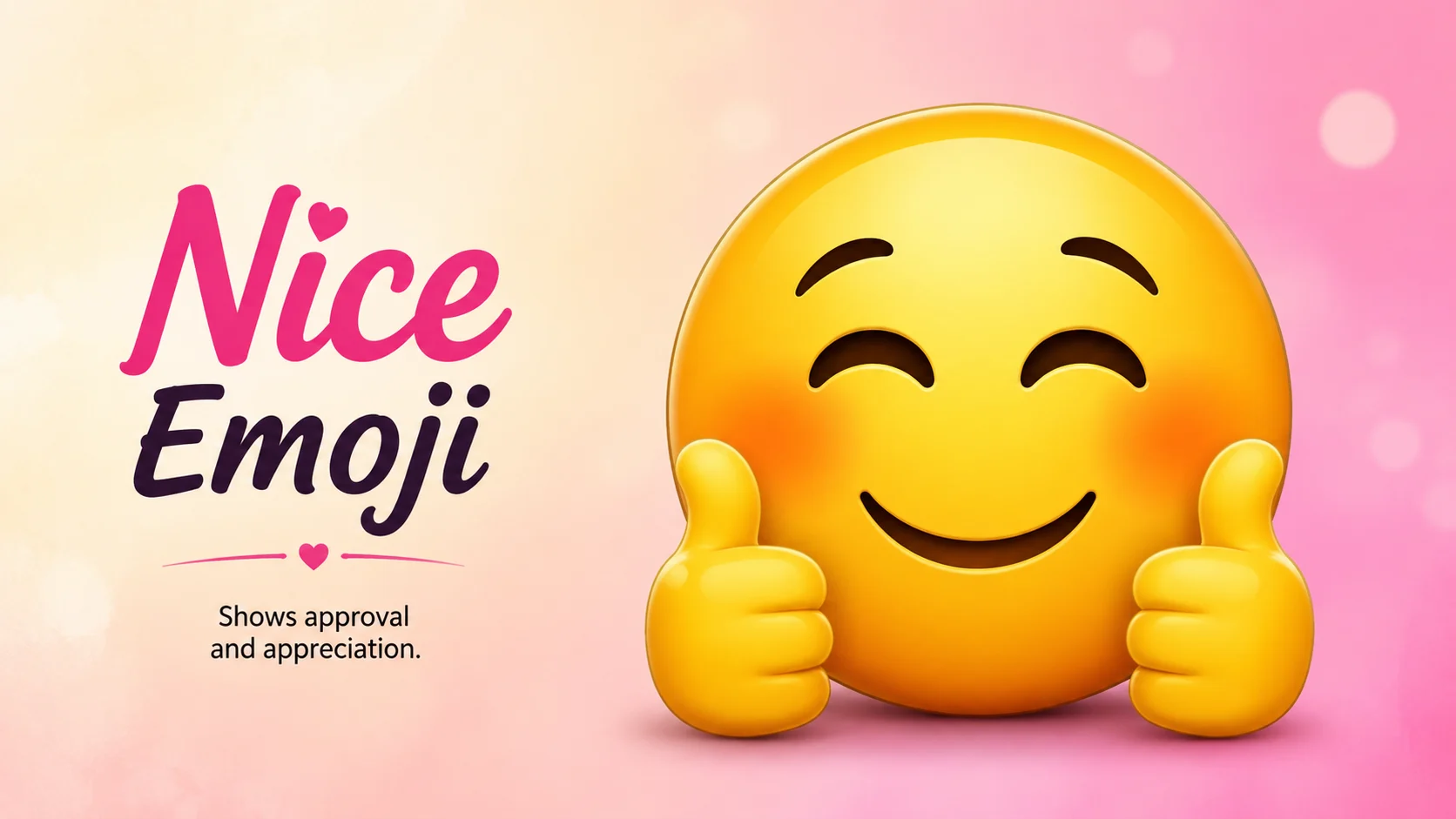
The nice emoji 😊 usually refers to 😊 Smiling Face with Smiling Eyes, which expresses genuine happiness, warmth, friendliness, gratitude, or a pleasant feeling. It often makes a message sound softer and more positive. Depending on the conversation, 😊 can also suggest appreciation, shy happiness, or gentle affection. Unicode lists its official name as Smiling Face with Smiling Eyes and its code point as U+1F60A.
😊 is one of the most recognizable friendly smiley emojis. Its smiling eyes, closed smile, and rosy cheeks give it a warm expression, making it useful when someone wants to communicate happiness without sounding overly excited. The official Unicode name is Smiling Face with Smiling Eyes, although people may casually describe it as a nice, happy, sweet, or friendly emoji.
In texting, 😊 often adds emotional warmth to otherwise simple words. A message like “Thank you 😊” feels more personal and appreciative than “Thank you” by itself. Likewise, “That sounds good 😊” can make a short response feel friendly rather than cold or distant.
The exact meaning still depends on context. 😊 can express sincere happiness, kindness, appreciation, relief, or gentle affection. It does not automatically mean flirting or romantic interest. The words surrounding the emoji and the relationship between the people communicating are usually more useful clues.
What Does the Nice Emoji 😊 Mean?
The 😊 emoji commonly expresses warm, genuine happiness and positive feelings. Emojipedia describes it as a yellow face with smiling eyes, a broad closed smile, and rosy cheeks that often conveys genuine happiness and warm feelings.
People may use 😊 to communicate:
- Happiness
- Friendliness
- Appreciation
- Gratitude
- Kindness
- Contentment
- Warmth
- Gentle excitement
- Shy happiness
- Affection
It is generally softer than a large toothy grin such as 😁 and less intense than heart-themed emojis such as 🥰 or 😍.
For example:
“Thanks for helping me 😊”
This usually sounds genuinely appreciative and friendly.
What Does 😊 Mean in Texting?
In text messages, 😊 often works as a tone-softener. It can make a short sentence feel warmer and less blunt.
Compare:
“Okay.”
with:
“Okay 😊”
The second version usually feels more welcoming or pleasant.
Another example:
“I’m glad you liked it 😊”
Here, the emoji reinforces the positive feeling in the sentence.
It can also be used after compliments, thanks, good news, or friendly comments. However, context still matters. A smiley placed after an awkward or uncomfortable statement may feel different from one used after sincere praise.
Is 😊 a Happy Emoji?
Yes. Happiness is one of its clearest common interpretations. Unicode places 😊 among the face-smiling emojis, and its official name is Smiling Face with Smiling Eyes.
The happiness expressed by 😊 is usually warm and gentle, rather than extremely excited.
For example:
“I finally finished my project 😊”
This suggests quiet satisfaction.
By contrast:
“I FINISHED IT!!! 😆🎉”
communicates much stronger excitement.
So if you want to express a pleasant, sincere smile without making the message feel overly energetic, 😊 can be a natural choice.
Does 😊 Mean Friendly?
Often, yes. 😊 is commonly used to make a message sound friendly, kind, or approachable.
For example:
“It was really nice talking to you 😊”
This can simply be a warm and polite statement.
Similarly:
“Have a great day 😊”
usually adds friendliness and goodwill.
The emoji does not guarantee that the sender has a particular relationship with you. It simply contributes a positive emotional tone.
Can 😊 Mean Thank You?
Yes. 😊 can accompany gratitude and appreciation.
For example:
“Thank you so much 😊”
The words already express thanks, while the emoji adds warmth.
It can also appear after someone gives a compliment:
“That’s really sweet of you 😊”
In this situation, it may communicate appreciation, happiness, or a slightly shy reaction.
Does 😊 Mean Flirting?
😊 can appear in a flirty conversation, but it is not automatically a flirting emoji.
Someone might use it while talking to a crush or romantic partner, but the emoji alone cannot establish romantic interest.
For example:
“You looked great today 😊”
could be friendly, affectionate, or flirtatious depending on the larger conversation.
On the other hand:
“Thanks for the birthday gift 😊”
is more naturally interpreted as appreciation.
If you are trying to understand whether someone is flirting, look at the overall conversation instead of treating 😊 as proof.
What Does 😊 Mean From Someone?
When someone sends 😊 to you, it usually adds a warm or positive tone to their message.
Its meaning may be:
- “I’m happy.”
- “That was nice.”
- “Thank you.”
- “I appreciate that.”
- “I’m glad.”
- “That makes me smile.”
- “I’m being friendly.”
For example:
“That made my day 😊”
clearly communicates happiness.
But:
“Sure 😊”
is more dependent on context. It could simply be friendly agreement, while in a different conversation it might carry a more complicated tone.
The safest approach is to read the entire message rather than assigning one fixed meaning to the emoji.
Can 😊 Be Sarcastic?
It can be used sarcastically, but sarcasm usually comes from the words and situation, not from the emoji alone.
For example:
“Oh great, another meeting 😊”
could sound sincere or sarcastic depending on what happened in the conversation.
The same emoji can therefore have different emotional effects when paired with different words.
If the sentence sounds obviously contradictory, 😊 may be helping create an ironic or awkward tone. Without that context, its default interpretation is generally positive.
😊 Compared With Similar Smiley Emojis
| Emoji | Official Name | Common Meaning | Tone | Where or When It Is Used |
|---|---|---|---|---|
| 😊 | Smiling Face with Smiling Eyes | Warm happiness, kindness, appreciation | Warm, gentle | Thanks, friendly texts, pleasant reactions |
| 🙂 | Slightly Smiling Face | Mild positivity or a simple smile | Neutral to friendly | Casual replies, light agreement, simple reactions |
| 😄 | Grinning Face with Smiling Eyes | Happiness and cheerful amusement | Cheerful, energetic | Good news, jokes, happy messages |
| 😁 | Beaming Face with Smiling Eyes | Strong happiness or a big grin | Bright, excited | Celebrations, pride, enthusiastic reactions |
| 😃 | Grinning Face with Big Eyes | Open, upbeat happiness | Cheerful, energetic | Exciting news, greetings, enthusiastic replies |
| 😌 | Relieved Face | Relief, calm, contentment | Calm, peaceful | After stress ends, reassurance, satisfaction |
| 🥰 | Smiling Face with Hearts | Loving or affectionate happiness | Affectionate, warm | Appreciation, affection, romantic contexts |
| 😍 | Smiling Face with Heart-Eyes | Strong admiration or love | Excited, affectionate | Compliments, favorite things, romantic situations |
The biggest distinction is emotional intensity. 😊 is warm and positive without necessarily being highly excited or romantic. 😄 and 😁 usually show bigger, more energetic happiness, while 🥰 and 😍 introduce a much stronger affectionate or romantic possibility.
🙂 is especially easy to confuse with 😊. The slightly smiling face can feel more neutral, while 😊 generally has a warmer and more openly positive expression.
Examples of 😊 in Text Messages
“Thank you for being so kind 😊”
Likely meaning: Genuine appreciation and warmth.
“That sounds great 😊”
Likely meaning: Friendly agreement and positive feelings.
“I’m really happy for you 😊”
Likely meaning: Sincere happiness for another person.
“It was nice seeing you today 😊”
Likely meaning: Warm friendliness, although the relationship may affect whether it feels affectionate.
“Oh, another Monday 😊”
Likely meaning: Could be playful or sarcastic if the person is clearly joking about Mondays.
These examples show why the words around 😊 matter as much as the emoji itself.
When Should You Use 😊?
😊 works well when you want your message to feel warm, pleasant, and friendly.
You can use it for:
- Saying thank you
- Responding to a compliment
- Sharing good news
- Showing appreciation
- Making a friendly request
- Greeting someone
- Showing quiet happiness
- Softening a short response
- Reacting positively to something kind
For example:
“I appreciate your help 😊”
sounds warm without being overly emotional.
If you want to express intense excitement, 😂, 😆, or 🤩 may fit better. If you want to show affection more clearly, 🥰 or ❤️ may communicate that more directly.
Common Misunderstandings About 😊
One misunderstanding is that 😊 always means romantic interest. It does not. The emoji is broad enough to work in ordinary friendly conversations.
Another is assuming that every 😊 represents exactly the same emotion. A person can use it for gratitude, happiness, politeness, relief, or a gentle reaction.
It is also possible for 😊 to feel different depending on the wording. Compare:
“I’m so happy to see you 😊”
with:
“Well, that went perfectly 😊”
The first sounds openly positive. The second could be sincere or sarcastic depending on the situation.
When the meaning is unclear, consider the complete message and the conversation history.
How to Respond to 😊
Your response can be simple because 😊 is generally positive.
If they are being friendly:
“Same here 😊”
If they are thanking you:
“You’re welcome!”
If they are sharing good news:
“That’s awesome! 😊”
If you are unsure about the tone:
“That sounds good!”
There is no need to attach a romantic meaning to the emoji unless the conversation clearly supports one.
Copy and Paste the Nice Emoji
😊
You can copy and paste 😊 into texts, captions, comments, or messages.
Common combinations include:
- 😊❤️ | warmth or affection
- 😊✨ | happiness or positivity
- 😊💕 | friendly or affectionate warmth
- 😊😂 | happy reaction with humor
- 😊👍 | friendly approval
The surrounding emoji can change the emotional flavor, so choose combinations that match what you actually want to communicate.
Official Name and Unicode Details
The official Unicode name for 😊 is Smiling Face with Smiling Eyes. Its Unicode code point is U+1F60A, and Unicode lists it under the face-smiling category.
😊 was approved as part of Unicode 6.0 in 2010 and added to Emoji 1.0 in 2015.
Emoji artwork can vary somewhat between platforms and devices, but the core concept remains a smiling yellow face with smiling eyes and a warm expression.
FAQs
What does 😊 mean?
😊 usually expresses genuine happiness, warmth, friendliness, appreciation, or positive feelings.
Is 😊 a nice emoji?
Yes. 😊 is commonly perceived as a warm and friendly smiley. Its official name is Smiling Face with Smiling Eyes.
Does 😊 mean love?
Not necessarily. It can express warmth or affection, but it does not automatically mean romantic love. Emojis such as 🥰 or 😍 communicate stronger affectionate signals.
Is 😊 flirty?
It can be used in a flirty conversation, but 😊 itself is not specifically a flirting emoji. Context matters.
What does 😊 mean from a friend?
From a friend, it commonly communicates friendliness, happiness, appreciation, or a warm reaction.
Conclusion
The nice emoji 😊 is officially called Smiling Face with Smiling Eyes and usually communicates warmth, happiness, friendliness, or appreciation. It is especially useful when you want a message to feel kind and positive without making the emotion overly intense.
Its meaning can change with context. 😊 may be a simple friendly smile, a grateful reaction, a sign of gentle affection, or even part of a sarcastic joke. It does not automatically mean flirting, love, or any other specific relationship feeling. Reading the complete message is the best way to understand what the sender intended.
Discover More Related Articles:
- Throwing Up Emoji | Disgusted, Sick or Grossed Out In 2026
- Fart Emoji | Funny, Silly & Playful Uses In 2026
