Quick Answer
The throwing up emoji 🤮 usually means vomiting, feeling extremely sick, or having a strong reaction of disgust. It is officially named Face Vomiting and is more direct than 🤢 Nauseated Face. In casual texts, 🤮 can also be used figuratively when someone finds something extremely gross, unpleasant, embarrassing, or ridiculous. Context determines whether the emoji is literal, exaggerated, or humorous.
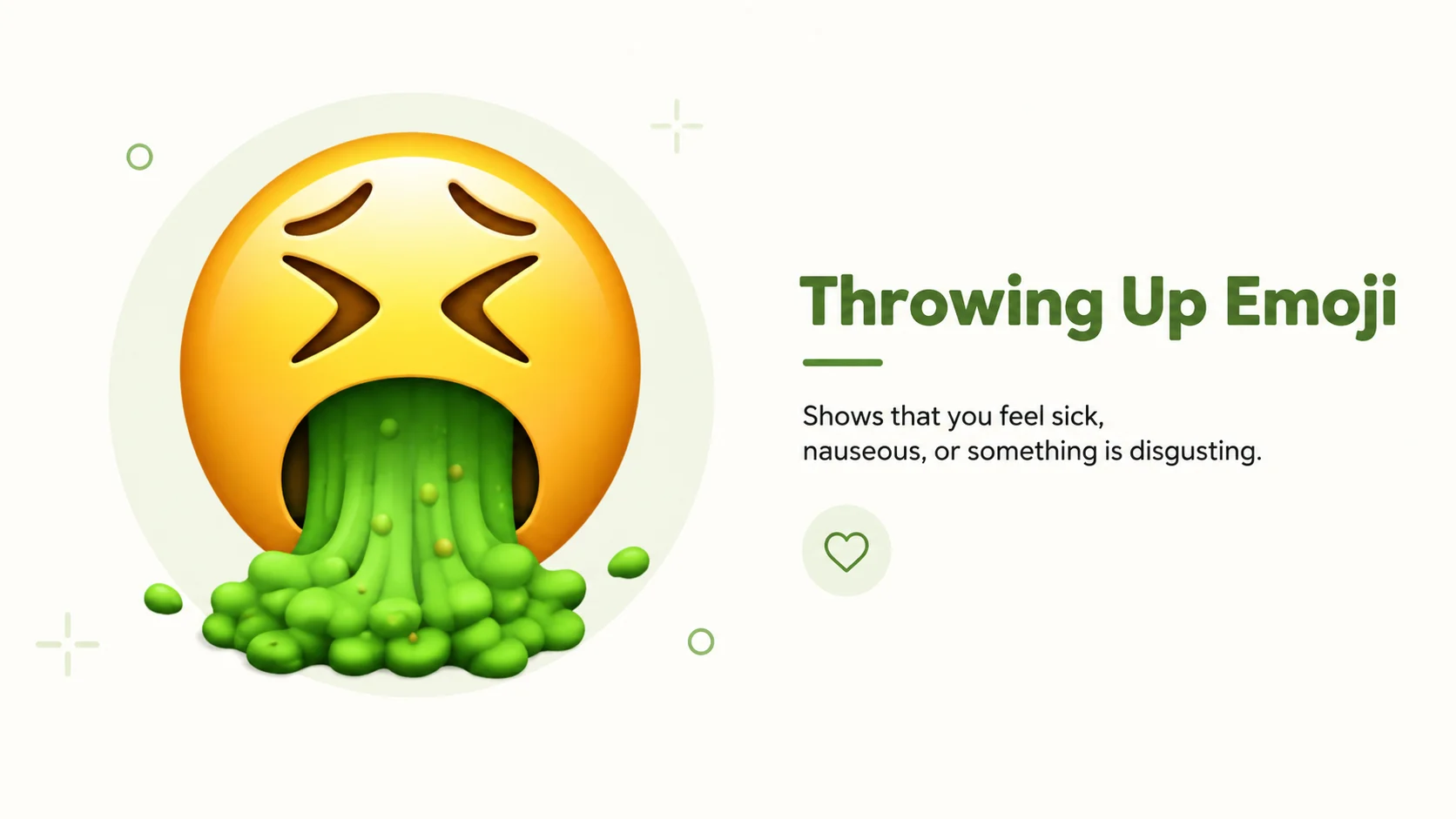
The 🤮 throwing up emoji shows a face with its mouth open and green vomit coming out. Unicode officially lists it as Face Vomiting, with the code point U+1F92E. Its design makes the basic message easy to understand: the sender is expressing vomiting, sickness, or an intense reaction of disgust.
In texting, however, 🤮 does not always mean that someone is physically sick. People can use it as an exaggerated reaction to something they consider gross, unpleasant, or ridiculous. For example, “That smell 🤮” can express strong disgust without literally describing an illness.
The emoji is also easy to confuse with 🤢 Nauseated Face. 🤢 generally communicates nausea or disgust, while 🤮 gives a much stronger and more explicit vomiting reaction. Choosing between them depends on how intense you want the message to sound.
What Does the Throwing Up Emoji 🤮 Usually Mean?
The most direct meaning of 🤮 is vomiting or being extremely sick. It can communicate that someone feels physically unwell or is reacting strongly to something unpleasant.
Common interpretations include:
- Feeling sick
- Vomiting
- Strong disgust
- Something being gross
- An unpleasant smell or taste
- A dramatic negative reaction
- A humorous “that’s disgusting” response
The emoji is visually intense, so it usually carries a stronger reaction than 🤢.
For example:
“I feel so sick today 🤮.”
This suggests genuine physical illness.
But:
“That food combination 🤮”
could simply mean the sender finds the combination disgusting.
The surrounding words are important because the same emoji can be literal or figurative.
What Does 🤮 Mean in Texting?
In text messages, 🤮 is often used as a quick reaction to something extremely unpleasant.
For example:
“You actually ate that? 🤮”
This most likely communicates disgust or disbelief.
“I have to clean the fridge 🤮.”
This could mean the task seems especially unpleasant.
“That plot twist 🤮.”
In this context, the emoji may be an exaggerated reaction to something the sender disliked.
A message containing 🤮 should not automatically be interpreted as a serious health statement. In casual conversations, it often works as an expressive reaction.
🤮 as a Sign of Disgust
One of the most common figurative uses of 🤮 is to say “That is disgusting.”
Someone might use it when reacting to:
- An unpleasant smell
- Gross food
- A messy situation
- An unpleasant idea
- Something they strongly dislike
- A disturbing or uncomfortable situation
For example:
“I opened the old lunch container 🤮.”
The emoji adds emotional emphasis to the reaction.
This is different from simply saying “I don’t like it.” 🤮 communicates a much stronger feeling of revulsion or disgust.
Can 🤮 Be Used as a Joke?
Yes. In casual conversations, the throwing up emoji can be deliberately exaggerated for humor.
For example:
“You put ketchup on that? 🤮😂”
The combination with 😂 can make it clear that the reaction is playful rather than hostile.
Another example:
“That outfit from my old photos 🤮😭.”
Here, the emoji can represent exaggerated embarrassment or dislike toward an old photo.
The meaning comes from the whole message, not just the emoji.
Does 🤮 Mean Someone Is Actually Sick?
Not always.
If someone says:
“I haven’t been feeling well 🤮”
the emoji may indicate genuine nausea or vomiting.
But if someone says:
“That smell 🤮”
it is much more likely to express disgust.
If you are unsure, look at the surrounding message. When the sender mentions symptoms or feeling unwell, the literal meaning is more likely. When they are reacting to food, a joke, a picture, or an idea, it may be figurative.
Is 🤮 Rude?
It can be.
Sending 🤮 in response to someone’s food, appearance, idea, or message may come across as insulting because it communicates a very strong negative reaction.
For example:
“You made this for dinner? 🤮”
could easily hurt someone’s feelings.
In a joking conversation between friends, the same emoji may be understood differently. Still, the emoji is much stronger than a neutral dislike reaction.
If you want to disagree politely, words or a softer emoji may be a better choice.
What Does 🤮 Mean From Someone?
When someone sends 🤮 to you, the meaning depends on what they are reacting to.
If they respond to food
It may mean:
“That looks disgusting.”
If they respond to a smell
It may mean:
“That smells terrible.”
If they respond to a joke
It could be playful exaggeration.
If they respond to an idea
It may mean they strongly dislike the idea.
If they send it after saying they feel sick
It may refer to actual nausea or vomiting.
The emoji alone does not tell you exactly what the sender means. The conversation provides the missing context.
🤮 vs. 🤢: What’s the Difference?
The most important comparison is between 🤮 Face Vomiting and 🤢 Nauseated Face.
🤢 generally communicates nausea, sickness, or disgust. It can suggest that someone feels like they might vomit.
🤮 is much more direct. It visually depicts vomiting and therefore usually communicates a stronger or more explicit reaction.
A simple way to remember the difference:
🤢 = “I feel sick.”
🤮 = “I’m vomiting / that’s extremely disgusting.”
Unicode lists them as two separate emoji characters: 🤢 is Nauseated Face, while 🤮 is Face Vomiting.
Related Sick and Disgust Emojis
| Emoji | Official Name | Common Meaning | Tone | Where or When It Is Used |
|---|---|---|---|---|
| 🤮 | Face Vomiting | Vomiting, extreme sickness, or strong disgust | Very strong, dramatic | Strong reactions, sickness, gross situations |
| 🤢 | Nauseated Face | Nausea, sickness, or disgust | Unpleasant, negative | Feeling sick or reacting to something gross |
| 🤒 | Face with Thermometer | Feeling ill or having a fever | Sympathetic, sick | Messages about being unwell |
| 🤧 | Sneezing Face | Sneezing, a cold, or feeling sick | Mildly negative | Colds, sneezing, illness |
| 🤕 | Face with Head-Bandage | Injury or being hurt | Concerned | Messages about an injury |
| 🥴 | Woozy Face | Feeling dizzy, confused, or woozy | Uncomfortable, playful | Strange situations or feeling out of sorts |
| 😵 | Face with Crossed-Out Eyes | Feeling overwhelmed, stunned, or out of it | Dramatic | Shock, confusion, extreme reactions |
| 😷 | Face with Medical Mask | Illness or avoiding germs | Serious, cautious | Health-related situations |
| 🤯 | Exploding Head | Extreme shock or disbelief | Dramatic | Surprising information or overwhelming reactions |
The closest match to 🤮 is 🤢 Nauseated Face. The key difference is intensity: 🤢 can express nausea or disgust without depicting vomiting, while 🤮 makes the reaction much more explicit. Unicode’s emoji data also distinguishes the two through separate official names and keywords.
Throwing Up Emoji Examples in Text Messages
“I feel awful today 🤮”
Likely meaning: The sender is describing feeling physically sick.
“That smell 🤮”
Likely meaning: A strong reaction of disgust.
“You seriously ate that? 🤮😂”
Likely meaning: A humorous or exaggerated reaction.
“That was the worst meal ever 🤮”
Likely meaning: Strong dislike of the food or experience.
“I just remembered my old haircut 🤮😭”
Likely meaning: Dramatic embarrassment or dislike, rather than literal sickness.
These examples show how the same emoji can communicate physical sickness, disgust, humor, or exaggeration.
Can 🤮 Mean “That’s Gross”?
Yes. This is one of its most natural figurative uses.
For example:
“That trash has been sitting there for a week 🤮.”
The sender is expressing disgust toward the situation.
Similarly:
“I cannot believe you put those ingredients together 🤮.”
Here, the emoji means something like “That sounds gross.”
When used this way, 🤮 is a reaction rather than a literal statement about vomiting.
Can 🤮 Be Used Sarcastically?
Yes, especially in informal conversations.
Someone might dramatically respond:
“You don’t like pizza? 🤮😂”
The sender is not necessarily disgusted. They may be jokingly pretending that the opinion is unbearable.
Because sarcasm depends heavily on context, look for clues such as laughing emojis, exaggerated wording, or an obviously playful conversation.
How to Respond to 🤮
Your response depends on what the emoji is reacting to.
If they say they’re sick:
“Hope you feel better soon.”
If they’re reacting to something gross:
“Yeah, that was pretty nasty 😭.”
If they’re joking:
“😂 I knew you’d hate it.”
If you’re unsure:
“Wait, are you actually feeling sick?”
A short response is usually enough. Avoid assuming the sender is angry or insulting you without considering the rest of the conversation.
When Should You Use 🤮?
🤮 works best when you want to communicate a very strong reaction of sickness or disgust.
It can be useful for:
- Saying something is extremely gross
- Describing vomiting
- Reacting to an unpleasant smell
- Reacting dramatically to food
- Expressing strong dislike
- Making a humorous exaggerated reaction
- Showing that something feels unbearable
If you only feel mildly uncomfortable, 🤢 may communicate the idea more naturally.
If you want to discuss an illness seriously, plain words are usually clearer than relying only on an emoji.
Copy and Paste Throwing Up Emoji
🤮
You can copy and paste the throwing up emoji into texts, comments, captions, or messages.
Common combinations include:
- 🤮😂
- 🤮😭
- 🤢🤮
- 🤮🤦
- 🤮💀
The surrounding emoji can make the reaction feel more humorous, dramatic, or emotional.
Official Name and Unicode Details
The official Unicode name for 🤮 is FACE VOMITING, and its code point is U+1F92E. Unicode’s current emoji list also includes keywords associated with the character such as “puke,” “sick,” “vomit,” and “vomiting.”
The emoji was approved as part of Unicode 9.0 in 2016 and added to Emoji 3.0 that same year.
It is separate from 🤢 Nauseated Face, which Unicode identifies as U+1F922. The distinction is useful because 🤢 focuses more on nausea or disgust, while 🤮 depicts vomiting more directly.
Different platforms may render the character with small visual differences, but its basic meaning remains recognizable.
FAQs
What does the 🤮 emoji mean?
🤮 usually means vomiting, feeling extremely sick, or being strongly disgusted by something. It can also be used humorously as an exaggerated negative reaction.
What is the difference between 🤮 and 🤢?
🤢 means nausea, sickness, or disgust, while 🤮 more directly represents vomiting. 🤮 generally creates a stronger reaction.
Does 🤮 always mean someone is sick?
No. It can describe physical sickness, but it is also commonly used figuratively to say that something is gross or extremely unpleasant.
Can 🤮 mean “gross”?
Yes. In casual texting, 🤮 can mean “that’s gross” or “I find that extremely unpleasant.”
Is 🤮 a negative emoji?
Yes, it generally communicates a negative reaction such as sickness, disgust, or strong dislike. However, it can be used playfully or humorously depending on the conversation.
Conclusion
The 🤮 throwing up emoji usually communicates vomiting, extreme sickness, or strong disgust. In casual texting, it can also be an exaggerated way to say something is gross, unpleasant, embarrassing, or simply hard to tolerate.
Its closest comparison is 🤢 Nauseated Face. While 🤢 usually suggests nausea or disgust, 🤮 gives a much more direct and intense vomiting reaction. As with most emojis, the surrounding words and conversation matter more than the symbol by itself.
Discover More Related Articles:
