Quick Answer
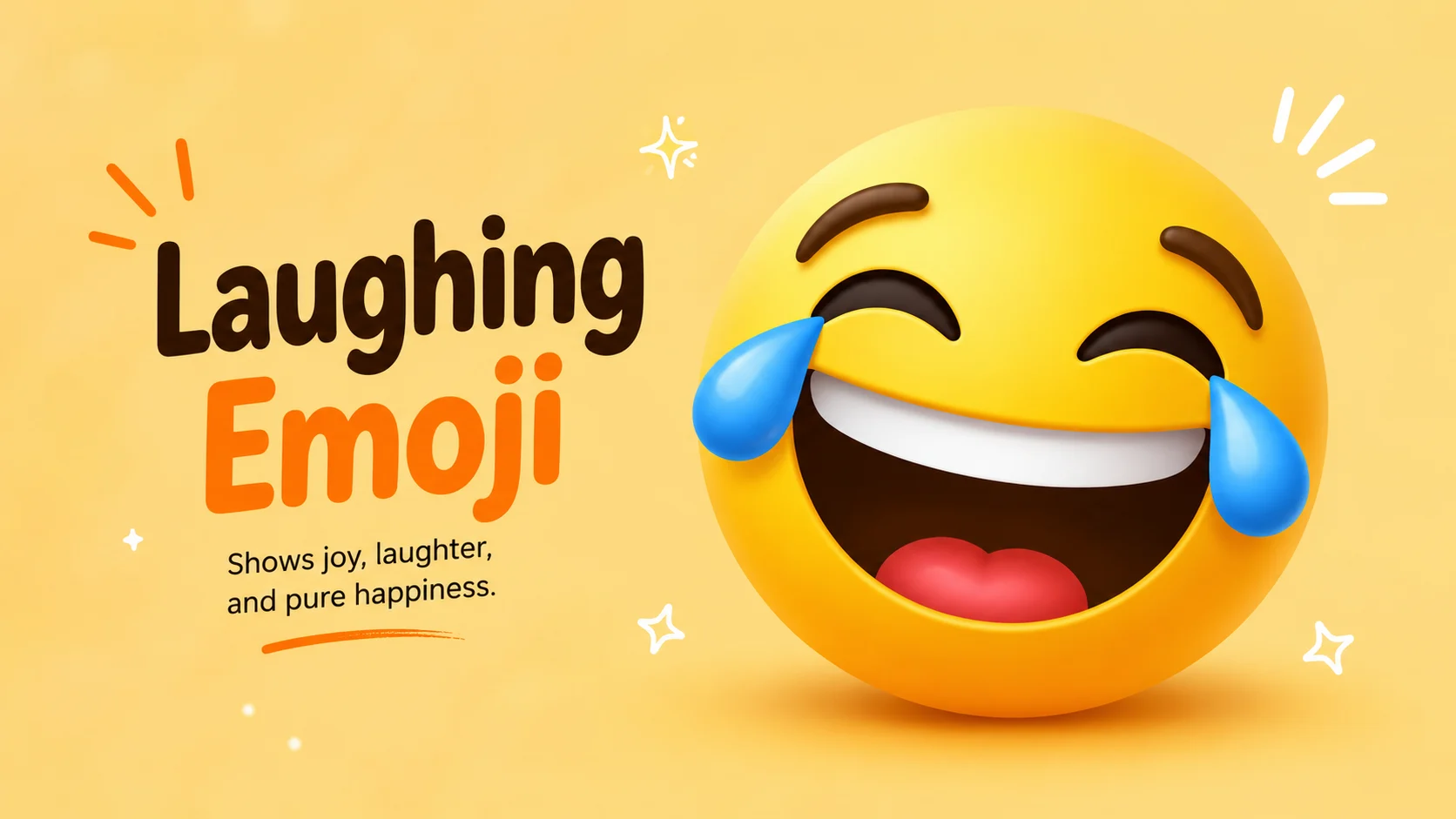
The 😂 emoji is officially called Face with Tears of Joy. It usually means something is very funny, amusing, or makes someone laugh so hard that they are “crying” with laughter. It can also be used to soften a joke, react to an awkward moment, or show playful amusement. Unicode identifies 😂 as U+1F602, while Emojipedia describes it as a laughing reaction to something funny or pleasing.
The 😂 laughing emoji is one of the clearest ways to show that you find something funny in a text. Its wide grin and tears suggest laughing so hard that tears come out, making it a natural digital equivalent of “LOL,” “that’s hilarious,” or “I’m crying laughing.”
Although its official name is Face with Tears of Joy, people commonly call it the laughing emoji, laughing-crying emoji, or crying laughing emoji. In everyday messages, the focus is usually on laughter and amusement, not sadness. Unicode’s emoji data also associates it with words such as “funny,” “haha,” “hilarious,” “joy,” and “laugh.”
Context can still change the tone. Someone might use 😂 after a genuinely funny joke, as a playful reaction to an embarrassing moment, or to make a sarcastic comment feel less serious. So while 😂 normally signals laughter, the words around it help explain exactly what the sender means.
What Does the 😂 Laughing Emoji Mean?
The 😂 emoji usually communicates:
- Laughter
- Amusement
- Something being very funny
- A funny mistake or situation
- Playful teasing
- “I’m laughing so hard”
- A lighthearted reaction
Its visual design shows a happy face with tears coming from both eyes, which explains the official name Face with Tears of Joy.
A simple message like:
“That was hilarious 😂”
clearly communicates laughter.
But it can also appear after something mildly funny:
“I forgot my own password again 😂”
Here, the emoji makes the message feel amused and self-aware rather than serious.
😂 Meaning in Text Messages
In texting, 😂 often acts almost like punctuation. It tells the other person how the message should be read.
Compare:
“You actually did that.”
with:
“You actually did that 😂”
The second version is much more likely to sound playful or amused.
People may also place 😂 after a funny story, meme, joke, unexpected mistake, or teasing comment. The emoji helps signal that the sender is laughing rather than criticizing.
Example
Message:
“I walked into the wrong classroom and sat down before realizing it 😂”
Likely meaning:
The sender is laughing at their own mistake.
Another example
Message:
“You really thought that was going to work 😂”
Likely meaning:
Playful teasing rather than a serious insult.
Does 😂 Always Mean Something Is Hilarious?
Not necessarily.
The emoji usually signals amusement, but the level of laughter can vary. Someone might use 😂 for something genuinely hilarious or simply for something they find amusing.
For example:
“That cat just stared at the wall for five minutes 😂”
could mean the sender found the situation genuinely funny.
But:
“I forgot to buy milk again 😂”
may simply mean the sender is laughing at an ordinary mistake.
The emoji does not provide an exact measurement of how funny something is. Context and the sender’s usual texting style matter.
Can 😂 Be Sarcastic?
Yes. 😂 can sometimes accompany sarcasm or an exaggerated reaction.
For example:
“Yeah, because getting homework at 11 p.m. is exactly what I needed 😂”
The emoji can signal that the statement should not be taken literally.
However, 😂 does not automatically make a message sarcastic. If someone says something genuinely funny and adds 😂, it may simply be a straightforward laughing reaction.
Look at the wording before deciding whether the message is sarcastic.
Can 😂 Be Used for Awkward or Embarrassing Moments?
Yes. People can use 😂 when laughing at their own mistakes or an awkward situation.
For example:
“I waved back at someone who wasn’t waving at me 😂”
The emoji shows embarrassment mixed with humor.
It can also make a potentially awkward confession feel lighter:
“I definitely practiced what I was going to say first 😂”
Here, 😂 communicates self-conscious humor.
What Does 😂 Mean From Someone?
If someone sends 😂 in response to your message, the safest interpretation is usually that they found something funny or amusing.
For example:
You: “I just tripped over absolutely nothing.”
Them: “😂”
They are most likely laughing at the situation.
If they send:
“You are ridiculous 😂”
the tone could be affectionate, playful, or teasing depending on the relationship and conversation.
The emoji alone does not prove romantic interest, rejection, sarcasm, or any other specific relationship meaning. The surrounding conversation matters more.
Is 😂 a Flirty Emoji?
😂 is not primarily a flirting emoji. Its main purpose is to express laughter or amusement.
Someone may use it during a friendly or romantic conversation because funny conversations naturally include laughing reactions, but the emoji itself does not establish romantic interest.
For example:
“You always make me laugh 😂”
This could be friendly or affectionate. The meaning comes from the entire conversation, not just the emoji.
If you are trying to understand someone’s intentions, look at their words and overall communication style instead of treating 😂 as a definite romantic signal.
Is 😂 Rude?
Usually, 😂 is lighthearted, but it can feel rude in certain situations.
For example:
“You really thought that was a good idea? 😂”
could sound like playful teasing between friends, but it might feel mocking in a serious conversation.
Likewise, using 😂 after someone’s genuine mistake may make them feel as though you are laughing at them rather than with them.
A good rule is to consider the subject. 😂 works naturally in casual joking, but a serious or sensitive message may call for a more thoughtful response.
Related Laughing Emojis and Their Meanings
| Emoji | Official Name | Common Meaning | Tone | Where or When It Is Used |
|---|---|---|---|---|
| 😂 | Face with Tears of Joy | Laughing hard or finding something funny | Playful, amused | Jokes, funny texts, memes, mistakes |
| 🤣 | Rolling on the Floor Laughing | Extremely strong laughter | Very intense, humorous | Something exceptionally funny |
| 😆 | Grinning Squinting Face | Big grin and strong amusement | Cheerful, energetic | Excited laughter and funny reactions |
| 😄 | Grinning Face with Smiling Eyes | Happiness and cheerful amusement | Warm, positive | Friendly conversations and happy reactions |
| 😅 | Grinning Face with Sweat | Nervous laughter, relief, or awkward humor | Awkward, relieved | Close calls, embarrassing moments, stressful jokes |
| 😭 | Loudly Crying Face | Overwhelming emotion, often exaggerated online | Dramatic, expressive | Hilarious, emotional, frustrating, or shocking moments |
| 🤭 | Face with Hand Over Mouth | Giggle, surprise, or playful reaction | Shy, mischievous | Teasing, secrets, awkward laughs |
| 😹 | Cat with Tears of Joy | Laughing reaction with a cat theme | Playful, silly | Funny messages or cat-related humor |
The closest comparison is 😂 versus 🤣. Both express laughter, but 🤣 is generally more intense and explicitly represents rolling on the floor laughing. Unicode lists both as separate emoji characters: 😂 is U+1F602, while 🤣 is U+1F923.
Another common source of confusion is 😂 versus 😭. Although 😭 officially means Loudly Crying Face, it is also commonly used online for exaggerated laughter or overwhelming reactions. Emojipedia notes that 😭 can express everything from grief to hilarity, depending on context.
😂 vs. 🤣: What’s the Difference?
Think of the distinction this way:
😂 = “That is so funny.”
🤣 = “I am absolutely losing it.”
For example:
“That joke was funny 😂”
sounds like a strong but ordinary laughing reaction.
“I cannot stop laughing at this 🤣”
sounds more intense and dramatic.
Neither emoji has a guaranteed intensity level in every conversation, but 🤣 is specifically named Rolling on the Floor Laughing, making its intended expression more exaggerated.
😂 vs. 😭: Why Do People Mix Them Up?
The two emojis can overlap when people use 😭 to express laughter.
😂 is designed around laughing with tears of joy.
😭 officially represents intense crying, but it can also be used informally for overwhelming emotions, including laughter.
For a straightforward “that’s hilarious” reaction, 😂 is usually clearer.
For exaggerated reactions such as:
“I cannot believe you just said that 😭”
the crying emoji may add a more dramatic internet-style tone.
Text Message Examples With 😂
1. Genuine Laughter
“That might be the funniest thing you’ve ever said 😂”
Meaning: The sender genuinely found the comment very funny.
2. Laughing at Yourself
“I sent the email to the wrong person 😂”
Meaning: The sender is amused or embarrassed by their own mistake.
3. Playful Teasing
“You really thought I wouldn’t notice 😂”
Meaning: The sender is teasing rather than necessarily being angry.
4. Funny Surprise
“Wait, you actually did it? 😂”
Meaning: The sender finds the situation amusing or unexpected.
5. Mild Humor
“I forgot my umbrella again 😂”
Meaning: The sender is making light of their own mistake.
How to Respond to 😂
Your response can match the tone of the conversation.
If they are laughing at your joke:
“😂 I knew you’d find that funny.”
If they’re teasing you:
“Okay, okay 😂”
If something genuinely funny happened:
“I’m still laughing 😂”
If you’re not sure what they found funny:
“Wait, what part? 😂”
If you’re joking back:
“You think that’s funny? Just wait 😂”
These responses keep the conversation natural without assuming that the sender means anything beyond amusement.
Common Misunderstandings About 😂
It does not always mean uncontrollable laughter
People may use 😂 for a small joke or amusing comment.
It does not automatically mean sarcasm
Sarcasm depends on the wording and context.
It does not prove flirting
Someone using 😂 in a conversation does not automatically indicate romantic interest.
It does not always mean the sender is laughing at you
They may be laughing at the situation, themselves, or something you said in a friendly way.
It is not the same as 🤣
Both indicate laughter, but 🤣 is specifically Rolling on the Floor Laughing and generally gives a more exaggerated reaction.
What Is the Official Name of 😂?
The official Unicode name for 😂 is Face with Tears of Joy. Its Unicode code point is U+1F602. Unicode’s current emoji charts list it under the smiling-face group and include keywords such as “funny,” “haha,” “hilarious,” “joy,” “laugh,” and “tear.”
Face with Tears of Joy was approved in Unicode 6.0 in 2010 and added to Emoji 1.0 in 2015.
The emoji may look slightly different across devices and services, but its core meaning remains recognizable as laughter or joy expressed through tears.
Is 😂 Still a Laughing Emoji?
Yes. 😂 remains officially named Face with Tears of Joy and continues to be recognized as a laughter-related emoji. Unicode’s emoji data explicitly includes laugh-related keywords for it.
Informal attitudes toward individual emojis can change over time, and people may choose different laughing emojis depending on their personal style. But that does not change the official identity of 😂.
FAQs
What does 😂 mean in texting?
😂 usually means “that’s really funny” or “I’m laughing.” It can also make teasing, awkward situations, and self-deprecating jokes feel more playful.
What is the official name of the laughing emoji?
The official Unicode name is Face with Tears of Joy.
Is 😂 the laughing-crying emoji?
Yes. “Laughing-crying emoji” is a common informal name for 😂, while Face with Tears of Joy is its official name.
What is the difference between 😂 and 🤣?
😂 represents laughing with tears of joy, while 🤣 is officially Rolling on the Floor Laughing and generally conveys a more exaggerated laughing reaction.
Can 😂 mean sarcasm?
It can accompany sarcastic messages, but the emoji itself does not automatically make a statement sarcastic.
Conclusion
The 😂 laughing emoji, officially called Face with Tears of Joy, is mainly used to show laughter, amusement, and a strong reaction to something funny. It can also make teasing, mistakes, awkward moments, and sarcastic comments feel lighter.
The most useful distinction is between 😂 and 🤣: both express laughter, but 🤣 generally gives a more exaggerated “I can’t stop laughing” feeling. Meanwhile, 😭 can sometimes be used for laughter online even though its official name is Loudly Crying Face.
If someone sends you 😂, the safest interpretation is usually simple: they found something funny or amusing. For anything more personal, read the words and conversation around the emoji instead of assigning a relationship meaning to the emoji alone.
Discover More Related Articles:
