Quick Answer
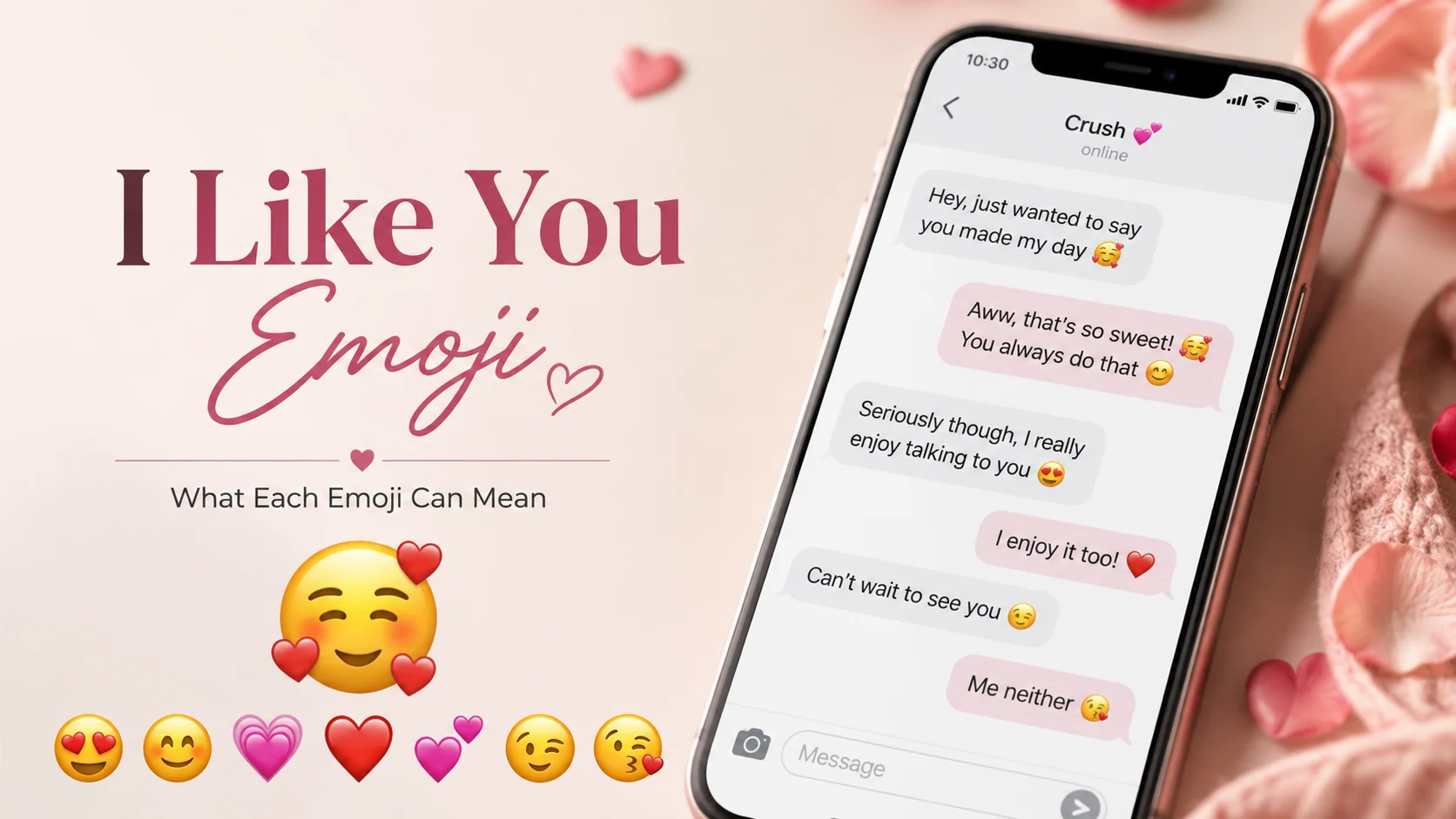
There is no single official “I like you” emoji, but 🥰 Smiling Face with Hearts is one of the closest choices when you want to express warm affection or that someone makes you feel loved. 😍 can feel more excited or intense, 😊 is warmer and more subtle, 🩷 can express sweet affection, and ❤️ can communicate stronger love or care. The best choice depends on the relationship and the tone of the message.
Looking for an I like you emoji usually means you want to express affection without typing the words directly. Emojis can soften a message, make it warmer, or hint at feelings that might sound too serious if written out. A simple 🥰 can communicate a sweet “I really like you” feeling without saying exactly that.
The closest choice depends on what kind of “like” you mean. If you want something gentle, 😊 may work. If your message is more intense, 😍 or ❤️ may send a stronger emotional signal.
Still, an emoji does not have one guaranteed relationship meaning. The same heart or affectionate face can be used between friends, family members, romantic partners, or simply for something a person really enjoys. The words around the emoji and the relationship between the people texting are important.
What Is the Best I Like You Emoji?
🥰 Smiling Face with Hearts is one of the best emojis for expressing a warm “I like you” feeling.
The official Unicode name is Smiling Face with Hearts. It shows a smiling face with rosy cheeks and hearts floating around its head. Emojipedia describes it as expressing happy, affectionate feelings, especially feeling loved or being in love.
For example:
“I really enjoyed talking to you today 🥰”
This can communicate warmth and affection without directly saying “I like you.”
Other good choices include:
- 🥰 Smiling Face with Hearts: warm, affectionate, sweet
- 😍 Smiling Face with Heart-Eyes: excited admiration or strong attraction
- 😊 Smiling Face with Smiling Eyes: gentle warmth and happiness
- 🩷 Pink Heart: sweet affection and caring
- ❤️ Red Heart: strong affection or love
- 😉 Winking Face: playful or teasing
- 💕 Two Hearts: affectionate and cute
- 😘 Face Blowing a Kiss: affectionate and potentially romantic
🥰 What Does the I Like You Emoji Mean?
🥰 is probably the closest match when you want your message to feel affectionate but not overly intense.
It can suggest:
- “I really like you.”
- “You make me feel happy.”
- “You’re so sweet.”
- “I feel warm and comfortable with you.”
- “I’m very fond of you.”
- “You made me smile.”
Unicode lists adore, crush, in love, and love among the keywords associated with 🥰.
However, that does not mean sending 🥰 automatically tells someone you have a romantic crush. The emoji can also express affection toward friends, family, pets, food, or something else someone loves.
😍 What Does 😍 Mean When You Like Someone?
😍 Smiling Face with Heart-Eyes is a stronger and more excited way to show admiration or affection.
It can communicate:
“I really like you.”
or:
“You are amazing.”
or:
“I’m crazy about this.”
Emojipedia describes 😍 as expressing love, infatuation, and strong admiration.
Because of its heart-shaped eyes, 😍 can feel more openly romantic than 😊.
For example:
“You looked amazing today 😍”
That message can sound more flirtatious than:
“You looked amazing today 😊”
The difference comes from the emotional intensity of the emoji.
😊 Is 😊 an I Like You Emoji?
Yes. 😊 can communicate that you like someone, but it is usually more subtle.
The official name is Smiling Face with Smiling Eyes, and it commonly expresses genuine happiness and warm, positive feelings.
For example:
“I always enjoy talking to you 😊”
This can sound warm and affectionate without making a strong romantic statement.
If you are trying to express a gentle “I like you” without making the message too obvious, 😊 can be a natural choice.
🩷 Is the Pink Heart an I Like You Emoji?
Yes, 🩷 can work very well for a sweet and affectionate “I like you” message.
The pink color often gives the heart a softer feeling than ❤️. It can communicate warmth, sweetness, appreciation, friendship, or affection.
For example:
“You’re honestly so sweet 🩷”
Depending on the conversation, that could be friendly or romantic.
The emoji itself cannot tell you which interpretation is correct.
❤️ Does ❤️ Mean “I Like You”?
❤️ can express “I like you,” but it usually carries more emotional weight than a simple smiley.
It can represent love, affection, appreciation, or strong care.
For example:
“I’m really glad I met you ❤️”
That can sound romantic, but ❤️ is also commonly used with friends and family.
If you want your message to feel softer and less intense, 🩷 or 🥰 may be a better fit.
😉 Does 😉 Mean “I Like You”?
😉 Winking Face can suggest playful interest, teasing, or a joking tone.
For example:
“Maybe I’ll save you a seat 😉”
Depending on the conversation, this could sound playful or slightly flirtatious.
Unlike 🥰 or ❤️, the wink does not directly communicate affection. It changes the tone of the words around it.
That makes 😉 useful when the message is already playful.
💕 Does 💕 Mean “I Like You”?
💕 Two Hearts can add a cute, affectionate feeling to a message.
For example:
“Goodnight, talk to you tomorrow 💕”
It can sound sweet and affectionate, but it is not automatically romantic.
It can also be used decoratively in friendly messages, social posts, or conversations about things someone loves.
😘 Does 😘 Mean “I Like You”?
😘 Face Blowing a Kiss can express affection and a kiss-like sentiment.
It may feel more intimate than 😊 and more directly affectionate than a simple heart.
For example:
“Thanks for being so sweet 😘”
The message can sound romantic or playful depending on who is sending it and what the conversation is about.
If you are not sure about the other person’s intentions, it is better to interpret the whole message rather than the emoji alone.
I Like You Emojis Compared
| Emoji | Official Name | Common Meaning | Tone | Where or When It Is Used |
|---|---|---|---|---|
| 🥰 | Smiling Face with Hearts | Warm affection, feeling loved, fondness | Sweet, affectionate | Affectionate texts, compliments, crushes, appreciation |
| 😍 | Smiling Face with Heart-Eyes | Love, admiration, infatuation | Excited, intense | Compliments, admiration, romantic messages |
| 😊 | Smiling Face with Smiling Eyes | Happiness, warmth, positive feelings | Gentle, friendly | Friendly texts, appreciation, subtle affection |
| 🩷 | Pink Heart | Sweet affection, warmth, caring | Soft, cute | Affectionate texts, friendship, gentle romance |
| ❤️ | Red Heart | Love, strong affection, care | Strong, heartfelt | Romantic messages, family, close friendships |
| 💕 | Two Hearts | Affection, sweetness, fondness | Cute, warm | Sweet texts, appreciation, affectionate messages |
| 😉 | Winking Face | Playfulness, teasing, possible flirtation | Playful, suggestive | Jokes, teasing, playful conversations |
| 😘 | Face Blowing a Kiss | Affection, kiss, warmth | Affectionate, potentially romantic | Goodbyes, sweet texts, romantic messages |
The biggest difference is emotional intensity. 😊 is usually the safest and most subtle choice. 🥰 and 🩷 add more affection. 😍 and ❤️ can feel stronger. 😉 changes the message toward playfulness, while 😘 makes the affection more direct.
Which Emoji Should You Use to Say “I Like You”?
There is no single best choice for every situation.
If you want to be subtle
Use:
😊
Example:
“I really like talking to you 😊”
It keeps the message warm without making the emoji itself overly romantic.
If you want to be sweet
Use:
🥰
Example:
“You always make me smile 🥰”
This gives the message a clearly affectionate feeling.
If you want a soft heart
Use:
🩷
Example:
“You’re really special to me 🩷”
The pink heart gives the message a gentle emotional tone.
If you want stronger affection
Use:
❤️
Example:
“I’m so happy you’re in my life ❤️”
This can feel more emotionally serious.
If you want playful energy
Use:
😉
Example:
“I might have to see you again soon 😉”
The wink makes the message more teasing and playful.
What Does It Mean If Someone Sends You an I Like You Emoji?
If someone sends 🥰, 🩷, ❤️, 😍, or another affectionate emoji, it usually means they are adding warmth or positive emotion to their message.
But the emoji alone cannot tell you whether they have a romantic interest.
Consider the full message:
“Thanks for helping me with my homework 🥰”
This may simply express gratitude and affection.
Compare that with:
“I really like spending time with you 🥰”
The second message contains direct words about personal affection, so the context gives the emoji more meaning.
The safest approach is to read the emoji together with the actual words.
Can an I Like You Emoji Be Friendly?
Absolutely.
Affectionate emojis are not limited to romantic relationships. Friends can use 🥰, ❤️, 🩷, 💕, or 😊 to show appreciation and closeness.
For example:
“You’re such a good friend 🩷”
The words make the friendly meaning clear.
This is why it is risky to treat one emoji as proof of a crush or romantic interest.
Can an I Like You Emoji Be Flirty?
It can contribute to a flirty tone, especially when combined with playful wording.
For example:
“Okay, you’re making me smile 😍”
or:
“You’re trouble 😉”
But emojis do not have a universal flirting code. A person who normally uses affectionate emojis with everyone may not intend anything romantic.
I Like You Emoji Text Examples
Sweet
“I really like talking with you 🥰”
Likely tone: Warm and affectionate.
Subtle
“I always look forward to your messages 😊”
Likely tone: Gentle and positive.
Heartfelt
“I’m really glad I know you ❤️”
Likely tone: Strong appreciation or affection.
Playful
“You’re kind of hard to ignore 😉”
Likely tone: Teasing and possibly flirtatious.
Cute
“You’re seriously so sweet 🩷”
Likely tone: Warm and affectionate.
Admiring
“You looked great today 😍”
Likely tone: Strong admiration.
The words are what make these examples different. The emoji supports the message rather than replacing it.
How to Say “I Like You” With Emojis
If you want to communicate the feeling without spelling it out, you can combine a short message with an emoji.
Try:
- “I really like talking to you 🥰”
- “You make me smile 😊”
- “You’re pretty special 🩷”
- “I always enjoy seeing you ❤️”
- “You’re amazing 😍”
- “I think you’re really cool 💕”
- “You always make my day 🥰”
These are clearer than sending an emoji alone because the words provide context.
Common Mistakes When Reading an I Like You Emoji
The biggest mistake is assuming that every heart or affectionate face has a secret romantic meaning.
Someone might send ❤️ because they appreciate you. Someone might send 😍 because they really like a new outfit, meal, song, or photo.
Another mistake is focusing on the color or emoji while ignoring the message itself.
If someone writes:
“Thanks for helping me! ❤️”
the heart mainly reinforces gratitude.
If they write:
“I really like spending time with you 🥰”
the words provide much stronger evidence of personal affection.
What Is the Closest Emoji to “I Like You”?
For a general affectionate “I like you” feeling, 🥰 Smiling Face with Hearts is one of the closest options.
For sweet affection, try 🩷.
The playful teasing, try 😉.
There is no official emoji that literally translates to “I like you.” Unicode’s emoji data instead gives individual characters official names and associated keywords. For example, Unicode lists 🥰 with keywords including “adore,” “crush,” “in love,” and “love,” making it especially relevant to affectionate messages.
FAQs
What is the emoji for “I like you”?
There is no single official “I like you” emoji. 🥰, 🩷, 😊, 😍, and ❤️ can all express different versions of liking or affection.
What emoji means “I have a crush on you”?
🥰 is one of the closest choices because it can express affectionate or romantic feelings. 😍 can feel more intense and enthusiastic.
Is 🥰 an “I like you” emoji?
Yes, 🥰 can express a warm, affectionate “I like you” feeling. It can also be used for non-romantic affection.
Is 😍 stronger than 🥰?
Often, 😍 feels more excited and intense, while 🥰 can feel warmer, softer, and more content. The distinction is not a strict rule.
Does 🩷 mean “I like you”?
It can. 🩷 often adds a sweet or affectionate tone, but it can also be friendly.
Does ❤️ mean love or like?
❤️ can communicate either strong affection or love. Context determines how strong the message feels.
Conclusion
There is no official emoji that means exactly “I like you,” but several emojis can express that feeling in different ways. 🥰 is a strong all-around choice for warm affection, 😊 keeps things subtle, 🩷 feels sweet, 😍 shows stronger admiration, and ❤️ communicates deeper affection.
The best choice depends on the message and the relationship. Rather than trying to decode one emoji as a guaranteed sign of romantic interest, look at the words, conversation, and overall tone. An emoji works best as an emotional accent, not a secret code.
