Quick Answer
The cry laugh emoji 😂, officially called Face with Tears of Joy, usually means “That’s so funny I’m crying laughing.” It combines a wide smile and tears to show strong amusement, happiness, or laughter. In texts, it can make a funny reaction feel more expressive than simply saying “LOL.” Depending on the conversation, 😂 can also be used playfully to soften a comment, react to something ridiculous, or exaggerate how funny a situation feels.
Unicode identifies the emoji as U+1F602, with keywords connected to crying, funny, happy, hilarity, joy, and laughter. The 😂 emoji is not normally a sign of sadness. The tears represent tears of joy, while the large grin communicates laughter. Emojipedia describes it as a face commonly used for something funny or pleasing.
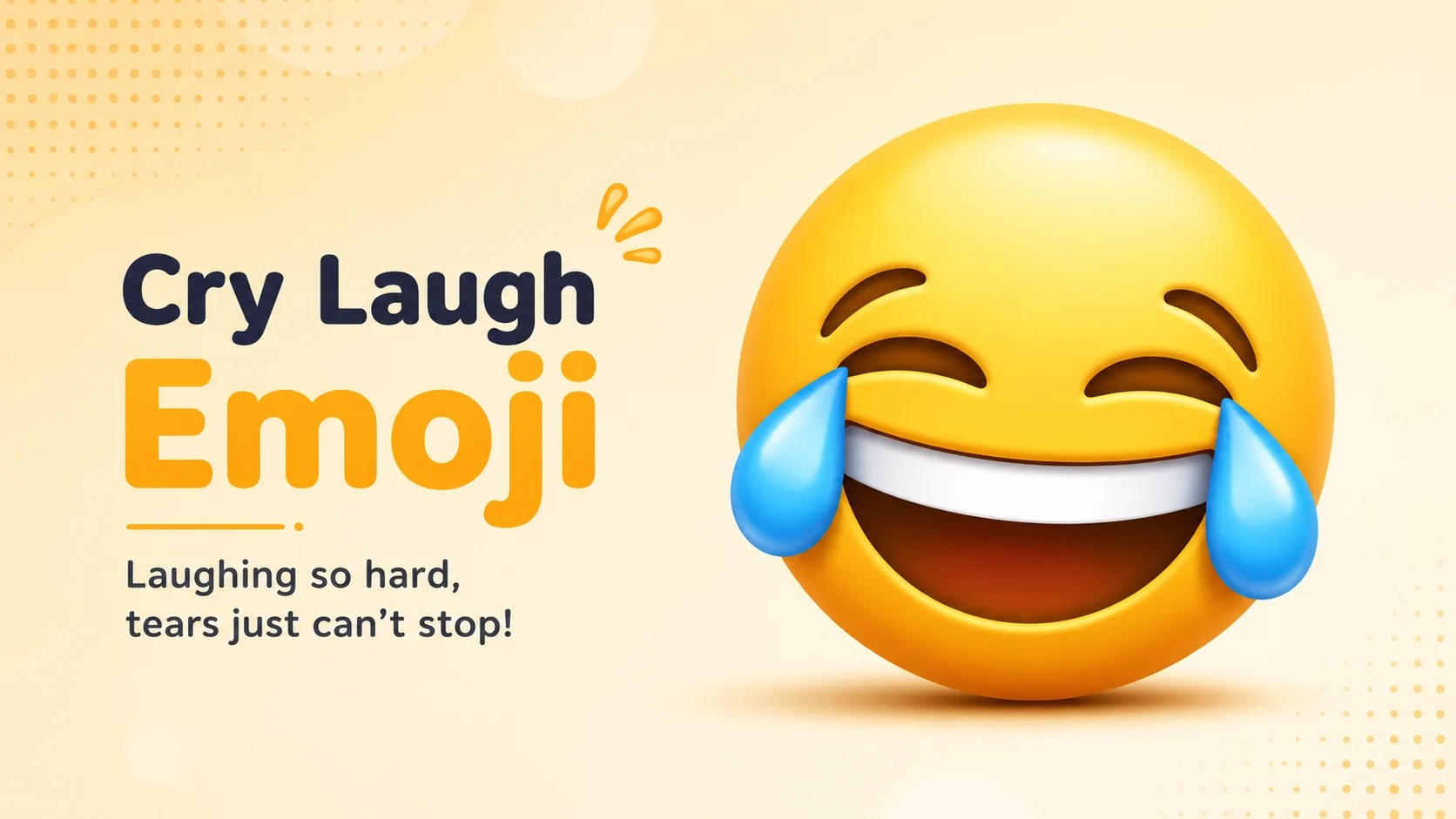
The cry laugh emoji 😂 is one of the clearest ways to show that something is extremely funny, ridiculous, or entertaining. Its official Unicode name is Face with Tears of Joy, and the character is designed with a big grin, smiling eyes, and tears coming from both eyes.
In everyday texting, 😂 can stand in for phrases such as “I’m laughing,” “That was hilarious,” or “You’re killing me.” It can also add a playful tone to a message that might otherwise sound too serious, blunt, or dry.
Still, the emoji does not have one fixed meaning in every conversation. The words around it, the relationship between the people chatting, and the reason it was sent can change how it feels. A friend might use 😂 after an obvious joke, while someone else might use it to react to an awkward or ridiculous situation.
What Does the Cry Laugh Emoji 😂 Mean?
The main meaning of 😂 is strong laughter or amusement.
People commonly use it when:
- Something is genuinely hilarious
- A friend makes a funny comment
- A situation is absurd or ridiculous
- They want to exaggerate a laughing reaction
- They are joking around
- They find a story unexpectedly funny
- They want their response to sound playful
For example:
“You really thought that was going to work 😂”
This could mean the person finds the situation funny rather than being seriously critical.
The emoji can also communicate emotional intensity. A simple 🙂 may show mild happiness, while 😂 suggests a much stronger laughing reaction.
😂 Meaning in Text Messages
In texting, 😂 often works as a reaction emoji rather than a statement on its own.
Someone might send:
“I just walked into the wrong classroom 😂”
The emoji tells you the person is laughing at their own mistake.
Or:
“You actually said that out loud 😂”
Here, 😂 can signal amusement and playful disbelief.
A single 😂 can be enough to show that the sender understood a joke. Several 😂 emojis can make the reaction look even more exaggerated:
“STOP 😂😂😂”
That usually reads as an enthusiastic laughing response.
Is 😂 a Happy or Sad Emoji?
Despite the tears, 😂 is primarily a happy and humorous emoji.
The tears are meant to represent laughing so hard that tears appear. Unicode’s official keywords include funny, happy, hilarious, joy, laugh, and tear, which helps distinguish it from emojis intended to communicate sadness.
Compare these:
- 😂 = laughing with tears of joy
- 😢 = sadness or crying
- 😭 = intense crying, though it can also be used humorously
- 🥲 = mixed or bittersweet emotion
So if someone sends 😂 after a joke, the most natural interpretation is laughter—not emotional distress.
How the Tone of 😂 Can Change
Context matters when interpreting the cry laugh emoji.
Genuine laughter
“That video was so funny 😂”
The meaning is straightforward: the person found it hilarious.
Playful teasing
“You forgot your own password again 😂”
The sender is probably teasing rather than expressing serious criticism.
Ridiculous situation
“The dog stole the entire sandwich 😂”
The emoji highlights the absurdity of the situation.
Softening a blunt statement
“You are definitely the messiest person I know 😂”
Without the emoji, the sentence might sound harsh. With 😂, it is more likely to feel like playful teasing.
Exaggerated reaction
“You wore that to the meeting 😂”
Depending on the relationship and surrounding conversation, this could be friendly humor or could feel mocking. The emoji alone cannot tell you which one.
Does 😂 Mean Someone Is Flirting?
Not by itself.
The cry laugh emoji can appear in playful or flirty conversations, but 😂 is fundamentally a laughter emoji. It does not prove romantic interest.
For example:
“You’re actually hilarious 😂”
This could be friendly, affectionate, or mildly flirty depending on the rest of the conversation.
Look at the broader context instead of treating one emoji as proof of attraction. The conversation history, wording, and communication style matter more than the emoji alone.
What Does 😂 Mean From Someone?
When someone sends 😂 directly to you, they are usually showing that they found something funny, entertaining, ridiculous, or amusing.
The exact feeling can depend on what came before it.
If you say:
“I accidentally sent my grocery list to my teacher 😂”
and they reply:
“NO WAY 😂”
they are almost certainly reacting with amusement.
But if you tell them something serious and they respond only with 😂, the meaning may be less obvious. They could be misunderstanding the situation, using humor awkwardly, or reacting to a specific part of the message. In that situation, context matters more than the emoji itself.
Related Emojis and Their Meanings
| Emoji | Official Name | Common Meaning | Tone | Where or When It Is Used |
|---|---|---|---|---|
| 😂 | Face with Tears of Joy | Laughing very hard or finding something hilarious | Joyful, playful | Funny texts, jokes, reactions, social posts |
| 🤣 | Rolling on the Floor Laughing | Extremely intense laughter | Highly playful, exaggerated | Very funny jokes, absurd situations, big reactions |
| 😆 | Grinning Squinting Face | Strong amusement or a big laugh | Energetic, cheerful | Jokes, teasing, excited reactions |
| 😅 | Grinning Face with Sweat | Nervous laughter, relief, or awkward amusement | Awkward, relieved, playful | Embarrassing moments, close calls, uncomfortable jokes |
| 😭 | Loudly Crying Face | Intense crying or exaggerated emotion; sometimes humorous | Dramatic, emotional | Strong reactions, sadness, overwhelming excitement, humorous exaggeration |
| 🥲 | Smiling Face with Tear | Mixed feelings, tender happiness, or smiling through difficulty | Bittersweet, emotional | Emotional moments, gratitude, complicated feelings |
| 😹 | Cat with Tears of Joy | Laughing hard in a cat-face style | Playful, silly | Jokes, animal-themed reactions, playful chats |
| 😄 | Grinning Face with Smiling Eyes | Happiness, friendliness, or cheerful amusement | Warm, positive | Casual conversation, good news, friendly reactions |
The closest comparison is usually 😂 vs. 🤣. Both express laughter, but 🤣 generally feels more exaggerated or intense. Unicode officially names 🤣 Rolling on the Floor Laughing, while 😂 is Face with Tears of Joy.
Another important comparison is 😂 vs. 😭. 😂 has a clear laughing expression with tears of joy, while 😭 depicts heavy crying and can be used for either genuine sadness or exaggerated reactions.
😂 vs. 🤣: Which One Should You Use?
Use 😂 when you want to say:
“That is really funny.”
Use 🤣 when you want to say:
“That is unbelievably hilarious.”
The difference is mostly one of intensity and style, not a completely different emotion.
For example:
- “That joke was funny 😂”
- “I cannot stop laughing at this 🤣”
Both work, but 🤣 usually makes the reaction feel more dramatic.
😂 vs. 😭: Why Do People Confuse Them?
These two can both appear after something extremely funny.
😂 has laughter built directly into its visual design. The grin and tears of joy make the intended humorous reaction easy to recognize.
😭, officially Loudly Crying Face, shows a much more intense crying expression. However, it can also be used informally for overwhelming laughter, excitement, affection, or other strong emotions.
That means:
“This is so funny 😂”
is clearly a laughing reaction.
While:
“I can’t deal with this 😭”
could mean sadness, laughter, disbelief, or dramatic overwhelm depending on the conversation.
Examples of the Cry Laugh Emoji in Texting
Example 1: Funny mistake
Message:
“I just waved back at someone who wasn’t waving at me 😂”
Likely meaning:
The sender is laughing at their own awkward mistake.
Example 2: Friendly teasing
Message:
“You really forgot where you parked again 😂”
Likely meaning:
Lighthearted teasing rather than serious criticism.
Example 3: Reacting to a joke
Message:
“That was the worst joke I’ve ever heard 😂”
Likely meaning:
The person may actually be amused by how bad the joke was.
Example 4: Absurd situation
Message:
“The cat jumped onto the keyboard and somehow sent the message 😂”
Likely meaning:
The sender finds the situation ridiculous and funny.
Example 5: Strong reaction
Message:
“Wait, you actually believed that? 😂”
Likely meaning:
Amusement or playful disbelief. Whether it feels friendly or insulting depends on the relationship and tone.
Is 😂 Ever Sarcastic or Rude?
Yes, it can be, although that is not its default meaning.
For example:
“Great job remembering the deadline 😂”
If the person actually missed the deadline, the emoji could make the sentence sarcastic.
Likewise:
“Nice idea 😂”
could be genuine encouragement or mockery.
The safest approach is to read the entire message rather than deciding what 😂 means on its own. An emoji can change tone, but it does not automatically determine the sender’s intention.
How to Respond to 😂
Your response should match the situation.
If they are laughing at your joke
- “I knew you’d laugh 😂”
- “I’m glad you got it 😂”
- “I was waiting for that reaction.”
If they are teasing you
- “Okay, okay, you got me 😂”
- “Don’t start 😂”
- “You’re one to talk.”
If you are not sure what they mean
- “Wait, what part was funny? 😂”
- “Are you laughing with me or at me?”
- “Okay, I need context 😂”
If the conversation is friendly
You can simply send another laughing reaction or continue the joke. There is no need to overthink a single 😂 when the surrounding conversation is clearly humorous.
Common Misunderstandings About 😂
One common mistake is assuming the tears mean sadness. They do not in the emoji’s official name or primary use. The emoji is specifically called Face with Tears of Joy.
Another mistake is assuming 😂 always means the sender is laughing at you. It could mean they are laughing with you, laughing at themselves, or simply reacting to something funny in the conversation.
It is also easy to overread 😂 as flirting. A laughing emoji can appear in romantic conversations, but its basic function remains humorous. One emoji is not enough to establish someone’s intentions.
Official Name and Unicode Details
The official Unicode name of 😂 is Face with Tears of Joy.
Its Unicode code point is U+1F602. Unicode lists it among the smiling-face emojis and associates it with terms such as crying, funny, happy, hilarious, joy, laugh, and tear.
Emojipedia notes that 😂 was approved as part of Unicode 6.0 in 2010 and added to Emoji 1.0 in 2015.
Different platforms may draw emoji characters with small visual differences, but the basic idea of 😂 remains the same: a laughing face showing tears of joy.
FAQs
What does 😂 mean in texting?
😂 usually means “That is really funny” or “I’m laughing so hard.” It can also express amusement, playful teasing, or an exaggerated reaction.
Is 😂 a crying emoji?
Not in its primary meaning. It is officially called Face with Tears of Joy, so the tears represent laughter and happiness rather than sadness.
What is the difference between 😂 and 🤣?
Both express laughter. 😂 is Face with Tears of Joy, while 🤣 is Rolling on the Floor Laughing and generally gives a more exaggerated impression.
Does 😂 mean laughing at someone?
Not necessarily. It can mean laughing with someone, laughing at a situation, reacting to a joke, or teasing. The surrounding message determines the tone.
Can 😂 be sarcastic?
Yes. Like many emojis, it can be used sarcastically. For example, a person might add 😂 to a statement that is clearly ironic or teasing.
Is 😂 flirty?
It can appear in a flirty conversation, but 😂 itself is not specifically a flirting emoji. Its main meaning is laughter or amusement.
Conclusion
The cry laugh emoji 😂 officially means Face with Tears of Joy and is mainly used to express strong amusement, laughter, happiness, or playful reactions. Its tears do not normally signal sadness.
The exact tone can still change with context. 😂 may communicate genuine laughter, friendly teasing, exaggeration, sarcasm, or playful disbelief. When comparing it with similar emojis, 🤣 generally feels more intensely humorous, while 😭 can represent either genuine crying or exaggerated emotion depending on the conversation.
When you are unsure what someone means by 😂, focus on the words around it and the overall tone instead of giving the emoji a fixed interpretation.
Discover More Related Articles:
