Quick Answer
The 🍣 sushi emoji usually represents sushi, Japanese food, eating out, restaurants, or a craving for sushi. It can also be used more broadly when talking about Japanese cuisine or food-related plans. The exact meaning depends on the surrounding message. For example, “Sushi tonight? 🍣” is a direct reference to the food, while “I could eat sushi every day 🍣” expresses enthusiasm or a craving.
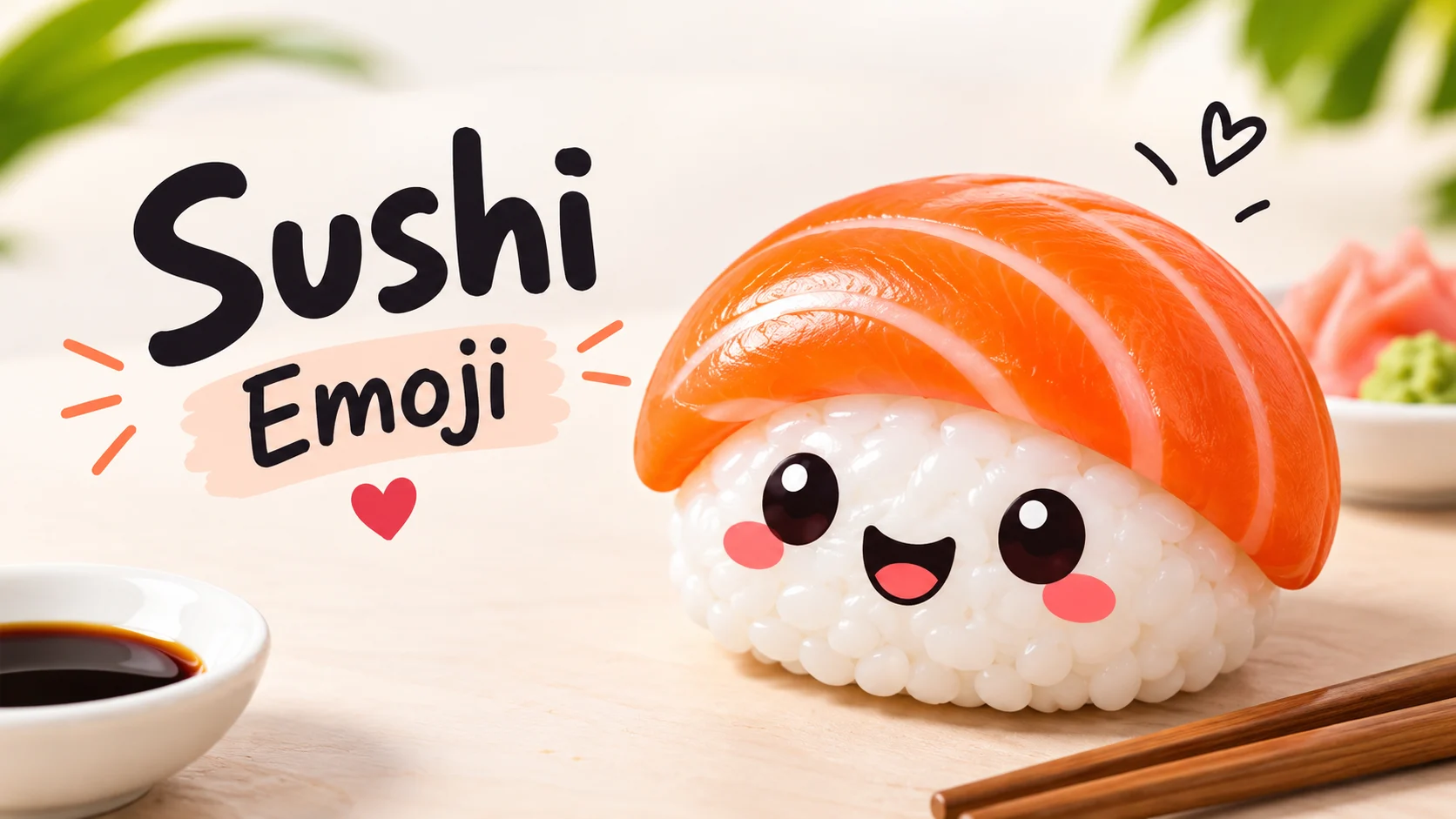
The 🍣 sushi emoji is one of the clearest food emojis: it represents sushi, particularly the type of sushi traditionally shown as fish served on rice. Unicode officially lists its name as Sushi, with the code point U+1F363.
In everyday texting, people use 🍣 when talking about ordering sushi, going to a sushi restaurant, making sushi, sharing a meal, or simply saying they are craving it. It can also appear in conversations about Japanese cuisine and food culture.
Unlike emojis whose meanings can become highly symbolic, 🍣 usually stays close to its literal meaning. Still, the tone can change depending on the message. It can communicate excitement, anticipation, appreciation, or a casual invitation to eat.
What Does the Sushi Emoji 🍣 Mean?
The 🍣 emoji most commonly means sushi or Japanese food. It may be used when someone is:
- Talking about eating sushi
- Planning a meal
- Mentioning a sushi restaurant
- Saying they are hungry
- Sharing a food photo
- Talking about Japanese cuisine
- Expressing excitement about sushi
- Discussing cooking or preparing sushi
The emoji is generally straightforward, so it does not normally require a complicated interpretation.
For example:
“Want to get sushi tonight? 🍣”
Here, 🍣 simply reinforces the idea of going out for sushi.
What Does 🍣 Mean in Text?
In text messages, 🍣 usually means “sushi,” “let’s eat sushi,” or “I’m craving sushi.”
The surrounding words determine the exact message.
“I haven’t had sushi in forever 🍣”
Likely meaning: The sender wants sushi or is thinking about eating it.
“That sushi place was amazing 🍣”
Likely meaning: The sender is talking positively about a sushi meal.
“Lunch? 🍣”
Likely meaning: The sender may be suggesting sushi as a meal option.
“Making sushi tonight 🍣”
Likely meaning: The sender is preparing or planning to make sushi.
The emoji itself does not automatically add a romantic or hidden meaning.
🍣 Meaning in a Conversation
The sushi emoji can have several closely related uses.
Talking About Food
This is the most direct use.
“What are you having for dinner? 🍣”
The sender is simply referring to sushi.
Showing a Craving
🍣 can emphasize that someone really wants sushi.
“I need sushi right now 🍣”
The words provide the craving, while the emoji visually reinforces it.
Making a Food Suggestion
It can also work as a short suggestion.
“Dinner tomorrow? 🍣”
Depending on the conversation, this could mean “How about sushi?”
Sharing Excitement
The emoji can add enthusiasm to food-related news.
“We finally got reservations at that sushi place! 🍣”
Here, 🍣 helps show what the excitement is about.
Is the Sushi Emoji Flirty?
The 🍣 emoji is not inherently flirty.
If someone sends it while discussing dinner or making plans, it usually means exactly what it shows: sushi or a sushi-related meal.
For example:
“Want to grab sushi after school? 🍣”
That could be a friendly invitation. The emoji alone does not prove romantic interest.
If the broader conversation has a playful or romantic tone, the emoji can appear within that context, but the romantic meaning comes from the conversation rather than 🍣 itself.
Can 🍣 Have a Funny Meaning?
Yes. Although 🍣 has a literal food meaning, people can use it humorously.
For example:
“Me pretending I only ordered one thing 🍣🍣🍣🍣”
The repeated emojis exaggerate how much sushi the person supposedly ordered.
Another example:
“My wallet after sushi night: 💸”
If 🍣 appears alongside the message, the joke is about spending money on food.
These uses are playful extensions of the literal meaning rather than separate official definitions.
Does 🍣 Mean Japanese Culture?
It can refer to Japanese cuisine or Japanese food culture, but it most directly represents sushi.
Unicode’s current emoji data lists 🍣 as Sushi and includes keywords such as “food” and “sushi.”
Emojipedia describes the emoji as Japanese sushi, typically depicting pieces of fish served over vinegared rice. Its visual design can vary between platforms.
So, 🍣 can work in a conversation about Japanese cuisine, but it should not automatically be interpreted as representing every aspect of Japanese culture.
Sushi Emoji and Different Types of Sushi
The emoji does not identify one specific sushi recipe every time it is used.
Sushi includes many forms, and emoji artwork varies between platforms. Some designs have traditionally shown nigiri-style sushi, while some platform designs have included maki-style sushi.
That means 🍣 is best understood as a general sushi symbol, rather than a precise label for one specific sushi dish.
If someone wants to specify a particular type of sushi, words are usually clearer than relying on the emoji alone.
Related Food Emojis Compared With 🍣
| Emoji | Official Name | Common Meaning | Tone | Where or When It Is Used |
|---|---|---|---|---|
| 🍣 | Sushi | Sushi, Japanese food, sushi meals | Casual, appetizing | Sushi plans, cravings, restaurant conversations |
| 🍱 | Bento Box | Japanese-style boxed meal | Casual, food-focused | Lunch, Japanese meals, packed food |
| 🍚 | Cooked Rice | Rice or a rice-based meal | Neutral, simple | Meals, cooking, Asian cuisine |
| 🍜 | Steaming Bowl | Noodles, ramen, hot meal | Cozy, casual | Restaurant plans, noodle cravings |
| 🍤 | Fried Shrimp | Fried shrimp, seafood, tempura-style food | Casual, appetizing | Seafood meals, Japanese food conversations |
| 🍥 | Fish Cake with Swirl | Japanese fish cake or food decoration | Food-focused, specific | Japanese dishes, ramen-related conversations |
| 🥟 | Dumpling | Dumplings and similar filled foods | Casual, appetizing | Meals, takeout, food recommendations |
| 🥢 | Chopsticks | Eating with chopsticks or Asian cuisine | Casual, food-related | Meal photos, restaurant plans, food discussions |
The closest alternatives depend on what you are trying to say. 🍱 is useful when the subject is a boxed Japanese meal, while 🍜 points more clearly toward noodles or ramen. 🍤 can suggest seafood or fried shrimp, and 🥢 focuses on the eating utensil rather than a specific food.
If the conversation is specifically about sushi, 🍣 is much clearer than these alternatives.
🍣 Sushi Emoji Examples in Text Messages
Here are some realistic ways 🍣 can appear in conversation:
“Sushi for dinner? 🍣”
Meaning: A suggestion or question about having sushi.
“I finally tried sushi today 🍣”
Meaning: The sender is sharing a food experience.
“I’m craving sushi so badly 🍣”
Meaning: The sender really wants sushi.
“That sushi was so good 🍣”
Meaning: The sender enjoyed the meal.
“Sushi date with my best friend 🍣”
Meaning: A casual meal or outing involving sushi. The word “date” does not automatically make the message romantic.
“Who wants sushi? 🍣”
Meaning: The sender may be inviting others to eat sushi.
How to Respond to the Sushi Emoji
Your response can be simple and match the conversation.
If you want sushi too
“Absolutely 🍣”
You’re not sure what they mean
“Are you craving sushi? 😂”
If you want to suggest another meal
“Sushi sounds good, but I’m also down for noodles 🍜”
There is no special response required. Since 🍣 usually has a literal meaning, responding to the food topic is often enough.
Common Misunderstandings About 🍣
One common mistake is assuming that every food emoji has a hidden emotional or romantic meaning. 🍣 generally does not.
Another misunderstanding is treating the emoji as a precise representation of one type of sushi. The artwork varies between platforms, and the emoji is intended as a general sushi symbol.
It is also better not to assume that 🍣 automatically means “Japanese culture.” It can refer to Japanese cuisine, but the immediate meaning is usually the food itself.
A simple rule
If 🍣 appears next to:
- A restaurant → it probably refers to sushi or dining
- A meal plan → it probably suggests sushi
- A food photo → it probably identifies sushi
- A craving → it probably reinforces the desire for sushi
- A joke → it may be part of a food-related joke
Context tells you how specific the meaning is.
Sushi Emoji Copy and Paste
Want to use the sushi emoji? Copy it here:
🍣
You can also combine it with related food emojis:
🍣🥢 | sushi and chopsticks
🍣🍱 | Japanese-style meal
🍣🍜 | Japanese food
🍣😋 | enjoying or craving sushi
🍣❤️ | strong appreciation for sushi or a sushi meal
These combinations are creative uses. The individual emojis retain their own meanings.
Official Sushi Emoji Facts
The official Unicode name of 🍣 is Sushi, and its Unicode code point is U+1F363. Unicode lists it in the food-related emoji set.
According to Emojipedia, the emoji predates the inclusion of emoji in Unicode and was first added to an early Japanese emoji keyboard by SoftBank in 2000. It was later approved as part of Unicode 6.0 in 2010 and added to Emoji 1.0 in 2015.
The artwork can differ across platforms. Some designs show nigiri-style sushi, while others have used maki-style designs or other variations.
FAQs
What does the 🍣 emoji mean?
🍣 officially represents Sushi. In everyday messages, it usually refers to sushi, Japanese food, eating sushi, or craving a sushi meal.
What does 🍣 mean from someone?
It depends on the message. Most often, the sender is talking about sushi, suggesting sushi, or expressing that they want to eat it.
Is 🍣 a Japanese emoji?
🍣 represents sushi, a food strongly associated with Japanese cuisine. Unicode’s official name is simply Sushi.
Does 🍣 mean flirting?
Not by itself. 🍣 is primarily a food emoji. Any romantic meaning would come from the surrounding conversation.
What does 🍣 mean on social media?
On social media, 🍣 can be used in food captions, restaurant posts, sushi photos, meal recommendations, or comments about Japanese cuisine. Its basic meaning remains sushi.
Conclusion
The 🍣 sushi emoji is a simple, recognizable way to talk about sushi, food plans, cravings, restaurants, or Japanese cuisine. Its most common meaning is literal rather than hidden: it usually means sushi.
Context can make the emoji feel excited, playful, casual, or inviting, but 🍣 does not automatically signal flirting or another secret message. If you’re unsure what someone means, look at the words around the emoji and the topic of the conversation.
Discover More Related Articles:
- Penguin Emoji | Is It Cute, Romantic or Just Funny In 2026
- Sheep Emoji | Is It Cute, Funny or Insulting In 2026
