Quick Answer
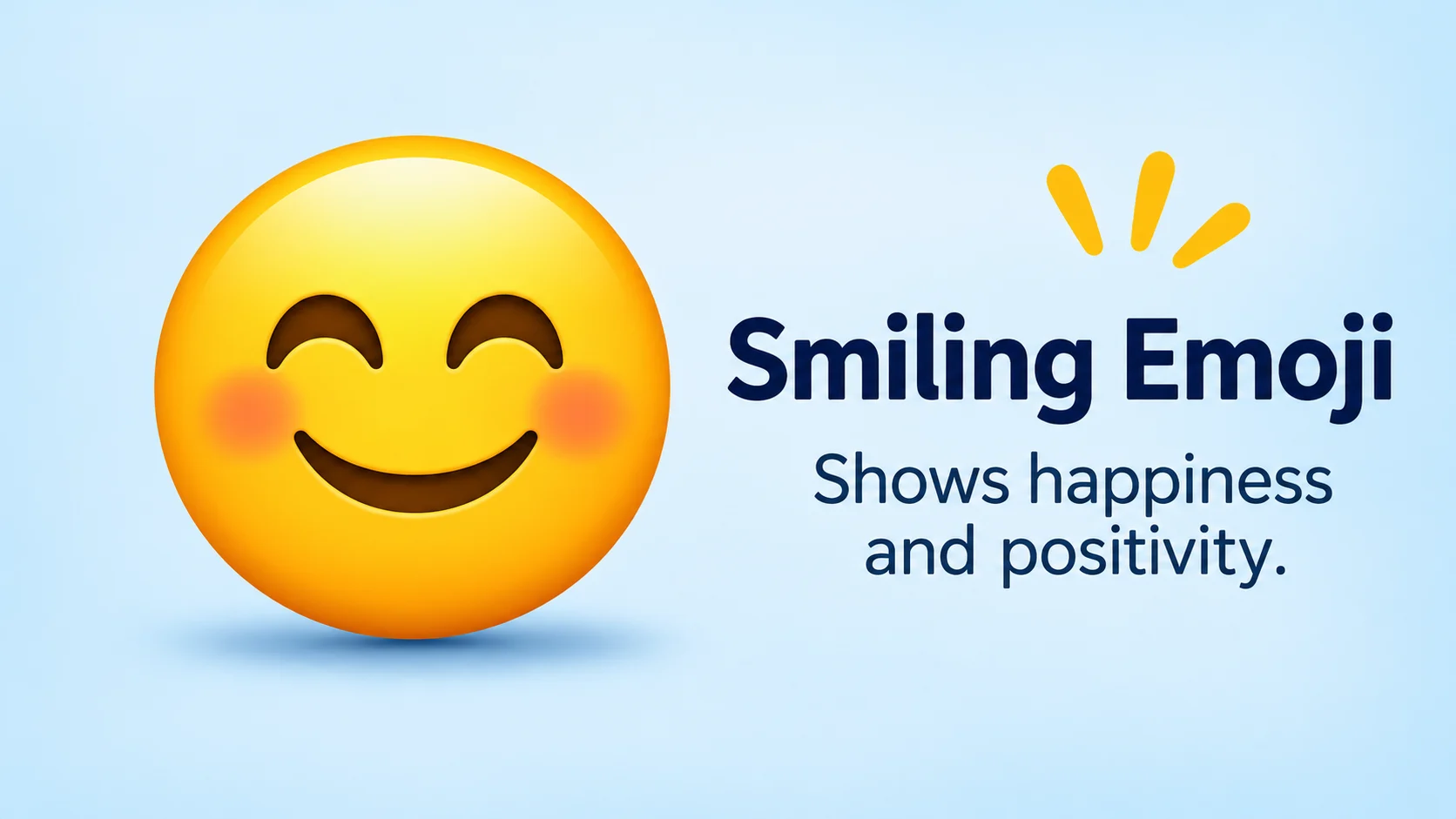
The smiling emoji 🙂, officially called Slightly Smiling Face, usually represents friendliness, politeness, happiness, or a gentle positive reaction. In text messages, it can also express quiet amusement, awkwardness, sarcasm, or passive-aggressive feelings depending on the conversation. Its meaning is not always the same, so the surrounding words and relationship between the sender and receiver matter.
The 🙂 emoji features a yellow face with open eyes and a small, closed-mouth smile. Unlike emojis with wide grins or laughing expressions, it has a simple and subtle appearance. People commonly use it to make messages feel friendly, polite, calm, or slightly cheerful.
In everyday texting, the smiling face can communicate a pleasant reaction without showing strong excitement. Someone might send it after saying thank you, agreeing with a suggestion, or responding to something nice. It can also soften a short message that might otherwise sound direct.
However, 🙂 does not always communicate genuine happiness. In some conversations, it may feel awkward, uncomfortable, sarcastic, or even slightly cold. Understanding its meaning requires looking at the message, the situation, and the sender’s usual communication style.
What Does the Smiling Emoji 🙂 Mean?
The 🙂 emoji usually represents a gentle smile, friendliness, politeness, or quiet happiness. It is less expressive than a wide-grinning emoji and can communicate a calm, pleasant reaction.
People use it for several reasons:
- Friendliness: Making a message sound pleasant.
- Politeness: Responding without sounding too serious.
- Happiness: Showing quiet satisfaction or contentment.
- Agreement: Acknowledging something positively.
- Awkwardness: Responding to an uncomfortable situation.
- Sarcasm: Adding an ironic smile to a statement.
- Playfulness: Giving a lighthearted reaction.
Unlike 😀, which has a broad open smile, 🙂 has a smaller closed-mouth expression. This makes it useful for situations where someone wants to sound positive without appearing overly excited.
What Does 🙂 Mean in Text Messages?
In text messages, 🙂 can have different meanings depending on the conversation.
It may simply be a friendly way to finish a sentence, acknowledge someone’s message, or show appreciation. However, some people interpret it differently, especially when it appears after a short or serious statement.
Here are some examples:
“Thanks for letting me know 🙂”
Likely meaning: A polite and friendly acknowledgment.
“That’s good to hear 🙂”
Likely meaning: Genuine happiness or a positive reaction.
“Okay, no problem 🙂”
Likely meaning: A calm and polite response, although the exact tone depends on the conversation.
“Well, that was interesting 🙂”
Likely meaning: It could be a genuine observation or subtle sarcasm.
The important thing is not to assume that every smiling emoji communicates the same emotion.
Why Does 🙂 Sometimes Feel Passive-Aggressive?
One unusual feature of 🙂 is that its simple smile can sometimes feel less friendly than expected.
For example:
“Sure, do whatever you want 🙂”
The words sound permissive, but the emoji may make the message feel sarcastic or slightly annoyed.
Another example:
“That’s completely fine 🙂”
Depending on the situation, this could be a genuine response or a way of hiding frustration.
This interpretation is informal rather than official. The Unicode name does not define the emoji as passive-aggressive. Its meaning changes because people interpret facial expressions alongside the words and circumstances.
If you are unsure whether someone is annoyed, avoid jumping to conclusions based on one emoji. Their usual texting style and the conversation leading up to the message provide better clues.
Is the Smiling Emoji 🙂 Friendly or Rude?
Usually, 🙂 is friendly or polite. However, some people may interpret it as cold, dismissive, or sarcastic when it appears in an uncomfortable conversation.
| Situation | Possible Interpretation |
|---|---|
| Saying thank you | Polite and friendly |
| Sharing good news | Quiet happiness |
| Agreeing with someone | Calm acknowledgment |
| Ending a short conversation | Polite closing |
| Responding to criticism | Possibly uncomfortable or ironic |
| Discussing an argument | Potentially passive-aggressive |
| Making a playful joke | Lighthearted amusement |
The emoji itself is not rude. Its perceived tone depends on how it fits into the message.
Does 🙂 Mean Someone Is Happy?
Yes, happiness is one of its common meanings. However, it usually expresses a softer or more restrained feeling than an excited grin.
For example:
“I had a nice day 🙂”
This suggests contentment or quiet happiness.
“I finally got some good news 🙂”
This suggests a positive emotional reaction.
“Everything is going well 🙂”
This communicates a pleasant or reassuring tone.
If someone wants to express stronger excitement, they might choose 😃, 😄, or 🤩 instead.
Is 🙂 a Flirty Emoji?
The smiling emoji is not automatically flirty. It generally communicates friendliness, politeness, or a mild positive emotion.
However, it can appear in a playful or affectionate conversation.
For example:
“It was nice talking to you 🙂”
This could simply be a friendly message.
“I always enjoy our conversations 🙂”
This may sound warmer, but it still does not prove romantic interest.
If someone is flirting, their words, conversation history, and overall behavior matter more than a single smiley face.
What Does 🙂 Mean From Someone?
When someone sends you 🙂, they are often trying to communicate a calm, friendly, or positive reaction.
The meaning depends on what they are responding to.
- After a compliment: They may be acknowledging it politely.
- After a joke: They may be showing mild amusement.
- After an apology: They may be accepting the apology or responding calmly.
- After making plans: They may be confirming the arrangement.
- During an argument: They may be trying to sound calm, or their message may carry irony.
For example:
You: “I hope everything goes well tomorrow.”
Them: “Thank you 🙂”
The most natural interpretation is a polite and appreciative response.
Do not automatically interpret the emoji as anger, romantic interest, or hidden frustration.
Related Smiling Emojis and Their Meanings
| Emoji | Official Name | Common Meaning | Tone | Where or When It Is Used |
|---|---|---|---|---|
| 🙂 | Slightly Smiling Face | Gentle happiness, friendliness, politeness | Calm, subtle | Casual texts and polite replies |
| 😊 | Smiling Face with Smiling Eyes | Warm happiness and appreciation | Warm, friendly | Thank-you messages and kind reactions |
| ☺️ | Smiling Face | Gentle happiness and contentment | Soft, classic | Friendly messages and positive reactions |
| 😀 | Grinning Face | General happiness and amusement | Cheerful, energetic | Good news and everyday conversations |
| 😃 | Grinning Face with Big Eyes | Excitement and happiness | Bright, enthusiastic | Celebrations and exciting news |
| 😄 | Grinning Face with Smiling Eyes | Genuine happiness and amusement | Warm, joyful | Jokes and happy conversations |
| 😁 | Beaming Face with Smiling Eyes | Strong happiness and delight | Excited, expressive | Achievements and celebrations |
| 🙃 | Upside-Down Face | Playfulness, irony, or awkward humor | Silly, ironic | Jokes and unusual situations |
| 😏 | Smirking Face | Smugness, mischief, or suggestiveness | Cheeky, sly | Teasing and suggestive conversations |
Which Smiling Emojis Are Most Similar to 🙂?
The closest alternatives are 😊 and ☺️ because all three have gentle, closed-mouth smiles.
However, they have slightly different expressions:
- 🙂 Slightly Smiling Face: A simple, subtle smile that can feel polite or neutral.
- 😊 Smiling Face with Smiling Eyes: A warmer expression that often communicates genuine happiness.
- ☺️ Smiling Face: A classic, gentle smile that can feel soft and friendly.
The other emojis communicate stronger or more specific feelings. 😀 and 😃 show broader grins, while 😁 has a more expressive beaming smile.
🙃 and 😏 are different because they can introduce irony, teasing, or a sly tone rather than straightforward friendliness.
🙂 vs. 😊: What’s the Difference?
Both emojis communicate positive feelings, but their expressions are different.
🙂 Slightly Smiling Face has open eyes and a small, closed-mouth smile. It can express politeness, calm happiness, or a simple acknowledgment.
😊 Smiling Face with Smiling Eyes has closed, smiling eyes and rosy cheeks in many platform designs. It generally feels warmer and more openly affectionate.
Examples:
- “Thanks for your help 🙂” sounds polite and pleasant.
- “Thanks for your help 😊” sounds warmer and more appreciative.
Choose 🙂 for a subtle smile and 😊 when you want to communicate more warmth.
🙂 vs. 😀: What’s the Difference?
The main difference is the size and intensity of the smile.
- 🙂 has a small, closed-mouth smile.
- 😀 has a broad, open-mouth grin.
For example:
“Nice to meet you 🙂”
A calm, polite greeting.
“Nice to meet you 😀”
A more enthusiastic and cheerful greeting.
Both are positive, but 😀 usually looks more expressive.
When Should You Use the 🙂 Emoji?
Use 🙂 when you want your message to feel pleasant, calm, or friendly without showing too much excitement.
Good situations include:
- Thanking someone politely.
- Responding to good news.
- Acknowledging a friendly message.
- Making a simple conversation warmer.
- Showing quiet happiness.
- Ending a casual conversation.
- Responding positively without using an exaggerated expression.
For example:
- “Have a wonderful day 🙂”
- “Thanks for checking in 🙂”
- “That sounds good to me 🙂”
- “I appreciate your help 🙂”
- “See you tomorrow 🙂”
When Should You Avoid Using 🙂?
Although the emoji is generally positive, it may not be the best choice for every conversation.
Consider avoiding it when:
- You are discussing a serious problem and a smile could seem dismissive.
- You need to express strong excitement or happiness.
- You are apologizing for something important and the emoji might make your message seem insincere.
- The conversation involves conflict and the smile could be misunderstood as sarcasm.
- You want to communicate a very specific emotion that another emoji expresses more clearly.
In serious situations, clear words are usually more helpful than adding a smiley face.
How to Respond When Someone Sends 🙂
Your response should match the message and the situation.
Here are some natural examples:
If they are being friendly:
“Thanks! Hope you’re having a great day too.”
If they are agreeing with you:
“Perfect, sounds good!”
If they are thanking you:
“You’re welcome!”
If they are responding to good news:
“I’m glad you think so!”
If their message seems sarcastic:
“Wait, is everything okay?”
You do not need to send another emoji in response. A simple message can communicate your feelings more clearly.
Copy and Paste the Smiling Emoji
Ready to copy
🙂
Slightly Smiling Face Copy Smiling Emoji
You can use 🙂 in text messages, social media captions, comments, emails, and friendly conversations.
Official Name and Unicode Details
The official Unicode name of 🙂 is Slightly Smiling Face.
Here are its basic technical details:
| Detail | Information |
|---|---|
| Emoji | 🙂 |
| Official Name | Slightly Smiling Face |
| Unicode | U+1F642 |
| Unicode Version | Unicode 7.0 |
| Emoji Version | Emoji 1.0 |
| Category | Smileys & Emotion |
| Subcategory | Face Smiling |
The emoji was approved in Unicode 7.0 in 2014 and included in Emoji 1.0 in 2015. Meaning, Copy And Paste+1
Its appearance can vary across Apple, Google, Samsung, Microsoft, and other platforms. Some versions have slightly different eye shapes, colors, or facial proportions, but the basic expression remains a small, closed-mouth smile.
Frequently Asked Questions
1. What does the 🙂 emoji mean from someone?
The 🙂 emoji usually means friendliness, politeness, or quiet happiness. Its exact meaning depends on the message and the relationship between the sender and receiver.
2. Is 🙂 a positive or negative emoji?
It is generally positive, but it can sometimes feel sarcastic, awkward, or passive-aggressive depending on the conversation.
3. What is the difference between 🙂 and 😊?
🙂 has a simple, subtle smile, while 😊 has smiling eyes and usually communicates more warmth, affection, or appreciation.
4. Does 🙂 mean someone is angry?
Not necessarily. Some people use it sarcastically when they feel annoyed, but the emoji alone does not prove anger.
5. Is 🙂 a flirty emoji?
Not usually. It mainly expresses friendliness or politeness, although it can appear in playful or flirty conversations.
Conclusion
The smiling emoji 🙂, officially known as Slightly Smiling Face, is commonly used to express friendliness, politeness, gentle happiness, and positive reactions. Its simple expression makes it suitable for everyday conversations, but its meaning can sometimes change depending on the situation.
While it usually communicates a pleasant feeling, it may also seem awkward, ironic, or passive-aggressive in certain messages. Understanding the surrounding words and the sender’s communication style can help you interpret it correctly. If you want a warmer smile, 😊 may be a better choice, while 😀 works well for a bigger, more cheerful expression.
Discover More Related Articles:
- Nail Polish Emoji | Attitude, Confidence & Style In 2026
- Snail Emoji | Love, Friendship & Texting In 2026
