Quick Answer
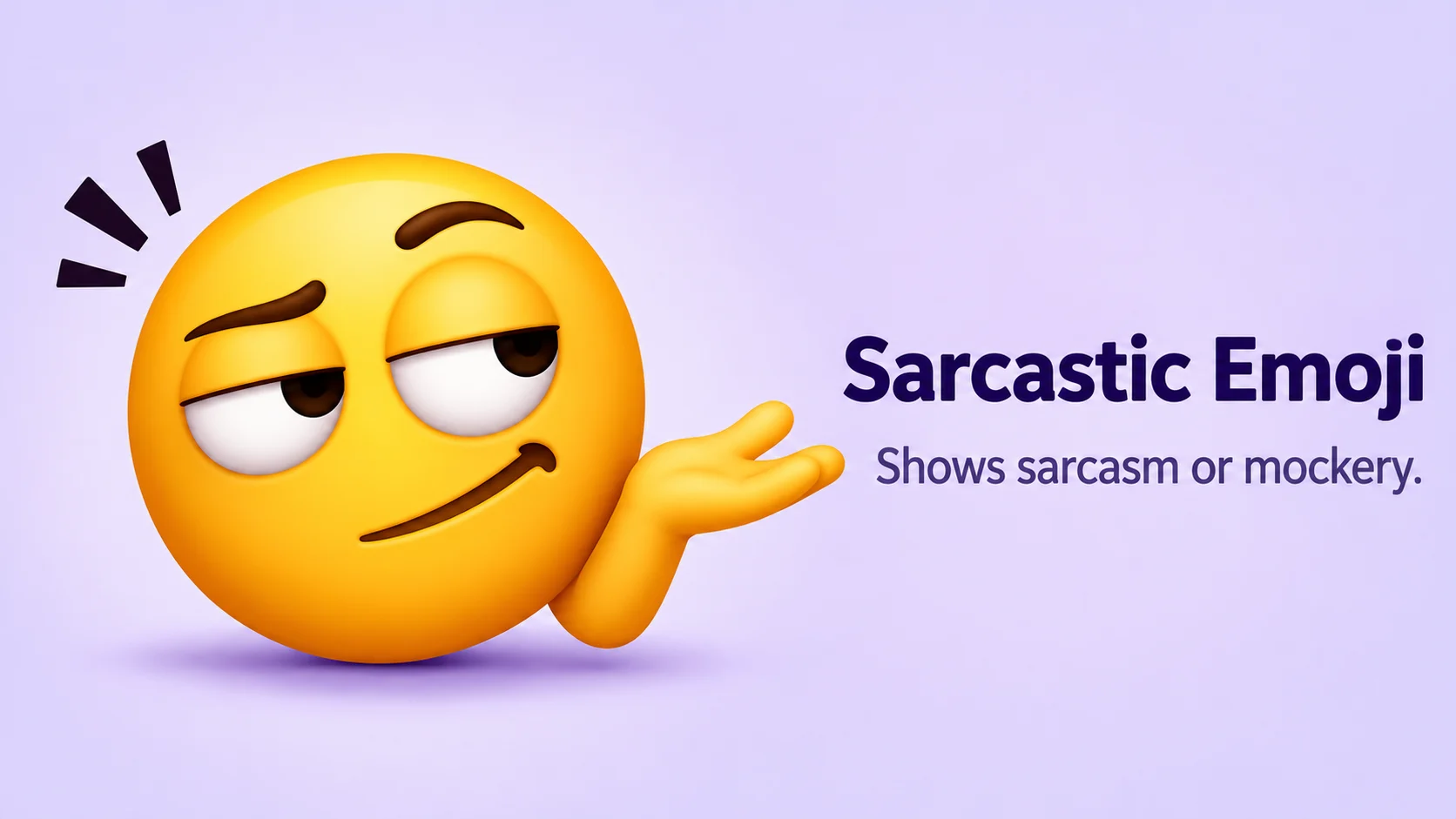
A sarcastic emoji is used to express irony, teasing, mockery, disbelief, or a humorous reaction when someone does not mean their words literally. Popular choices include 🙃 (Upside-Down Face), 😏 (Smirking Face), 🙄 (Face with Rolling Eyes), and 😒 (Unamused Face). The intended meaning depends on the message and conversation.
Sarcastic emojis help people communicate a tone that ordinary text may not express clearly. For example, someone might write “Oh, that’s just perfect 🙃” when something has gone wrong. The upside-down face can suggest that the person is being ironic rather than genuinely happy.
Different emojis express different kinds of sarcasm. A smirking face 😏 can make a comment sound teasing or cheeky, while an eye-rolling face 🙄 can show annoyance or disbelief. Some expressions are lighthearted, while others may sound dismissive or critical.
However, not every sarcastic emoji has the same meaning. The relationship between the people, the wording, and the situation all affect how a message comes across. Understanding these differences can help you recognize sarcasm and choose the right emoji when joking with someone.
A sarcastic emoji is a facial expression used to make a message sound ironic, teasing, unimpressed, or intentionally funny. Instead of taking someone’s words literally, the reader understands that the sender may mean the opposite or is making a playful comment. For example, “Wow, what a wonderful day 🙃” could express frustration if something has gone wrong.
People use sarcastic emojis to add personality to everyday conversations. Some are suitable for friendly jokes, while others communicate annoyance, disbelief, or a little attitude. The upside-down face 🙃 is often used for ironic humor, the smirking face 😏 can suggest a cheeky remark, and the rolling-eyes emoji 🙄 can express disbelief or irritation.
However, sarcasm is not always easy to recognize in text messages. A message that feels funny to one person might sound rude to another. The sender’s wording, relationship with the reader, and usual communication style all help determine whether an emoji is playful, sarcastic, or genuinely annoyed.
Most Common Sarcastic Emojis and Their Meanings
Different emojis communicate different styles of sarcasm. Here are some commonly used choices:
🙃 Upside-Down Face
The 🙃 emoji is one of the most recognizable choices for expressing irony or playful sarcasm. It can suggest that something is awkward, frustrating, unexpected, or not quite as wonderful as the words suggest.
Example:
“Another meeting that could have been an email 🙃”
Likely meaning: The sender is making a sarcastic comment about having another unnecessary meeting.
😏 Smirking Face
The 😏 emoji can communicate a cheeky remark, sly humor, confidence, or teasing. It may make a sentence sound knowingly sarcastic.
Example:
“Oh, you finally finished your homework? 😏”
Likely meaning: The sender is teasing someone about taking a long time.
🙄 Face with Rolling Eyes
The 🙄 emoji is commonly used to show disbelief, annoyance, impatience, or an eye-roll reaction. It can make a sarcastic response sound more dismissive.
Example:
“Sure, because that always works 🙄”
Likely meaning: The sender doubts the suggestion and is expressing frustration.
😒 Unamused Face
The 😒 emoji communicates dissatisfaction, boredom, or an unimpressed reaction. It can make a sarcastic statement feel more serious than playful.
Example:
“Great, exactly what I needed today 😒”
Likely meaning: The sender is unhappy about something and is using sarcasm to express it.
😑 Expressionless Face
The 😑 emoji is useful for deadpan humor. It can suggest that someone has no words, is unimpressed, or finds a situation ridiculous.
Example:
“You did what? 😑”
Likely meaning: The sender is surprised or unimpressed by someone’s decision.
Different Types of Sarcasm These Emojis Express
Not all sarcasm sounds the same. Some comments are friendly and funny, while others communicate frustration or disbelief.
Playful Sarcasm
Playful sarcasm is used between people who understand each other’s humor. It usually involves harmless teasing rather than serious criticism.
Example:
“You’re only five minutes late this time. Impressive 🙃”
Likely meaning: A lighthearted joke about someone’s timing.
Dry Sarcasm
Dry sarcasm uses a straight-faced or emotionless expression to make a funny comment. It often works without obvious laughter.
Example:
“Well, that went perfectly 😑”
Likely meaning: Something probably went wrong, and the sender is making a deadpan joke.
Annoyed Sarcasm
Annoyed sarcasm communicates frustration through words that sound positive but have a negative meaning.
Example:
“Thanks for telling me at the last minute 🙄”
Likely meaning: The sender is unhappy about receiving late information.
Ironic Sarcasm
Ironic sarcasm happens when the words and the actual situation do not match.
Example:
“Love getting stuck in traffic 🙃”
Likely meaning: The sender is frustrated, not genuinely enjoying the traffic.
Sarcastic Emojis Compared With Similar Emojis
Some emojis can express sarcasm even though their official names do not mention it. The following table explains their differences and when they may be useful.
| Emoji | Official Name | Common Meaning | Tone | Where or When It Is Used |
|---|---|---|---|---|
| 🙃 | Upside-Down Face | Irony, awkwardness, playful sarcasm | Ironic, playful | Unexpected situations and jokes |
| 😏 | Smirking Face | Sly humor, teasing, smugness | Cheeky, confident | Teasing comments and knowing reactions |
| 🙄 | Face with Rolling Eyes | Disbelief, annoyance, impatience | Dismissive, sarcastic | Frustrating situations and reactions |
| 😒 | Unamused Face | Disappointment, boredom, dissatisfaction | Unimpressed, annoyed | Responding to irritating comments |
| 😑 | Expressionless Face | Deadpan humor, no reaction | Dry, neutral | Ridiculous situations and awkward conversations |
| 🤨 | Face with Raised Eyebrow | Doubt, skepticism, questioning | Suspicious, doubtful | Questioning an unbelievable statement |
| 😬 | Grimacing Face | Awkwardness, discomfort, nervous humor | Awkward, uncomfortable | Embarrassing moments and difficult situations |
| 🫠 | Melting Face | Overwhelm, embarrassment, ironic frustration | Dramatic, humorous | Stressful or uncomfortable situations |
| 😉 | Winking Face | Playfulness, teasing, joking | Lighthearted, suggestive | Friendly jokes and playful comments |
The biggest difference is the emotional tone. 🙃 is useful for light irony, while 🙄 usually communicates more obvious annoyance. 😏 adds a knowing or cheeky expression, whereas 😑 is better suited to dry, emotionless humor.
The 🤨 emoji is especially useful when you want to question something without directly accusing someone. Meanwhile, 🫠 can make an uncomfortable situation sound humorous or exaggerated.
Sarcastic Emoji Meaning in Text Messages
In texting, sarcastic emojis help readers understand that a statement may not be meant literally. A short sentence can have a completely different tone when an emoji is added.
Here are some hypothetical text-message examples.
1. “Oh, that’s just amazing 🙃”
Meaning: Something disappointing happened, and the sender is expressing irony.
2. “You’re a real genius 😏”
Meaning: Depending on the situation, this could be playful teasing or a sarcastic comment about a mistake.
3. “Yeah, because that’s a brilliant idea 🙄”
Meaning: The sender does not agree with the suggestion and is expressing disbelief.
4. “Another problem? Just perfect 😑”
Meaning: The sender is frustrated and using deadpan sarcasm.
5. “I absolutely love waiting for hours 🫠”
Meaning: The sender is making an exaggerated joke about an unpleasant experience.
These examples show why the words and emoji should be interpreted together.
Is a Sarcastic Emoji Rude or Funny?
A sarcastic emoji can be funny, friendly, or rude depending on how it is used.
When friends understand each other’s humor, an emoji like 🙃 or 😏 can make teasing feel lighthearted. It can turn an ordinary sentence into a playful joke.
However, the same emoji may sound disrespectful during an argument or serious conversation. For example, responding with 🙄 when someone shares an important concern may make them feel dismissed.
If you are unsure how someone will interpret your message, consider using a clearer sentence or a laughing emoji to show that you are joking.
Can Sarcastic Emojis Be Used in Friendly Conversations?
Yes. Sarcasm is often used as a form of friendly humor. People may use it to joke about everyday situations, harmless mistakes, or funny misunderstandings.
Example:
“Wow, you actually remembered! 🙃”
This could be a playful way to tease someone who often forgets things.
Another example:
“Best cooking skills ever 😏”
Depending on the situation, this could be friendly teasing rather than a serious criticism.
The important thing is to consider whether the other person understands your sense of humor.
How to Respond to a Sarcastic Emoji
Your response should match the tone of the conversation. You can joke back, respond neutrally, or ask for clarification if the message seems confusing.
Funny Responses
- “Okay, I see the sarcasm 😂”
- “Someone woke up with an attitude today!”
- “That was definitely not a serious compliment 😂”
Playful Responses
- “Very funny, I must say 🙃”
- “You’re getting too good at this.”
- “I’ll take that as a compliment!”
Neutral Responses
- “Haha, what do you mean?”
- “Are you joking or serious?”
- “I get what you’re saying.”
When Someone Seems Annoyed
- “I didn’t mean to upset you.”
- “Is something bothering you?”
- “Let’s talk about it.”
You do not have to respond sarcastically just because someone sends a sarcastic emoji. A simple, friendly response can prevent a small misunderstanding from becoming a bigger disagreement.
Common Mistakes When Interpreting Sarcastic Emojis
Sarcastic emojis can sometimes create confusion because their meanings are not fixed.
Here are a few common mistakes to avoid:
- Assuming every 🙃 is negative: It can also express awkwardness, playfulness, or lighthearted irony.
- Treating 😏 as automatic flirting: A smirk can communicate teasing or confidence without indicating romantic interest.
- Thinking 🙄 always means anger: It can also be used as an exaggerated reaction to something silly.
- Ignoring the message: The words surrounding an emoji often provide the clearest clue.
- Taking every joke personally: Some people use sarcasm as a normal part of their communication style.
The best approach is to consider the entire conversation instead of judging the sender’s intention from one small symbol.
Sarcastic Emojis Copy and Paste
Looking for sarcastic emojis to use in your messages, captions, or social media comments? Here are some options you can copy.
Common sarcastic emojis:
🙃 😏 🙄 😒 😑 🤨 😬 🫠 😉
Sarcastic emoji combinations:
- 🙃😂 – Playful irony
- 😏😉 – Cheeky teasing
- 🙄😒 – Annoyance or disbelief
- 😑🙃 – Deadpan sarcasm
- 🤨😏 – Doubt with a cheeky attitude
- 🫠😂 – Laughing through an awkward situation
These combinations are informal ways to communicate a particular tone. Their interpretation still depends on the message.
Official Names of Popular Sarcastic Emojis
The term “sarcastic emoji” describes a common way of using certain expressions. It is not the official Unicode name of one specific emoji.
According to the Unicode emoji charts, the individual characters have their own official names:
| Emoji | Official Unicode Name | Code Point |
|---|---|---|
| 🙃 | Upside-Down Face | U+1F643 |
| 😏 | Smirking Face | U+1F60F |
| 🙄 | Face with Rolling Eyes | U+1F644 |
| 😒 | Unamused Face | U+1F612 |
| 😑 | Expressionless Face | U+1F611 |
| 🤨 | Face with Raised Eyebrow | U+1F928 |
| 😬 | Grimacing Face | U+1F62C |
| 🫠 | Melting Face | U+1FAE0 |
| 😉 | Winking Face | U+1F609 |
These official names identify the emoji characters, but they do not restrict how people use them in everyday conversations.
FAQs
What is the most common sarcastic emoji?
🙃 is a common choice for playful irony and sarcasm. However, 😏 and 🙄 are also useful for teasing, disbelief, or annoyance.
What does 🙃 mean sarcastically?
🙃 can suggest that something is awkward, frustrating, or the opposite of what the words literally say. It often adds a playful or ironic tone.
Does 😏 mean sarcasm?
It can. 😏 is officially called Smirking Face and may express sly humor, teasing, smugness, or a knowing reaction. Context determines whether it sounds sarcastic.
Which emoji shows an eye-roll?
🙄 is officially called Face with Rolling Eyes. It commonly communicates disbelief, annoyance, impatience, or a sarcastic reaction.
Can a smiling emoji be sarcastic?
Yes. Even a smiling expression can sound sarcastic when the words suggest the opposite of genuine happiness. The surrounding sentence helps establish the intended tone.
Conclusion
Sarcastic emojis add humor, irony, attitude, and personality to everyday messages. Expressions such as 🙃, 😏, 🙄, and 😒 are useful for communicating different types of sarcasm, from playful teasing to genuine annoyance.
The key is understanding the difference between an emoji’s official name and its informal meaning. A single emoji does not tell the whole story. Always consider the surrounding words and conversation before deciding whether someone is joking, teasing, or expressing frustration.
Discover More Related Articles:

2 thoughts on “Sarcastic Emoji | Express Humor, Irony, and Attitude In 2026 😏”