Quick Answer
The hugs emoji usually refers to 🤗 Hugging Face, which expresses warmth, affection, support, appreciation, or a virtual hug. It can also refer to 🫂 People Hugging, a separate emoji that more directly shows two people embracing. The meaning depends on the conversation. 🤗 can feel cheerful, friendly, or affectionate, while 🫂 is often more clearly associated with comfort, sympathy, solidarity, or an actual hug. Unicode lists 🤗 as “hugging face” and 🫂 as “people hugging.”
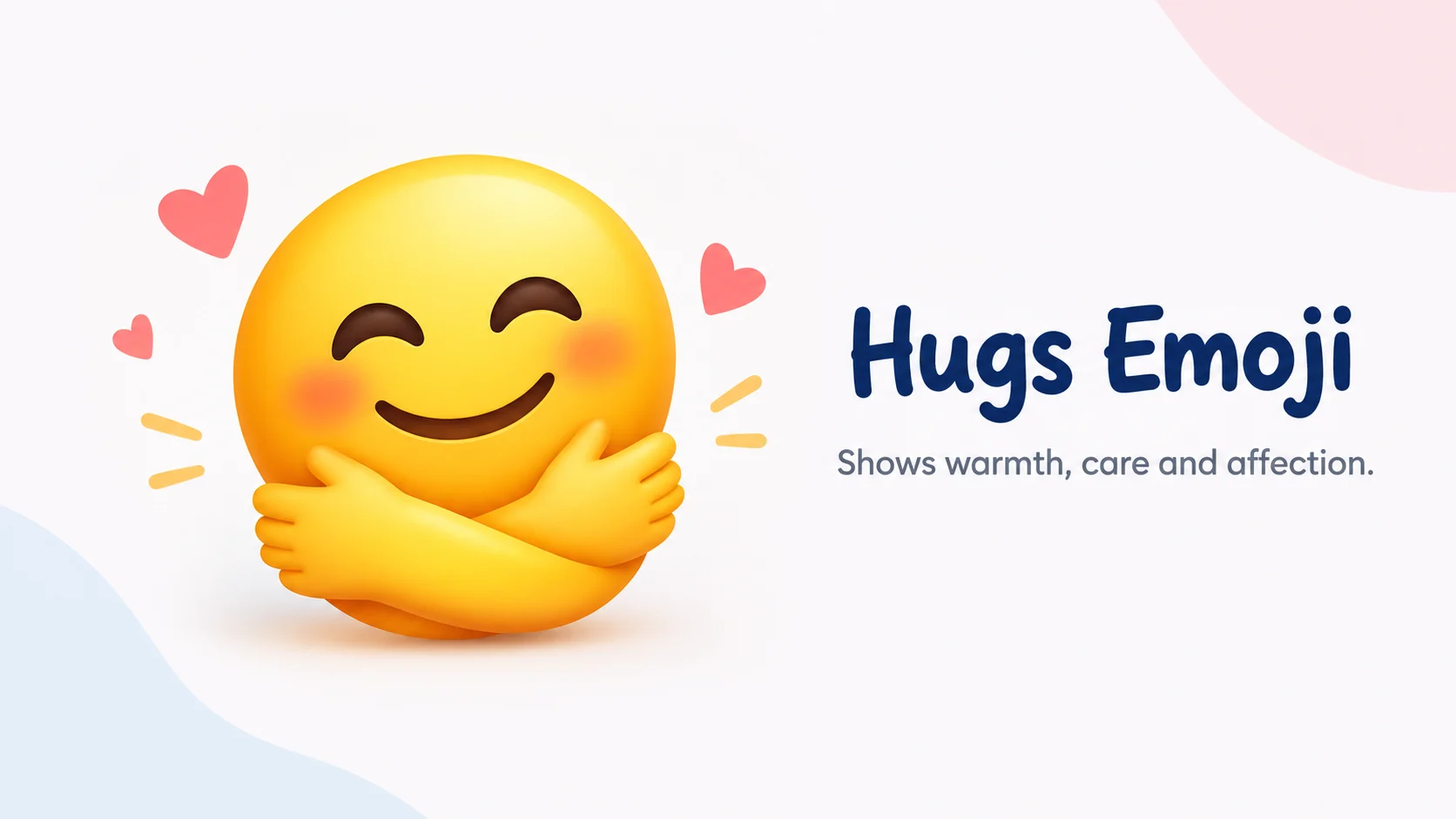
The hugs emoji is commonly used when words alone do not quite capture warmth, care, encouragement, or affection. The most familiar option is 🤗, whose official Unicode name is Hugging Face. Its smiling face and open hands make it useful for sending the idea of a virtual hug.
There is also 🫂 People Hugging, which gives the hug itself a more direct visual representation. Unlike 🤗, it shows two people embracing, so it can work especially well when the message is about comfort, sympathy, support, or togetherness.
These emojis can overlap, but they are not identical. 🤗 often feels lighter and more cheerful, while 🫂 can feel more like an actual embrace. Neither emoji has one guaranteed meaning, so the surrounding words and relationship between the people messaging matter.
What Does the Hugs Emoji 🤗 Mean?
🤗 is officially called Hugging Face. Unicode lists its keywords as including “face,” “hug,” and “hugging.”
People commonly use 🤗 to communicate:
- A virtual hug
- Warmth
- Care
- Support
- Affection
- Appreciation
- Encouragement
- Friendly enthusiasm
For example:
“Thanks for being there for me 🤗”
Here, the emoji adds warmth and appreciation to the message.
Someone might also write:
“You’ve got this 🤗”
In that situation, 🤗 can make the encouragement feel more caring and supportive.
What Does 🫂 Mean?
🫂 is officially called People Hugging. It depicts two people embracing and was added with Unicode 13.0 in 2020.
This emoji can communicate:
- A literal hug
- Emotional support
- Sympathy
- Comfort
- Solidarity
- Affection
- Saying hello or goodbye
Emojipedia describes 🫂 as often being used for sympathy or solidarity, especially when someone is dealing with an uncomfortable or difficult situation.
For example:
“I’m really sorry you’re going through this 🫂”
The emoji reinforces the supportive tone and can be understood as offering a virtual hug.
🤗 Hugging Face vs. 🫂 People Hugging
The two emojis are easy to connect because both relate to hugs, but their visual designs give them slightly different uses.
🤗 Hugging Face shows one smiling face with open hands. It can feel cheerful, warm, enthusiastic, or affectionate.
🫂 People Hugging shows two people embracing. It makes the physical idea of a hug much clearer and can work particularly well for comfort or solidarity.
Emojipedia notes that 🤗 can sometimes be interpreted as “jazz hands” or excitement because of the way its hands are displayed.
So if you want your message to clearly communicate “sending you a hug,” 🫂 may be more visually direct. If you want a warm and cheerful “hugging you” feeling, 🤗 can work naturally.
Hugs Emoji Meaning in Text
In texting, 🤗 can soften a message and make it feel more personal.
Compare:
“Thank you.”
with:
“Thank you 🤗”
The second version can feel warmer and more affectionate, although the exact tone depends on the relationship and conversation.
Similarly:
“Good luck today 🤗”
usually feels encouraging and friendly.
The emoji does not necessarily mean romantic affection. Friends, relatives, classmates, and other people can all use a hugs emoji to express care or support.
Hugs Emoji Meaning From Someone
If someone sends you 🤗 or 🫂, the safest interpretation depends on what they wrote with it.
After an apology
“I’m sorry about what happened 🤗”
The emoji may soften the apology and communicate warmth.
After encouragement
“Don’t worry, you’ll be okay 🫂”
Here, 🫂 strongly suggests emotional support.
After saying thank you
“You helped me so much, thank you 🤗”
The emoji adds appreciation and warmth.
During a happy conversation
“So good to hear from you again 🤗”
Here, it can communicate friendliness and happiness.
The emoji by itself does not prove that the sender has romantic feelings. Context matters more than the symbol alone.
Is the Hugs Emoji Flirty?
🤗 or 🫂 can appear in affectionate conversations, but they are not automatically flirting emojis.
A hug can be friendly, supportive, familial, or affectionate. The same emoji may have different meanings depending on the people involved and the surrounding message.
For example:
“Good luck with your presentation 🤗”
sounds supportive.
But:
“Wish I could give you a hug right now 🫂”
places more emphasis on personal affection.
Even then, the message should be interpreted in context rather than treating the emoji as proof of romantic interest.
Can the Hugs Emoji Be Used for Friendship?
Yes. 🤗 is commonly suitable for friendly messages.
You might see it after:
- “Thanks for helping me!”
- “Good luck!”
- “I missed talking to you!”
- “That was really nice of you.”
- “Take care!”
- “You did great!”
In these situations, the emoji can simply make a friendly message feel warmer.
Hugs Emoji Meaning for Comfort and Support
One of the most useful situations for a hugs emoji is when someone is upset or going through a difficult moment.
For example:
“I’m sorry you’re dealing with this 🫂”
The emoji acts like a virtual gesture of comfort.
🤗 can also work:
“I’m here if you need to talk 🤗”
However, 🫂 may communicate the idea of an actual embrace more directly because its design shows two people hugging.
Hugs Emoji Meaning in a Happy Conversation
Hugs are not only for sad situations.
🤗 can also express excitement, enthusiasm, appreciation, or a warm greeting. Emojipedia has noted that the open hands of 🤗 have led some users to interpret it as “jazz hands,” giving it an additional playful or celebratory reading.
For example:
“We finally finished the project 🤗”
Here, the emoji may communicate relief, happiness, or enthusiasm rather than an actual hug.
Related Hugs Emojis and Their Meanings
| Emoji | Official Name | Common Meaning | Tone | Where or When It Is Used |
|---|---|---|---|---|
| 🤗 | Hugging Face | Warmth, affection, support, virtual hug | Warm, cheerful | Friendly texts, encouragement, appreciation |
| 🫂 | People Hugging | Hugging, comfort, sympathy, solidarity | Supportive, caring | Difficult moments, greetings, emotional support |
| ❤️ | Red Heart | Love, care, strong affection | Affectionate | Appreciation, close relationships, supportive messages |
| 🥰 | Smiling Face with Hearts | Feeling loved, affectionate happiness | Sweet, affectionate | Warm messages and expressions of fondness |
| 💕 | Two Hearts | Affection, closeness, loving feelings | Warm, playful | Friendly or affectionate conversations |
| 🫶 | Heart Hands | Love, support, appreciation | Warm, positive | Gratitude, encouragement, affection |
| 😊 | Smiling Face with Smiling Eyes | Happiness, friendliness, warmth | Friendly, gentle | Everyday positive messages |
| 😌 | Relieved Face | Relief, calmness, contentment | Calm, peaceful | Reassurance, relief, relaxed conversations |
The biggest comparison is between 🤗 and 🫂. 🤗 is a face with open hands and can have several warm or enthusiastic interpretations, while 🫂 directly depicts two people hugging.
The heart emojis communicate affection without specifically representing a hug. 🫶 focuses on love or appreciation through a hand-heart gesture, while 😊 is generally more neutral and simply communicates friendliness or happiness.
Hugs Emoji Examples in Text Messages
Supportive
“I know things are difficult right now. I’m here for you 🫂”
Likely meaning: Emotional support and comfort.
Friendly
“Thanks for helping me with that 🤗”
Likely meaning: Warm appreciation.
Encouraging
“You can do this! 🤗”
Likely meaning: Friendly encouragement.
Affectionate
“Sending you a big virtual hug 🫂”
Likely meaning: A direct expression of care.
Playful
“Look who finally showed up 🤗”
Likely meaning: A warm or teasing greeting, depending on the conversation.
Common Misunderstandings About the Hugs Emoji
The first common misunderstanding is that 🤗 always represents a literal hug. Its official name is Hugging Face, but its visual design has also been interpreted as open hands, excitement, or “jazz hands.”
Another misunderstanding is assuming that 🤗 automatically means romance. It does not. The emoji can be used in ordinary friendly and supportive conversations.
A third misunderstanding is treating 🤗 and 🫂 as exactly the same. They are closely related, but their designs communicate different things. 🫂 is visually much clearer when the intended message is “I’m giving you a hug.”
How to Respond to the Hugs Emoji
Your response can match the tone of the original message.
Warm response
“Sending one back 🤗”
Supportive response
“Thank you, I really appreciate that 🫂”
Friendly response
“Aww, thanks! 🤗”
Simple response
“Thank you!”
If Someone Is Having a Difficult Day
“I’m here for you too 🫂”
There is no need to overthink the emoji. If the accompanying message is clear, respond to the overall message rather than trying to decode the emoji by itself.
Hugs Emoji Copy and Paste
If you want a virtual hug, you can copy these emojis:
🤗 🫂
You can also combine them with other warm emojis:
🤗❤️
🫂❤️
🫶🤗
💕🫂
These combinations can add warmth, affection, or support, but their exact tone still depends on the message around them.
Official Hugs Emoji Facts
There are two particularly relevant official emoji characters.
🤗 Hugging Face is Unicode character U+1F917. Unicode lists its CLDR short name as “hugging face,” with keywords including hug and hugging.
🫂 People Hugging is a separate emoji that shows two people embracing. It was approved as part of Unicode 13.0 and added to Emoji 13.0 in 2020.
Platform designs can vary, so the appearance of an emoji may look slightly different across devices and services. Unicode provides the standard character information, while individual platforms create their own visual designs.
FAQs
What does 🤗 mean?
🤗 is officially called Hugging Face. It commonly expresses a virtual hug, warmth, support, affection, appreciation, or cheerful enthusiasm.
Is 🤗 a hug emoji?
Yes. 🤗 is officially named Hugging Face and is associated with hugging. However, its open hands can also lead people to interpret it as excitement or “jazz hands.”
What is the difference between 🤗 and 🫂?
🤗 shows a smiling face with open hands, while 🫂 shows two people hugging. 🫂 is more visually direct when you mean an actual embrace.
Does 🤗 mean love?
It can express affection or care, but it does not automatically mean romantic love. Friends and family can use it too.
Is 🫂🤗 a romantic emoji?
Not necessarily. 🫂 can communicate friendship, sympathy, comfort, family affection, or general support. The surrounding conversation determines the tone.
Conclusion
The hugs emoji can refer to both 🤗 Hugging Face and 🫂 People Hugging. 🤗 is often used for warmth, affection, encouragement, appreciation, and virtual hugs, while 🫂 gives a more direct visual message of two people embracing.
Neither emoji automatically means romance or flirting. They can be used between friends, family members, and other people who want to show care or support. The surrounding words and situation are the best clues to the intended tone.
Discover More Related Articles:
- Soccer Ball Emoji | From Sports Chats to Everyday Texting In 2026
- Volleyball Emoji | Friendly, Sports & Casual Uses In 2026
