Quick Answer
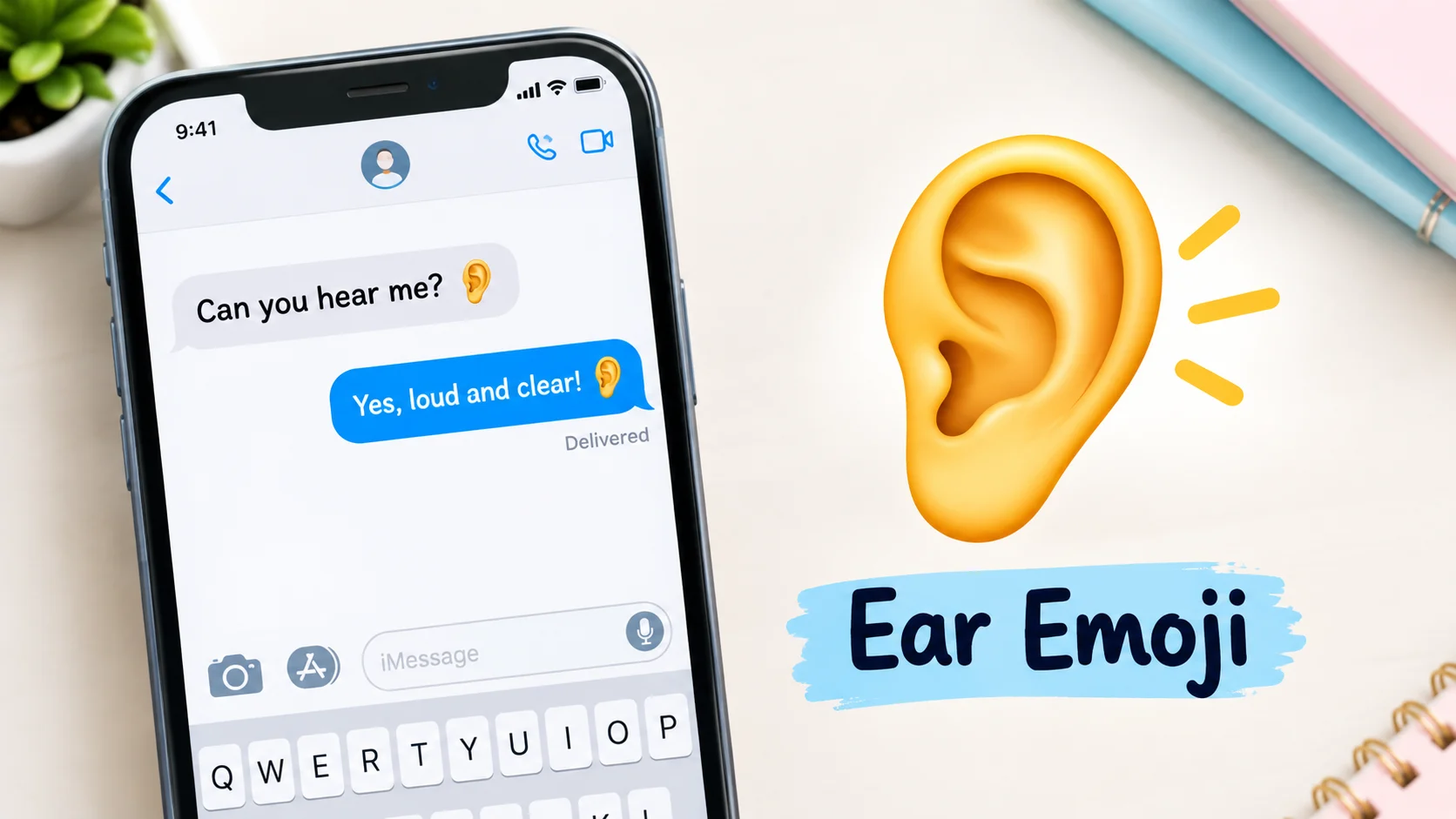
The 👂 ear emoji usually means “I’m listening,” “I heard that,” or “Tell me more.” It can show attention, curiosity, or interest in what someone is saying. In some contexts, it may refer to music, sound, hearing, or a joke about ears.
The 👂 ear emoji is a simple way to show that someone is listening or paying attention. It can replace phrases such as “I’m all ears,” “Go ahead,” or “I heard you.” Unlike many facial expression emojis, it focuses on the act of hearing rather than a specific emotion.
In texting, the ear emoji can have a friendly, curious, serious, or playful tone. Someone might send it when they want to hear a story, react to gossip, or acknowledge something you said. The same emoji can also be used literally when talking about hearing, sound, music, or an ear-related situation.
The meaning becomes clearer when you look at the complete message. “I’m listening 👂” is different from “Did you hear that? 👂” and “Tell me everything 👂.” The emoji stays the same, but the words around it change what the sender is trying to communicate.
What Does the Ear Emoji 👂 Usually Mean?
The most common meaning of 👂 is listening or hearing. It represents a human ear and can communicate attention without using many words.
People often use it to express:
- I’m listening.
- I can hear you.
- Tell me more.
- I heard that.
- I’m paying attention.
- What did you say?
- I’m curious about this.
For example:
“Go ahead, I’m listening 👂.”
This means the sender is ready to hear what you have to say.
“Wait, did you hear that? 👂”
Here, the emoji draws attention to a sound or something someone may have heard.
The ear emoji does not always mean the sender is physically listening at that moment. It can also be a figurative reaction to information, a story, or gossip.
What Does 👂 Mean in Texting?
In text messages, 👂 often works as a short reaction to something interesting. It can show that a person wants more details or is paying close attention.
“I’m all ears 👂”
This is one of the most natural uses. It means the sender is ready to listen.
“Tell me what happened 👂”
The emoji adds curiosity and encourages the other person to continue.
“I heard you 👂”
This can show acknowledgment, although the words are what make the meaning clear.
“Did you hear that noise? 👂”
This is a literal use related to sound or hearing.
“Okay, I’m listening 👂”
This can be supportive, neutral, or slightly playful depending on the conversation.
The ear emoji is often less expressive than a face emoji. It does not automatically show happiness, sadness, anger, or affection. It mainly points toward hearing, listening, or attention.
Ear Emoji Meaning in Different Contexts
The same emoji can communicate different things depending on the situation.
Listening to Someone
When a person wants to show attention, 👂 can mean “I’m listening” or “You have my attention.”
Example:
“Tell me what’s going on 👂”
Likely meaning: The sender wants to hear the story.
Curiosity and Gossip
The ear emoji can suggest that someone is interested in information, especially when the conversation involves a surprising story or personal update.
Example:
“Wait, what happened between them? 👂”
Likely meaning: The sender is curious and wants more details.
This does not automatically mean the person is being nosy. The tone depends on the relationship and the subject.
Hearing Something
A literal use of 👂 relates to sounds, hearing, or noticing noise.
Example:
“Did anyone else hear that? 👂”
Likely meaning: The sender is asking whether other people noticed a sound.
Music and Audio
The ear emoji can also relate to listening to music, podcasts, or audio.
Example:
“This song sounds amazing with headphones 👂🎧”
Likely meaning: The sender is talking about hearing or listening to music.
For music-related messages, 🎧 or 🎶 may communicate the idea more clearly, but 👂 can still fit.
Paying Attention
Sometimes 👂 is used to remind someone to listen carefully.
Example:
“Listen up 👂 I have something important to say.”
Likely meaning: The sender wants attention.
Is the Ear Emoji Friendly or Flirty?
The 👂 emoji is generally neutral or friendly. It can appear in playful or flirty conversations, but it does not automatically communicate romantic interest.
For example:
“Tell me more about yourself 👂”
This may show genuine curiosity, but it could be friendly or romantic depending on the conversation.
Similarly:
“I’m listening 👂”
usually means the person is paying attention, not necessarily flirting.
The emoji alone cannot prove attraction, affection, or romantic interest. If someone uses it in a conversation with you, consider the complete message and the relationship rather than assigning a fixed meaning.
What Does the Ear Emoji Mean From Someone?
When someone sends 👂 to you, they may be saying that they are listening, interested, or ready for more information.
The meaning depends on what you said before it.
| Message | Likely Meaning |
|---|---|
| “I’m listening 👂” | They are paying attention. |
| “Tell me everything 👂” | They want to hear the story. |
| “Did you hear that? 👂” | They are asking about a sound. |
| “I heard you 👂” | They acknowledge what you said. |
| “Wait, what? 👂” | They want clarification or more information. |
A single 👂 without any words is more open to interpretation. It might mean “I’m listening,” “What did you say?” or “Tell me more.” The conversation is the best clue.
Can the Ear Emoji Be Sarcastic?
Yes, 👂 can be used sarcastically or humorously, especially when someone is pretending to pay close attention.
For example:
“Oh, now you want to tell me the story? 👂”
This may sound playful or teasing.
Another example:
“I’m listening to your excuses 👂”
Depending on the relationship, this could be a light joke or a more serious comment.
The emoji itself does not create sarcasm. The words, timing, and tone of the conversation do.
Does 👂 Mean “I’m All Ears”?
Yes. One of the most natural interpretations of 👂 is “I’m all ears.”
The phrase means that someone is ready and willing to listen.
Example:
“Got a story? I’m all ears 👂”
Meaning: The sender is inviting the other person to continue talking.
This is especially useful when someone is sharing news, asking for advice, or telling a funny story.
Ear Emoji and Body Language
The ear emoji can also be used to represent the act of listening or paying attention in a visual way.
For example:
“I’m paying attention 👂”
The emoji reinforces the idea of hearing someone.
However, the emoji does not show a complete facial expression or body posture. It is a simple symbol, so it cannot communicate every detail of a person’s feelings or intentions.
Related Emojis and Their Meanings
| Emoji | Official Name | Common Meaning | Tone | Where or When It Is Used |
|---|---|---|---|---|
| 👂 | Ear | Listening, hearing, or paying attention | Neutral, curious, or friendly | Texts, stories, questions, and audio-related messages |
| 👀 | Eyes | Looking, watching, or showing interest | Curious or playful | Gossip, surprising news, and reactions |
| 🦻 | Ear with Hearing Aid | Hearing support or hearing-related topics | Informative or personal | Discussions about hearing aids and accessibility |
| 🗣️ | Speaking Head | Talking, speaking, or expressing an opinion | Neutral or expressive | Conversations, speeches, and discussions |
| 🤫 | Shushing Face | Quiet, secrecy, or asking someone to be silent | Playful or serious | Secrets, quiet moments, and confidential information |
| 🤔 | Thinking Face | Thinking, questioning, or considering something | Curious or thoughtful | Questions, uncertainty, and reactions |
| 🙉 | Hear-No-Evil Monkey | Not wanting to hear something or pretending not to hear | Playful or humorous | Embarrassing comments, jokes, and uncomfortable topics |
| 🎧 | Headphone | Listening to music or audio | Relaxed or focused | Music, podcasts, gaming, and audio activities |
The closest match to 👂 is usually 🦻 because both represent an ear. However, 🦻 specifically includes a hearing aid and is more directly connected to hearing support or accessibility.
👀 is often confused with 👂 in gossip-related conversations. The eyes suggest watching or looking, while the ear suggests listening or hearing. 🤫 focuses on silence or secrecy, while 👂 focuses on receiving sound or information.
If you want to say “Tell me more,” 👂 is a natural choice. If you want to say “I’m watching,” 👀 may fit better.
Ear Emoji Text Message Examples
“I’m all ears 👂”
Likely meaning: The sender is ready to listen.
Why context matters: The phrase directly supports the listening meaning.
“Wait, what did you say? 👂”
Likely meaning: The sender wants clarification or is pretending to listen closely.
Why context matters: The question makes the emoji about hearing or understanding.
“Tell me the whole story 👂”
Likely meaning: The sender is curious and wants more information.
Why context matters: The request for a story gives the emoji a conversational meaning.
“Did you hear that sound? 👂”
Likely meaning: The sender is asking about a real or imagined noise.
Why context matters: The message refers directly to hearing.
“I’m listening to this podcast 👂🎧”
Likely meaning: The sender is listening to audio.
Why context matters: The headphone emoji makes the audio context clear.
“Okay, I’m listening to your explanation 👂”
Likely meaning: The sender is acknowledging that they are paying attention.
Why context matters: The wording may be neutral, supportive, or slightly skeptical depending on the conversation.
How to Respond to the Ear Emoji
If someone sends 👂, your response depends on what they mean.
If They Want to Hear a Story
“Okay, so here’s what happened…”
If They Are Listening to You
“Thanks for listening.”
If They Are Asking for More Details
“Sure, I’ll explain.”
If They Are Being Playful
“😂 You really want to know?”
If You Are Unsure
“Do you mean you’re listening?”
These responses keep the conversation natural without assuming a hidden meaning.
When Should You Use the Ear Emoji?
The 👂 emoji works well when you want to communicate listening, curiosity, or hearing.
Use it for:
- Showing that you are listening
- Asking someone to continue a story
- Reacting to gossip or surprising information
- Talking about sounds
- Discussing music or audio
- Acknowledging that you heard someone
- Adding a playful “I’m all ears” reaction
It may not be the best choice when you need to express a strong emotion. For example, if you want to show sadness, excitement, or anger, a more specific emoji may communicate your feeling better.
Copy and Paste Ear Emoji
👂
You can copy and paste the ear emoji into texts, comments, captions, or messages.
Common combinations include:
- 👂👀
- 👂😂
- 👂🎧
- 👂🤔
- 👂🗣️
These combinations can suggest listening, curiosity, audio, questions, or conversation.
Official Name and Unicode Details
The official Unicode name of 👂 is EAR. Its Unicode code point is U+1F442. The Unicode emoji charts identify it as a human ear symbol.
The emoji was included in Unicode 6.0, released in 2010.
Different platforms may display the ear with slightly different shapes, colors, or levels of detail. The basic meaning remains the same: an ear associated with hearing or listening.
FAQs
What does 👂 mean in texting?
👂 usually means listening, hearing, or paying attention. It can also mean “I’m all ears” or “Tell me more.”
Is the ear emoji a good response to gossip?
Yes. In a playful conversation, 👂 can show curiosity or interest in a story. It does not automatically mean the sender is being nosy.
Does 👂 mean “I heard you”?
It can. When used with a message such as “I heard you 👂,” it may acknowledge that the sender received what someone said.
Is 👂 a flirty emoji?
Not by itself. It is usually neutral or friendly, although it can appear in playful or flirty conversations.
What is the difference between 👂 and 👀?
👂 represents hearing or listening. 👀 represents looking, watching, or showing interest in something visual.
Conclusion
The 👂 ear emoji usually means listening, hearing, or paying attention. In texting, it can express “I’m all ears,” show curiosity about a story, or refer to a sound or audio. Its tone may be friendly, neutral, playful, or serious depending on the message.
The most useful way to interpret 👂 is to look at the surrounding words. A message such as “Tell me more 👂” suggests curiosity, while “Did you hear that? 👂” refers to sound. The emoji does not automatically mean flirting, anger, or any other specific emotion.
Discover More Related Articles:
- Ticket Emoji | Is It About Travel or Events In 2026
- Beach Emoji | Is Used for Travel, Summer or Relaxation In 2026
