Quick Answer
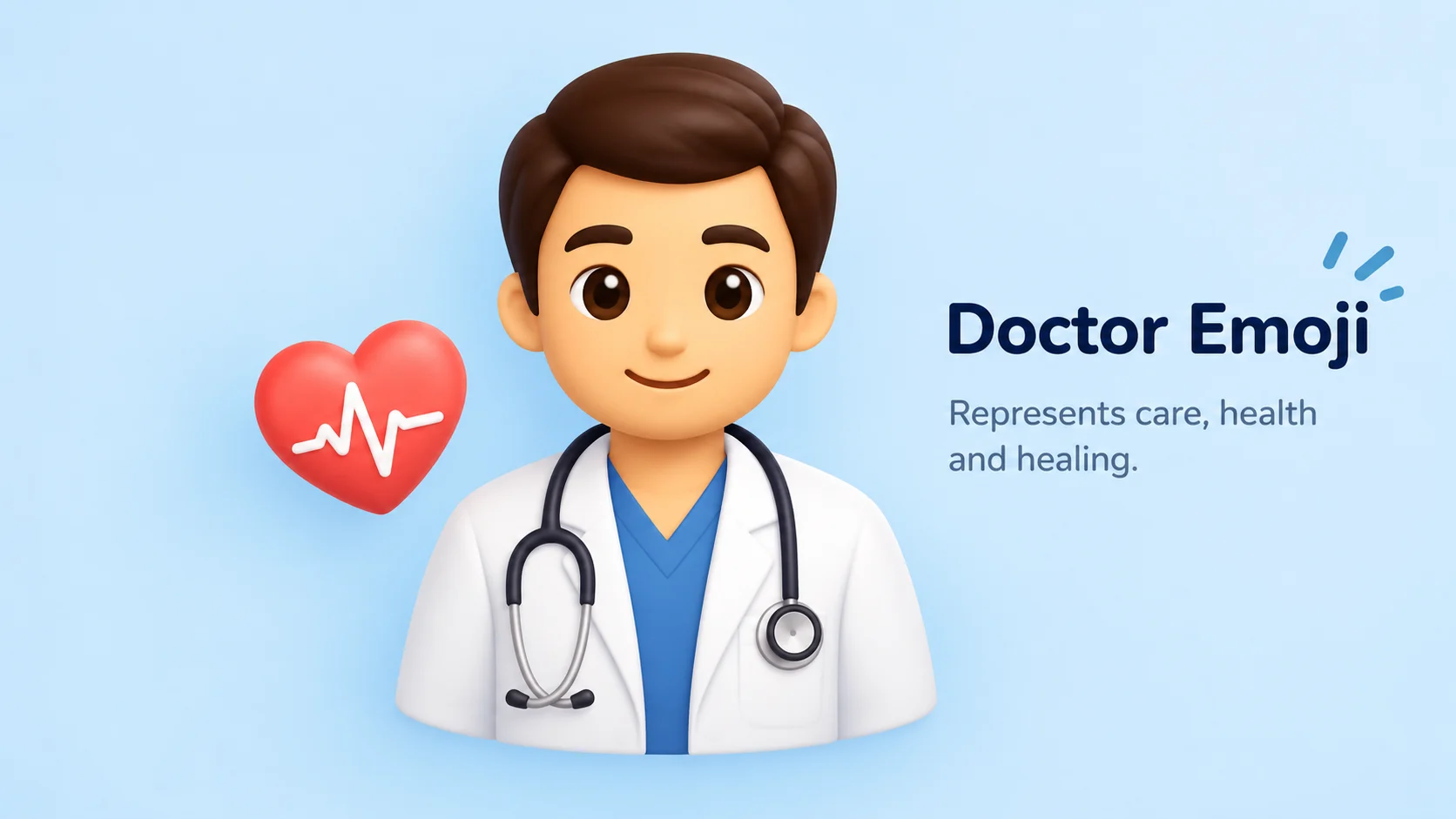
The doctor emoji 🧑⚕️ usually represents a doctor, medical professional, healthcare worker, or someone connected with medicine and healthcare. It can be used literally when talking about a medical appointment, hospital, treatment, or healthcare job. In casual messages, it may also represent getting medical advice, feeling sick, taking care of someone’s health, or joking about being the “doctor” in a situation.
The 🧑⚕️ doctor emoji shows a person wearing a medical coat and is commonly used to represent a healthcare professional or medical worker. It is a combination emoji built from the person emoji and the medical symbol, making it useful when a message is specifically about doctors, healthcare, medicine, or medical care.
In everyday texting, 🧑⚕️ can have a straightforward meaning such as “I have to see the doctor” or “The doctor said I’m okay.” It can also be used more generally when discussing hospitals, medical appointments, health advice, or someone working in healthcare.
Context can make the emoji more playful too. A friend might jokingly use 🧑⚕️ after giving you advice about a minor problem. In that case, the emoji does not mean that the person is actually a medical professional. It simply adds a humorous “doctor” theme to the message.
What Does the Doctor Emoji 🧑⚕️ Usually Mean?
The 🧑⚕️ emoji usually represents a healthcare professional, especially a doctor or medical worker.
People may use it when talking about:
- Doctors
- Medical appointments
- Hospitals
- Healthcare
- Medicine
- Medical advice
- Checkups
- Working in healthcare
- Taking care of someone who is sick
- A career in medicine
For example:
“I have an appointment with the doctor tomorrow 🧑⚕️.”
Here, the emoji directly reinforces the medical context.
It can also appear in a message such as:
“The doctor said everything looks fine 🧑⚕️.”
In this case, it represents the medical professional mentioned in the sentence.
What Does 🧑⚕️ Mean in Texting?
In texting, 🧑⚕️ is usually a simple visual reference to a doctor or healthcare professional. It can make a medical message easier to recognize at a glance.
For example:
“Heading to the doctor now 🧑⚕️.”
This means the sender is going to a medical appointment.
“Ask your doctor first 🧑⚕️.”
Here, it reinforces the idea of professional medical advice.
“Future doctor 🧑⚕️📚.”
This can refer to someone studying medicine or hoping to become a doctor.
The emoji can also be used jokingly:
“I watched one medical video, so I’m basically a doctor now 🧑⚕️😂.”
In this example, the emoji is humorous rather than literal.
What Does 🧑⚕️ Mean From Someone?
If someone sends 🧑⚕️ to you, the most likely meaning depends on what you were discussing.
If you were talking about an appointment, it may simply mean doctor or medical care.
For example:
“You should probably get that checked out 🧑⚕️.”
This uses the emoji to reinforce the idea of medical advice.
The emoji itself does not prove that the sender is a doctor, is giving professional medical advice, or has a particular emotional intention.
Can the Doctor Emoji Be Used Playfully?
Yes. 🧑⚕️ can be used humorously when someone pretends to be a doctor or gives exaggerated “medical” advice.
For example:
“My official diagnosis is that you need more sleep 🧑⚕️😂.”
The emoji makes the message sound like a playful doctor role rather than a serious medical statement.
Another example is:
“Don’t worry, I got my medical degree from the internet 🧑⚕️.”
Here, the emoji supports the joke.
However, people should not treat a casual emoji or joke as evidence of real medical expertise.
Is 🧑⚕️ a Doctor or a Nurse?
The emoji is broadly associated with healthcare professionals, but its common interpretation is often “doctor” because of its medical appearance and usage.
Unicode identifies the emoji as HEALTH WORKER, rather than specifically naming it “doctor.” The sequence can therefore represent a healthcare worker more generally.
That means 🧑⚕️ can be appropriate when discussing a doctor, nurse, medical worker, or another healthcare professional, depending on the context.
If you need to communicate a specific profession, words are clearer than relying on the emoji alone.
Does 🧑⚕️ Mean Medical Advice?
Not by itself.
Someone may use 🧑⚕️ alongside a health-related message, but the emoji does not turn ordinary advice into professional medical advice.
For example:
“You should ask a healthcare professional 🧑⚕️.”
The emoji reinforces the reference to healthcare.
By contrast:
“Drink this and you’ll definitely be cured 🧑⚕️.”
The emoji does not make the claim medically reliable.
When a health question is serious, a qualified healthcare professional is a better source than interpreting an emoji or casual online message.
Doctor Emoji and Gender
The 🧑⚕️ emoji uses a gender-neutral person presentation. Unicode also provides gendered health-worker variants, including 👨⚕️ Man Health Worker and 👩⚕️ Woman Health Worker.
The gender-neutral version is useful when the person’s gender is unknown, irrelevant, or intentionally not specified.
The meaning remains centered on healthcare rather than gender.
Doctor Emoji in Different Contexts
Medical Appointment
“I have to see the doctor tomorrow 🧑⚕️.”
The emoji refers directly to the medical professional.
Healthcare Career
“One day I’ll be wearing this for real 🧑⚕️📚.”
Here, it can represent studying toward a healthcare career.
Hospital Conversation
“The doctor just came in 🧑⚕️.”
The meaning is literal and straightforward.
Caring for Someone
“Make sure you get checked out 🧑⚕️.”
The emoji reinforces concern about medical care.
Playful Diagnosis
“My diagnosis is: you need a vacation 🧑⚕️😂.”
Here, it is clearly being used humorously.
Doctor Emoji vs. Other Medical Emojis
| Emoji | Official Name | Common Meaning | Tone | Where or When It Is Used |
|---|---|---|---|---|
| 🧑⚕️ | Health Worker | Doctor or healthcare professional | Professional or neutral | Medical conversations, healthcare jobs, appointments |
| 👨⚕️ | Man Health Worker | Male-presenting healthcare professional | Neutral | Referring to a male doctor or healthcare worker |
| 👩⚕️ | Woman Health Worker | Female-presenting healthcare professional | Neutral | Referring to a female doctor or healthcare worker |
| 🏥 | Hospital | Hospital or medical facility | Neutral | Appointments, hospital visits, healthcare discussions |
| 💉 | Syringe | Injection, vaccination, or medical procedure | Medical | Vaccinations, treatment, healthcare |
| 🩺 | Stethoscope | Medical examination or healthcare | Professional | Doctors, checkups, diagnosis-related contexts |
| 💊 | Pill | Medicine or medication | Medical | Medication, treatment, pharmacy discussions |
| 🩹 | Adhesive Bandage | Minor injury, wound, or recovery | Caring or medical | First aid, injuries, healing |
| 🩻 | X-Ray | Medical imaging or examination | Clinical | X-rays, scans, medical testing |
The most important distinction is between 🧑⚕️ and 🩺. The doctor or health-worker emoji represents a person working in healthcare, while 🩺 represents a medical examination or the medical profession more generally.
Similarly, 🏥 represents a place rather than a person, while 💉 and 💊 focus on medical procedures and medication.
What Is the Difference Between 🧑⚕️ and 👩⚕️ or 👨⚕️?
The main difference is the person’s gender presentation.
🧑⚕️ is gender-neutral.
👩⚕️ represents a woman health worker.
👨⚕️ represents a man health worker.
All three are related to healthcare and can represent a doctor or another healthcare professional. Choose the version that best matches the context when the person’s gender is relevant. Otherwise, the gender-neutral 🧑⚕️ works well.
What Is the Difference Between 🧑⚕️ and 🩺?
These emojis are closely connected but represent different things.
🧑⚕️ represents a person working in healthcare.
🩺 represents a stethoscope and is associated with medical examinations, doctors, and healthcare.
If you want to say “the doctor”, 🧑⚕️ is more direct.
If you want to represent “medical examination” or the general idea of medicine, 🩺 may fit better.
What Is the Difference Between 🧑⚕️ and 🏥?
🧑⚕️ represents a healthcare worker.
🏥 represents a hospital.
For example:
“I’m going to the hospital 🏥.”
This focuses on the location.
“I’m seeing my doctor 🧑⚕️.”
This focuses on the healthcare professional.
You can also combine them:
“Hospital appointment today 🏥🧑⚕️.”
Text Message Examples Using 🧑⚕️
“Doctor’s appointment tomorrow 🧑⚕️.”
Likely meaning: The sender has an upcoming medical appointment.
“My doctor said I’m doing fine 🧑⚕️.”
Likely meaning: The emoji represents the doctor mentioned in the message.
“Future doctor 🧑⚕️📚.”
Likely meaning: Someone is studying or planning to work in medicine.
“Please get that checked 🧑⚕️.”
Likely meaning: The sender is encouraging the person to seek professional medical attention.
“Okay, Dr. Google 🧑⚕️😂.”
Likely meaning: A playful joke about someone acting like a medical expert.
Common Misunderstandings About 🧑⚕️
One common misunderstanding is assuming that anyone who uses 🧑⚕️ is claiming to be a doctor. That is not necessarily true. People use emojis symbolically, and the character can simply represent healthcare or a medical topic.
Another misunderstanding is treating 🧑⚕️ as a specific medical diagnosis. It does not communicate a particular illness or treatment.
It is also useful to remember that Unicode defines the character more broadly as a health worker, so the emoji should not always be interpreted as specifically meaning “doctor.”
How to Respond to the Doctor Emoji
Your response depends on why the person used it.
If they mention a doctor’s appointment:
“Hope everything goes well!”
They say they’re becoming a doctor:
“That’s exciting. Good luck with your studies!”
If they are suggesting professional care:
“Good point. I’ll get it checked.”
You do not need to give a medical opinion just because someone uses 🧑⚕️ in a message.
When Should You Use 🧑⚕️?
The doctor emoji works well when you are talking about:
- Doctors
- Healthcare workers
- Medical appointments
- Hospitals
- Healthcare careers
- Medical checkups
- Professional medical care
- Studying medicine
- Caring for someone who is sick
- Light medical jokes
It is especially useful when you want a visual reference to a healthcare professional without writing a long explanation.
Copy and Paste Doctor Emoji
🧑⚕️
You can copy and paste the doctor or health-worker emoji into messages, captions, comments, or notes.
Some combinations include:
- 🧑⚕️🩺
- 🧑⚕️🏥
- 🧑⚕️💉
- 🧑⚕️💊
- 🧑⚕️📚
Each combination adds a slightly different medical context.
Official Name and Unicode Details
Unicode identifies 🧑⚕️ as HEALTH WORKER. It is a sequence that combines a person with the medical symbol, allowing it to represent a healthcare professional.
The base person character is U+1F9D1, while the medical symbol is U+2695. The sequence uses a zero-width joiner to display them together as a single emoji presentation.
Unicode also supports gender-specific health-worker emoji sequences, including 👩⚕️ and 👨⚕️.
The exact visual design can vary across operating systems and devices, but the core meaning remains related to a person working in healthcare.
FAQs
What does the 🧑⚕️ emoji mean?
🧑⚕️ usually represents a doctor, healthcare professional, or health worker. It can also refer to medical appointments, healthcare careers, or medical care.
Is 🧑⚕️ specifically a doctor emoji?
Not officially. Unicode calls it HEALTH WORKER, so it can represent a doctor or another healthcare professional.
What does 🧑⚕️ mean in texting?
In texting, it usually means doctor, healthcare, medical care, or a medical professional. It can also be used humorously when someone pretends to give a diagnosis.
What does 🧑⚕️ mean from someone?
It usually points to a medical or healthcare topic. The exact meaning depends on the message surrounding the emoji.
Is 🧑⚕️ a nurse emoji?
It can represent a nurse or another healthcare worker because its official meaning is broader than “doctor.” The surrounding context determines the specific profession.
Conclusion
The doctor emoji 🧑⚕️ usually represents a doctor, healthcare professional, or health worker. It can refer to medical appointments, hospitals, healthcare careers, checkups, and professional care. In casual conversations, it can also be used humorously when someone pretends to diagnose a friend or gives playful medical advice.
Because Unicode officially identifies it as HEALTH WORKER, it is broader than a doctor alone. When choosing between 🧑⚕️, 🩺, 🏥, 💉, or 💊, think about whether you are referring to a person, a medical examination, a healthcare location, a procedure, or medication.
Discover More Related Articles:
