Quick Answer
The 💣 bomb emoji usually represents a bomb, explosion, or something described as explosive. In everyday texting, it is often used figuratively to show that something is intense, shocking, dramatic, exciting, or likely to have a big impact. It can also appear in slang and humorous expressions. The exact meaning depends on the surrounding message, because 💣 can be literal, dramatic, playful, or metaphorical.
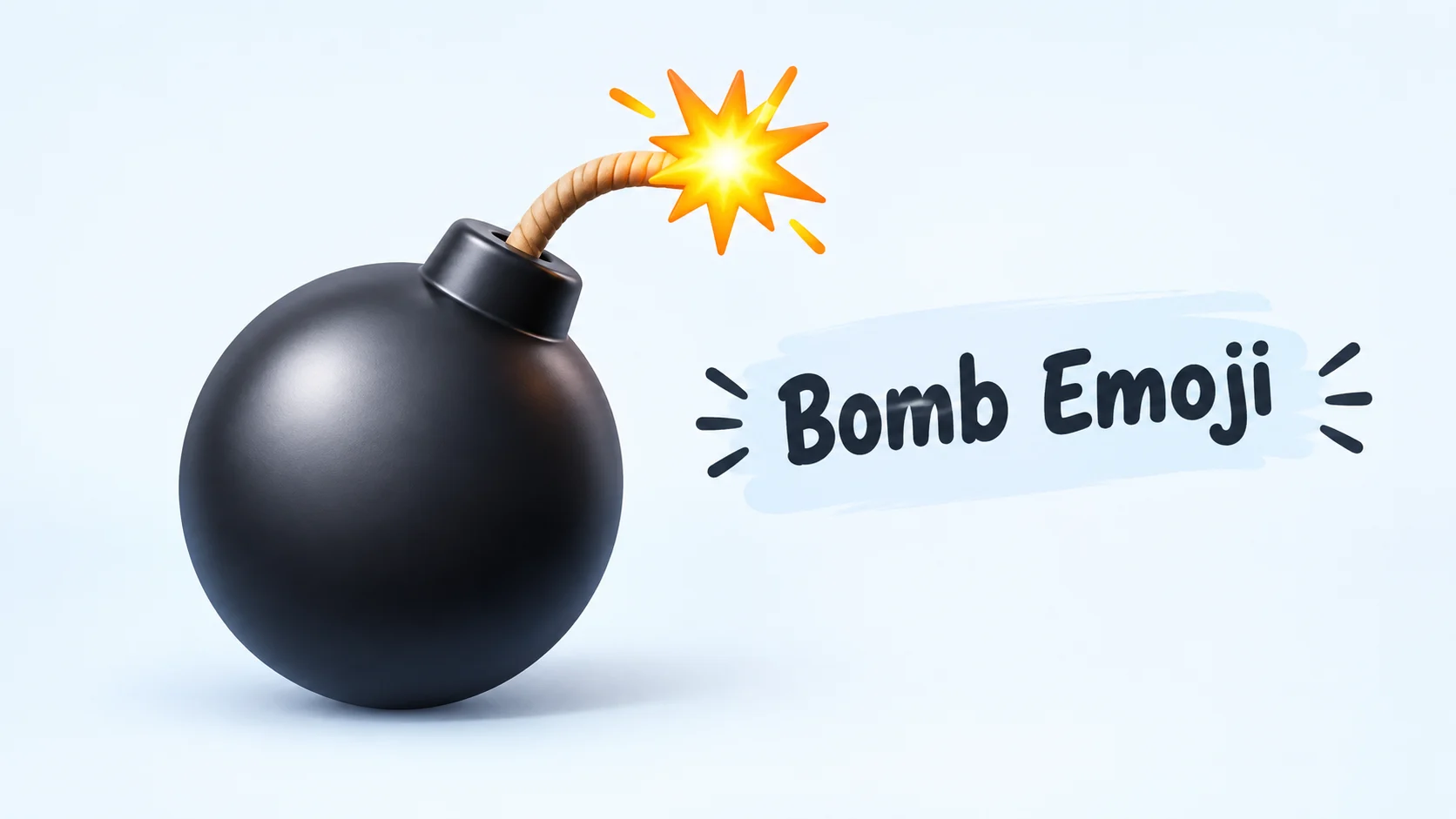
The 💣 bomb emoji shows a dark round bomb with a lit fuse. Unicode officially names it BOMB, while its CLDR short name is “bomb.” It was approved as part of Unicode 6.0 in 2010 and later added to Emoji 1.0 in 2015.
In texting, however, people do not always use 💣 to talk about an actual bomb. It can represent something that feels explosive, surprising, intense, or dramatic. For example, someone might use it after describing shocking news, a huge reaction, or something that made a conversation suddenly become intense.
The meaning can also be playful. A person might use 💣 to describe something as extremely impressive, powerful, or attention-grabbing. Because of these different uses, it is better to read the emoji together with the words around it instead of assuming that every 💣 has the same meaning.
What Does the Bomb Emoji 💣 Usually Mean?
The most direct meaning of 💣 is bomb or explosion. In ordinary digital communication, though, it often works as a metaphor.
Depending on context, it can suggest:
- Something explosive
- A huge reaction
- Shocking news
- A dramatic situation
- Something intense
- Something that had a major impact
- A joke or exaggerated reaction
- Something described with slang as being excellent or impressive
Emojipedia notes that 💣 can be used for figurative “bombs” and explosions, including slang uses, while also noting that it can sometimes appear in contexts involving war, weapons, or violence.
The figurative uses are especially important when interpreting casual messages.
What Does 💣 Mean in Texting?
In a text message, 💣 can mean that something is big, explosive, dramatic, or unexpected.
For example:
“That announcement was 💣.”
This could mean the announcement was huge, shocking, or made a strong impression.
“This story is about to be 💣.”
Here, the emoji can suggest that something dramatic or exciting is coming.
“That performance was 💣🔥.”
In this context, the emoji is being used figuratively to emphasize how impressive or intense the performance was.
The words surrounding 💣 help determine whether the sender means something literally, dramatically, humorously, or as slang.
💣 as a Symbol of Something Explosive
One of the most common figurative uses of 💣 is to describe something as explosive.
This does not have to involve a physical explosion. People can use “explosive” to describe:
- A dramatic argument
- A shocking announcement
- A major reaction
- An intense event
- A surprising piece of information
- A very energetic performance
For example:
“That meeting was 💣.”
Depending on the conversation, this could mean the meeting was extremely intense or dramatic.
The emoji adds visual emphasis to the idea of something having a powerful effect.
Does 💣 Mean Something Is Good?
Sometimes, yes.
In informal online language, people may use 💣 to emphasize that something is excellent, impressive, attractive, or extremely good. This is a figurative use rather than the emoji’s literal definition. Emojipedia specifically notes slang uses in which “bomb” can describe something excellent or attractive.
For example:
“That new song is 💣.”
The sender may mean the song is really good.
“Those cookies are 💣.”
Here, the emoji can emphasize that the cookies are exceptionally good.
This interpretation depends on the wording. A bomb emoji does not automatically mean “good.”
Can 💣 Mean Something Is Shocking?
Yes. 💣 can be used when something feels unexpected, surprising, or shocking.
For example:
“I just heard the news 💣.”
The emoji can make the message feel more dramatic.
Similarly:
“You won’t believe what happened 💣.”
Here, it creates anticipation and suggests that the information has a major impact.
The emoji is not proof that the information is actually shocking. It simply adds emphasis to the sender’s reaction.
Can 💣 Be Used Playfully?
Yes. In casual conversations, 💣 can be used as exaggerated visual humor.
For example:
“You really said that? 💣😂”
The emoji makes the reaction more dramatic.
Another example:
“My weekend plans are 💣🔥.”
This may simply mean the plans are exciting or impressive.
The combination of 💣 with emojis such as 😂 or 🔥 can make its figurative meaning clearer.
Does 💣 Mean Anger?
Not necessarily.
The bomb emoji can appear in conversations involving anger, conflict, or frustration because those situations may be described as “explosive.” Unicode’s historical emoji documentation also included “explosive” and “angry” among early associated descriptions for 💣.
However, seeing 💣 does not prove that someone is angry.
Compare:
“I’m so mad right now 💣.”
with:
“That performance was amazing 💣🔥.”
The first uses the emoji to intensify frustration. The second uses it as positive slang.
Context changes the meaning.
What Does 💣 Mean From Someone?
If someone sends you 💣, look at what they wrote before or after it.
It might mean:
- “That was intense.”
- “That was shocking.”
- “This is going to be dramatic.”
- “That was amazing.”
- “This situation is explosive.”
- “I’m exaggerating for effect.”
For example:
“Did you hear the latest news? 💣”
This likely emphasizes the importance or shock of the news.
“Your presentation was 💣.”
This may be a compliment meaning the presentation was impressive.
“Okay, things just got serious 💣.”
Here, it signals a sudden increase in intensity.
The emoji alone cannot tell you exactly what the sender intended.
Is the Bomb Emoji Flirty?
💣 is not inherently a flirting emoji. Someone may use it in a playful conversation with a person they like, but the emoji itself does not establish romantic interest.
For example:
“That outfit is 💣.”
Depending on the conversation, this could be a compliment. But it does not automatically mean romantic attraction.
If a message has a romantic meaning, that meaning comes from the complete conversation and relationship context rather than 💣 by itself.
Does 💣 Mean “Hot”?
Sometimes people use “bomb” as slang for something attractive or impressive, so 💣 may occasionally appear in a compliment about someone’s appearance. However, this is an informal interpretation, not the official meaning of the emoji.
For example:
“That look is 💣.”
The sender could be saying the look is outstanding or attractive.
Do not assume this interpretation every time you see the emoji.
💣 in Social and Casual Conversations
The bomb emoji can make ordinary statements feel more dramatic.
Consider these examples:
“The party was 💣.”
This may mean the party was exciting or memorable.
“That ending was 💣.”
This could mean the ending was shocking or had a major impact.
“This dessert is 💣.”
This can be a casual compliment meaning the dessert is excellent.
“The group chat is 💣 tonight 😂.”
This suggests that the conversation is unusually intense, funny, or chaotic.
These are figurative uses rather than literal references.
Related Emojis and Their Meanings
| Emoji | Official Name | Common Meaning | Tone | Where or When It Is Used |
|---|---|---|---|---|
| 💣 | Bomb | Explosive, dramatic, intense, or figuratively impressive | Dramatic or playful | Big reactions, intense situations, slang compliments |
| 💥 | Collision | Explosion, impact, sudden energy, or dramatic reaction | Energetic | Surprising moments, strong reactions, excitement |
| 🧨 | Firecracker | Celebration, excitement, or something explosive | Playful or festive | Celebrations, jokes, energetic moments |
| 🔥 | Fire | Excellent, exciting, hot, or intense | Positive or energetic | Compliments, trends, performances, strong reactions |
| ⚡ | High Voltage | Energy, speed, power, or sudden intensity | Energetic | Excitement, fast action, powerful reactions |
| 💢 | Anger Symbol | Anger, frustration, or irritation | Angry or dramatic | Frustrated reactions, comic-style anger |
| 🚨 | Police Car Light | Alert, emergency, or urgent attention | Urgent | Warnings, serious alerts, dramatic jokes |
| ⚠️ | Warning | Caution, risk, or something requiring attention | Cautious | Warnings, reminders, potentially serious situations |
The closest alternatives depend on what you want to express. 💥 focuses more on impact or an explosive reaction, while 🔥 is often more clearly positive. ⚠️ communicates caution rather than an explosive reaction, and 💢 is much more directly associated with anger.
If you want to emphasize excitement or praise, 🔥 may communicate the idea more clearly than 💣. If you want to emphasize sudden impact or a dramatic reaction, 💥 may be a closer match.
Examples of the Bomb Emoji in Text Messages
“That news was 💣.”
Likely meaning: The news was shocking, dramatic, or significant.
“This dessert is 💣.”
Likely meaning: The sender thinks the dessert is extremely good.
“The final scene was 💣.”
Likely meaning: The scene had a major impact or was especially dramatic.
“Things got 💣 really fast.”
Likely meaning: The situation became intense or chaotic quickly.
“That performance was 💣🔥.”
Likely meaning: The sender is strongly praising the performance.
“What happened next was 💣😂.”
Likely meaning: The sender is describing something surprising or ridiculous in a humorous way.
These examples are illustrations of possible interpretations. The actual meaning always depends on the surrounding conversation.
Common Misunderstandings About 💣
One common misunderstanding is assuming that 💣 always refers to violence or a dangerous object. The emoji does represent a bomb, but casual online communication often uses it metaphorically for intensity, surprise, drama, or praise.
Another mistake is assuming that 💣 always means something is good. It can sometimes work as slang for something excellent, but it can also describe something shocking, intense, or dramatic.
It is also easy to assume that 💣 means anger. While it can appear in angry or explosive situations, the emoji alone does not establish the sender’s emotional state.
How to Respond to the Bomb Emoji
Your response depends on what the sender is talking about.
If they are praising something:
“Right? 🔥”
If they are reacting to surprising news:
“Wait, what happened?”
If they are being playful:
“😂 You are being dramatic.”
If you are unsure what they mean:
“What do you mean by 💣?”
A short clarification is better than assuming a specific meaning when the context is unclear.
When Should You Use 💣?
Use 💣 when you want to add an idea of explosion, intensity, drama, surprise, or figurative impact to a message.
It can work well for:
- Dramatic reactions
- Unexpected news
- Intense situations
- Playful exaggeration
- Strong compliments in informal language
- Exciting events
- Describing something as explosive or high-impact
Because the emoji has a strong visual meaning, it may not be the best choice when you want a calm or neutral tone.
Copy and Paste Bomb Emoji
💣
You can copy and paste the bomb emoji into a text, caption, comment, or message.
Common combinations include:
- 💣🔥
- 💣😂
- 💣💥
- 💣⚡
- 💣🤯
The surrounding emojis can make the intended tone easier to understand.
Official Name and Unicode Details
The official Unicode name of 💣 is BOMB, and its Unicode code point is U+1F4A3. Unicode’s current emoji list also associates it with keywords including “bomb,” “boom,” “comic,” “dangerous,” “explosion,” and “hot.”
The emoji was approved in Unicode 6.0 in 2010 and added to Emoji 1.0 in 2015.
Its design can vary slightly between operating systems and devices, but the core concept remains recognizable as a round bomb with a fuse.
FAQs
What does 💣 mean?
💣 usually represents a bomb or explosion. In casual texting, it can also suggest something dramatic, intense, shocking, or figuratively impressive.
What does 💣 mean in texting?
In texting, 💣 can mean something is explosive, dramatic, surprising, or intense. It can also be used as informal slang for something excellent.
Does 💣 mean something is good?
Sometimes. In informal slang, “the bomb” can describe something excellent, so 💣 may be used as a compliment. Context determines whether that interpretation fits.
Does 💣 mean angry?
Not necessarily. It can emphasize an angry or intense situation, but it can also be playful, positive, or dramatic.
Is 💣 a flirting emoji?
Not by itself. It can appear in playful compliments or conversations involving attraction, but the emoji alone does not prove romantic interest.
Conclusion
The 💣 bomb emoji has a direct meaning connected to a bomb, but its everyday use often goes beyond that literal meaning. In casual texts, it can express something explosive, dramatic, shocking, intense, or exceptionally impressive. It may also be used playfully to exaggerate a reaction.
The best way to understand 💣 is to look at the complete message. A phrase about exciting news can make it a dramatic reaction, while a compliment can make it a slang expression of praise. Unlike 🔥 or 💥, which often have more specific conversational uses, 💣 can cover several different kinds of intensity.
Discover More Related Articles:
- TV Emoji | Texting, Chat & Social Media In 2026
- Balloon Emoji | Birthday, Celebration, Fun & More In 2026
